


How to Make a Candy Sculpture (A Demonstration at the Festival du Livre Culinaire)

April 17th, 2013
Facebook Twitter Linkedin
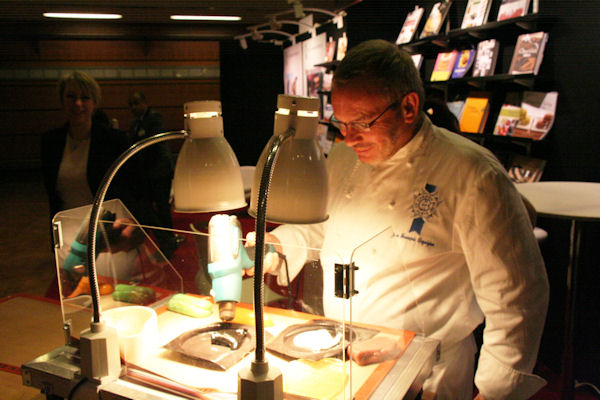
Cordon Bleu Chef Jean-François Deguignet Making Candy Sculpture

Cordon Bleu Chef Jean-François Deguignet
Photograph by www.DiscoverParis.net

Start with several differently-colored globs of candy and heat them with a hot-air blower so that they becomes pliable.
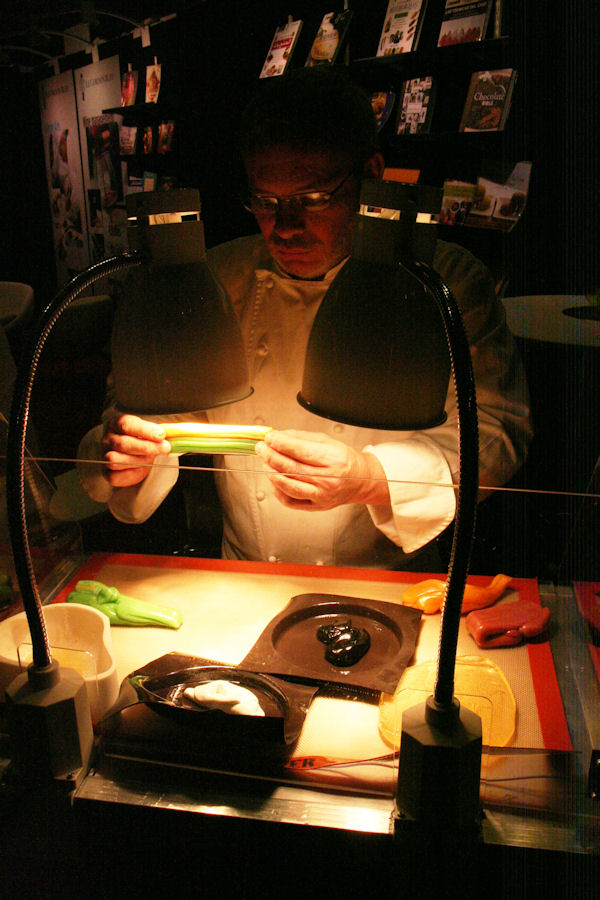
Making Colored-candy Strips

Sticking Log Strips Together
Photograph by www.DiscoverParis.net

Roll the warm candy into log strips, and then press differently-colored strips together. If the strips don’t stick, use the hot-air blower to re-warm the candy until they stick.
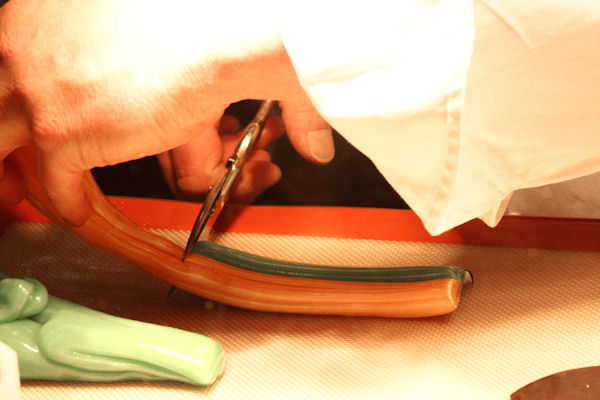
Cutting Candy Strips

Cutting Candy Strips
Photograph by www.DiscoverParis.net

Use scissors to cut the joined log strips to the desired length.
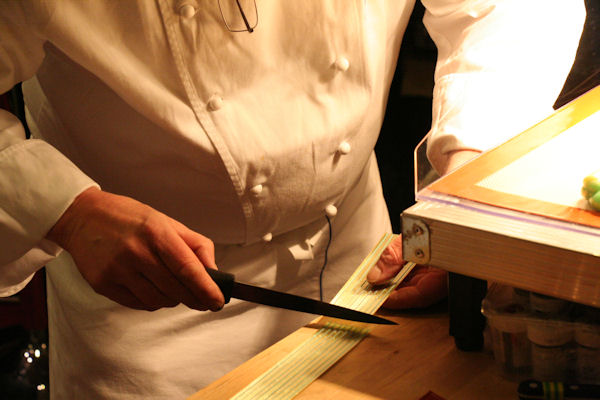
Cutting Flattened Strips

Cutting Flattened Strips
Photograph by www.DiscoverParis.net

After joining several differently-colored log strips together, flatten them, and then use a knife to cut them to the desired length. To make a clean cut, heat the edge of the knife with the hot-air blower.
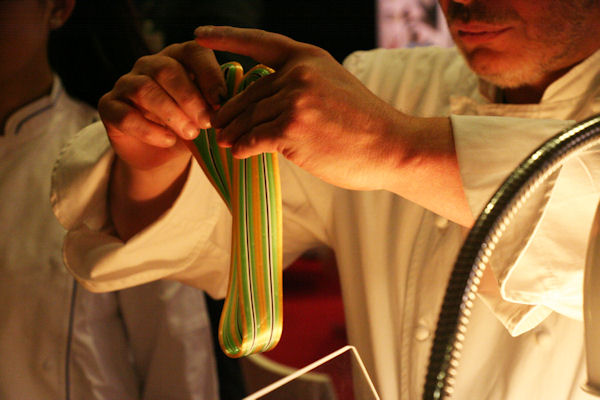
Working with the Flattened Strips

Working with the Flattened Strips
Photograph by www.DiscoverParis.net

Depending upon the effect that you want to achieve (a bow, for example, or a flower) take long, flattened strips and twist them into the desired shapes.
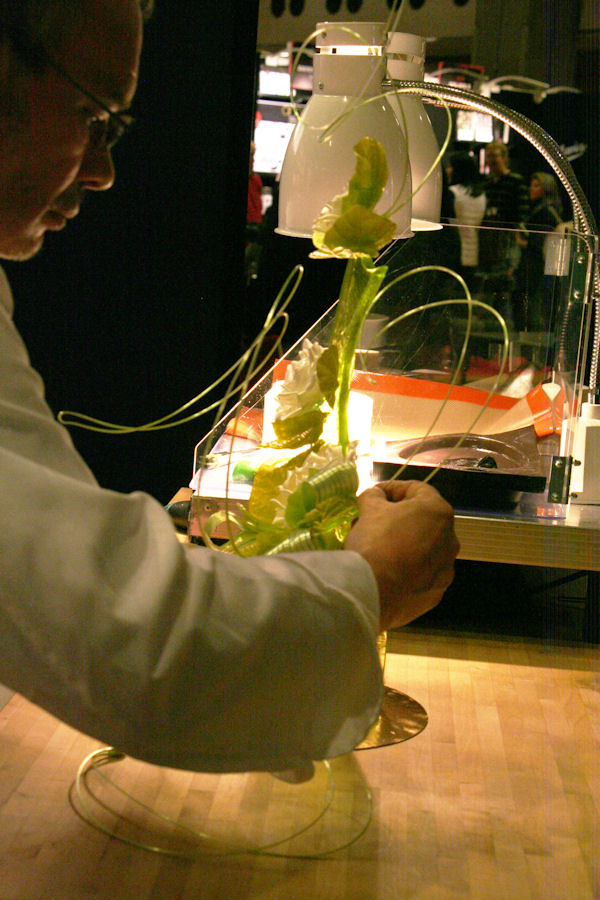
Assembling the Sculpture

Assembling the Sculpture
Photograph by www.DiscoverParis.net

Assemble the ribbons, bows, and other shapes that you have created into a sculpture. Use the hot-air blower as necessary to get the pieces to stick together.
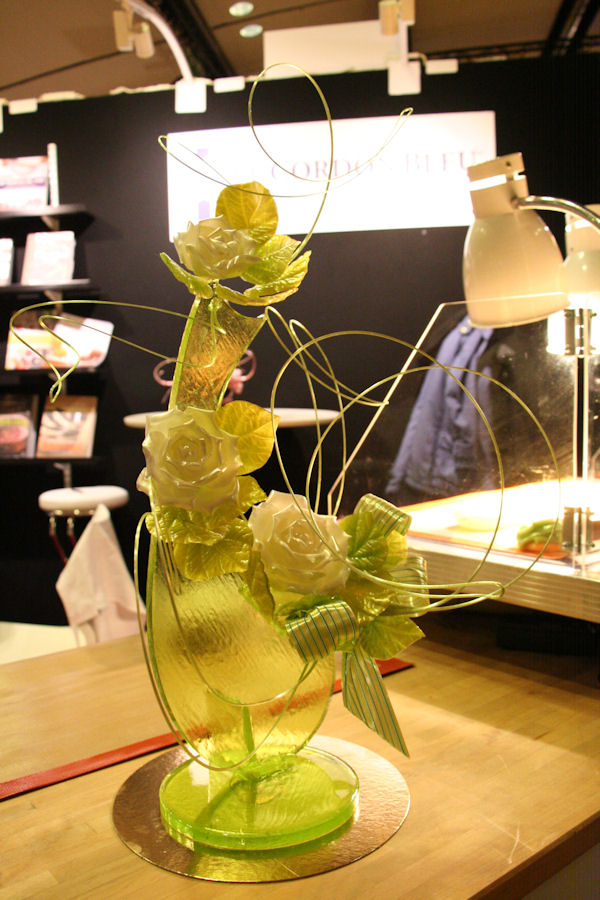
Finished Sculpture

Finished Sculpture
Photograph by www.DiscoverParis.net

Et voilà!
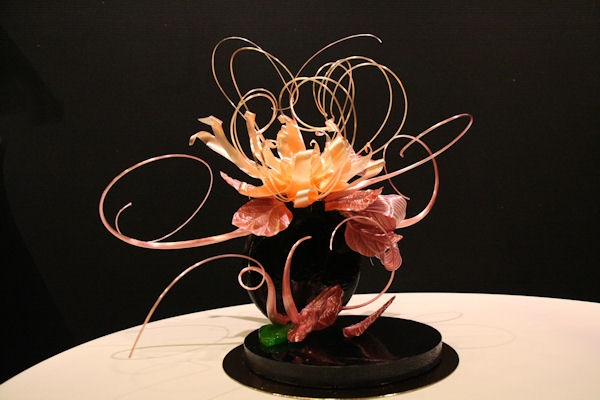
Another Finished Sculpture

Another Finished Sculpture
Photograph by www.DiscoverParis.net

These candy sculptures were created by Chef Jean-François Deguignet of Le Cordon Bleu cooking school at the Festival du Livre Culinaire, held from February 22 – 24 this year at the Carrousel du Louvre.
* * * * * * *

* * * * * * *

We participate in Wanderfood Wednesdays. Head over there to explore food from around the world!

Like our blog? Join us on Facebook!
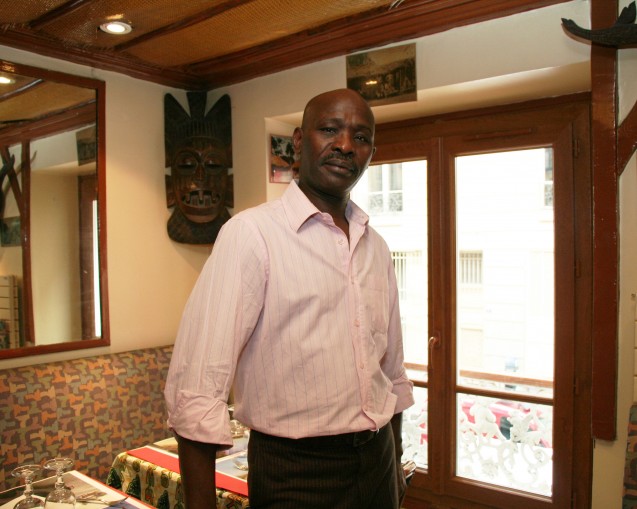
Meet Bécaye Tounkara, Proprietor of Le Dogon

April 10th, 2013
Facebook Twitter Linkedin
Bécaye Tounkara, Proprietor of Le Dogon

Bécaye Tounkara, Proprietor of Le Dogon
Photograph by www.DiscoverParis.net

In this month’s Le Bon Goût we present Bécaye Tounkara, proprietor of Le Dogon, a restaurant located near Place de la République that serves Malian and Senegalese cuisine. We think that travelers to Paris will enjoy dining at this restaurant, where the food is authentic and the service is cordial!

Le Bon Goût is a restaurant review that you will find in Paris Insights, a newsletter about the history and culture of Paris, as well as our observations on contemporary life in the city. It is published monthly as a downloadable PDF file and is available only to paid subscribers for an annual subscription fee of $30.

If you are not a paid subscriber and would like to download the newsletter, please click here. Enter promotional code 11473309154 to receive a $5 discount off the price of an annual subscription.

Bonne Lecture…et Bon Appétit!

* * * * * * *

* * * * * * *

We participate in Wanderfood Wednesdays. Head over there to explore food from around the world!

Like our blog? Join us on Facebook!
The Luxembourg Garden – My Personal View
By Monique Y. Wells

April 6th, 2013
Facebook Twitter Linkedin
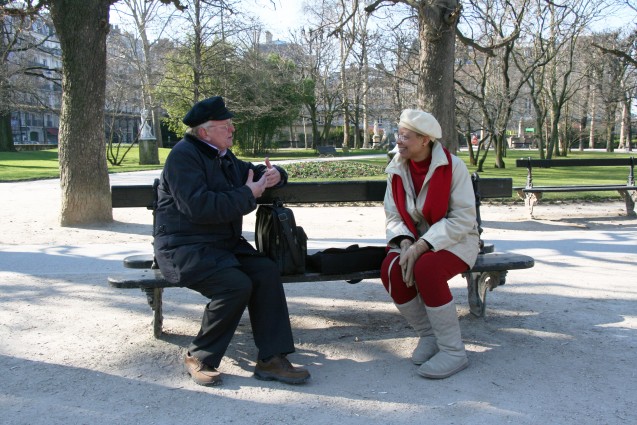
Des Coulam and Monique Y. Wells

Des Coulam and Monique Y. Wells
Photograph by www.DiscoverParis.net

I am honored to have been asked to participate in a very special series of interviews called Paris – A Personal View. Des Coulam, whose passion is to record the sounds of Paris, is the creative genius behind the series. He recorded my observations of the Luxembourg Garden—my favorite place in Paris—as we took a leisurely walk through it.

I took Des to several of my preferred spots in the garden. We began outside the gate, where there is currently a photo exposition on the Tour de France. There are a few photos of “vintage” races in the 1920s and 50s, but the majority of them are from competitions that have taken place in the last twenty years. The images are stunning!

We then walked to the eastern terrace near the boat basin, where I showed Des an image of Loïs Mailou Jones’ 1948 painting of the Luxembourg Palace and the towers of Saint-Sulpice beyond. There has been virtually no change in the landscape since she painted it 64 years ago!

I stopped briefly at the southernmost point of the parterre to talk about Gaston Monnerville, brilliant legal mind and President of the French Senate—a sculpture of him stands just outside the garden. Then we headed over to the statue of Marie de Medicis, the women whom we need to thank for having built the palace and garden. Thank goodness she pined for the Pitti Palace and the Boboli Gardens of her native Florence so much that she tried to have them recreated in Paris!

We next stopped to admire the Zadkine sculpture Le Poète ou l’Hommage à Paul Eluard. This is my favorite piece of art in the garden. I love Zadkine’s story and his works, many of which you can find on the streets of Paris as well as in his studio-turned-museum near the garden.

From Zadkine, the conversation turned to fruits, bees, and the Chartreuse monks when we strolled to the southwest corner of the garden. This is where the espaliered orchard produces fruits for the French Senate, beekeeping courses are taught, and honey from the garden’s apiary is sold in the fall.

To finish our tour, we visited the Statue of Liberty, strode past the Orangerie, stopped to admire the view of the Pantheon at the far end of rue Soufflot, and talked briefly about the Medicis Fountain. I shared some final thoughts about the garden as we walked by the crocuses (a sure sign that spring has arrived) that grow near the exit that faces the Odéon Theater.

I hope you enjoy this audio tour and the beautiful photos that accompany it!

* * * * * * *

Like our blog? Join us on Facebook!
The World of Wine According to Marco Parusso

April 3rd, 2013
Facebook Twitter Linkedin
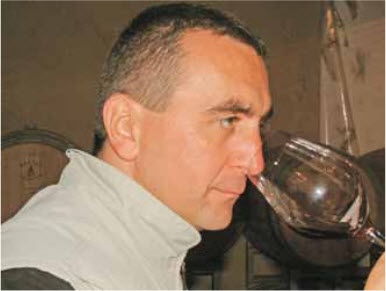
Marco Parusso

Marco Parusso

Monique and I had the pleasure of receiving an invitation to a tasting and presentation of wines produced in the Barolo district of the Piedmont region of Italy by Marco Parusso. The tasting took place at I Golosi restaurant in Paris, an Italian restaurant for which we later wrote a review.

While we sipped nine different wines (two whites, and seven reds), Mr. Parusso talked about his technique of wine production.

We learned that he works very hard at quality control during each step of wine production—from harvesting the grapes to bottling—and that some of his methods are rather unusual. During the harvest, bunches of Nebbiolo grapes are placed in containers and then carried to an atmospheric-conditioned storage room where they “rest” for three to nine days. During this time, at least three things happen: the grapes continue to ripen, the tannins become more mature, and the grape stalks absorb oxygen. It is this absorption of oxygen that Mr. Parusso desires because he believes that oxygenation of the grape juice is an important part of the wine-producing process (unlike many wine producers, who try to protect the grape juice from oxygen).

After this stage, the grape bunches are placed in a roto-fermenter, a tank that macerates the grape skins, juice, stalks, and pulp during the stage of fermentation and maceration. During the first days of the process, the temperature is kept at 8°-10°C. In the final stages, the temperature is elevated to 30°C and then reduced to 21°-25°C to control fermentation. Mr. Parusso only uses indigenous yeasts.

After maceration, the wine is transferred to barriques (wine barrels) made out of new and old French oak. There it ages for up to 24 months. During this process, a technique called bâtonnage is applied, in which the lie of the wine that falls to the bottom of the barrique is stirred.

Finally, the wine is decanted, clarified, and transferred to bottles.

During the presentation we enjoyed tasting a number of Parusso’s wines. The following are notes that we took on two of the wines, one white, the other red:

Langhe Bianco DOC Bricco Rovella 2010 (made from white Sauvignon grapes) – suave bouquet of soft, sweet pineapple, smooth body, long finish with burnt sugar as the final taste sensation

Barolo DOCG Bussia 2004 (made from Nebbiolo grapes) – animal notes, dried fruits (prunes and raisins), quite soft

It is notable that even though Mr. Parusso’s wines are aged in oak barrels, we did not taste the presence of oak during the tasting.

Marco Parusso is intensely passionate about his wines. One of the things that might distinguish his production techniques from those of other wine makers is that he treats oxygen as an ally, rather than as an enemy. According to him, his wines are ready for drinking much more quickly than wines produced by traditional techniques. (Historically, Barolo wines had to be aged for many years to soften the wine.) Because Mr. Parusso’s wine has been exposed to oxygen during the winemaking process, a newly opened bottle will keep for several days.

* * * * * * *

We participate in Wanderfood Wednesdays. Head over there to explore food from around the world!

* * * * * * *

Like our blog? Join us on Facebook!
She’s a Fan!

March 28th, 2013
Facebook Twitter Linkedin
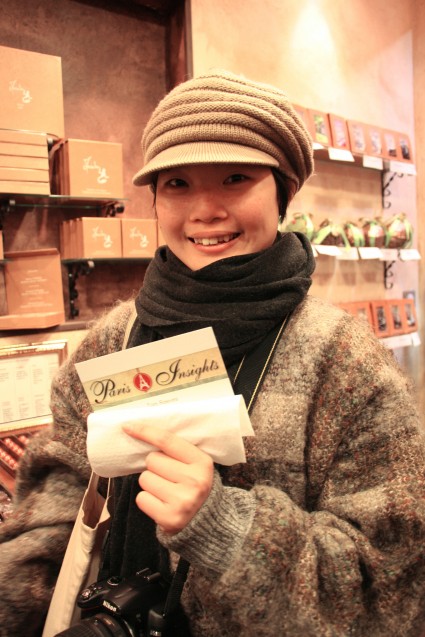
Wasabi from Taiwan

Wasabi from Taiwan
Photograph by www.DiscoverParis.net

During the chocolate tasting that I blogged about yesterday, a young woman stepped into the store. Her name is Wasabi, and she is from Taiwan. She told me that she is studying art in Florence.

I asked her if she was in Paris during her spring break and she replied affirmatively. She also told me that she was traveling alone. Her response greatly impressed me because so many people refuse to travel because they are afraid to travel by themselves and don’t have anyone to travel with. Here was a young, soft-spoken woman who didn’t seem at all perturbed by the idea of traveling solo in a foreign country. Even more amazing (to my mind, at least), she told me that she doesn’t speak French! She had come upon the chocolate shop full of people conversing in French and stepped right in. She speaks English quite well, and seems to get around fine in that language.

Will her story inspire those who yearn to travel but are afraid to travel alone?

After she purchased some chocolates, I asked her if I could take a photo of her and put it on Facebook. She held up my business card when I took the shot. She’s a fan!

* * * * * * *

Like our blog? Join us on Facebook!

Autrement Chocolat by Christophe Potel

March 27th, 2013
Facebook Twitter Linkedin

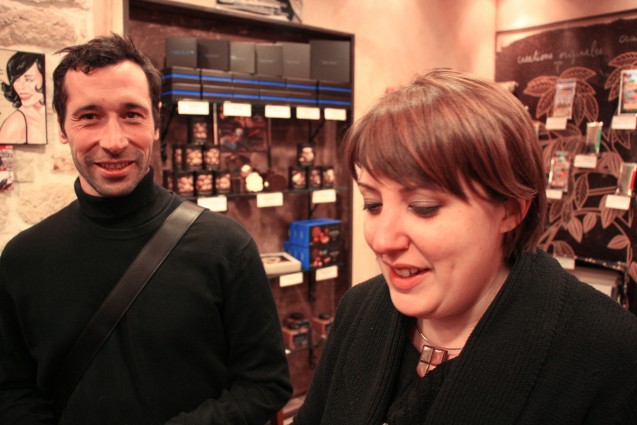
Last Thursday evening Maire-Hélène Gantois of Mococha, our favorite chocolate shop on rue Mouffetard, held an open-house chocolate tasting at her store. She invited Christophe Potel of Autrement Chocolat, a producer of chocolate confections in the nearby town of Colombes, to present his designer chocolates.

Christophe Potel and Marie-Hélène Gantois

Christophe Potel of Autrement Chocolat
Marie-Hélène Gantois of Mococha

Photograph by www.DiscoverParis.net

“Designer” is the appropriate word to use here, because Potel earned a degree in design from the Ecole Supérieure de Design Industriel and then went on to work for Dior (fashion), Christofle (tableware), Cartier (jewelry), and Léonard (fashion). After a number of years he decided that his true calling was in chocolate, so he founded his own confection company. To learn his new trade he studied with Jérôme Lespinay, the former chief of production for chocolatier Patrice Chapon.

Potel makes several kinds of chocolates, including Tubos (tubes), Amulettes (matchsticks), and Tablettes (tablets). The ones that we tasted that evening were Tubos, which look like lipstick containers.

Tubos

There are fifteen different flavors of Tubo. Each is identified by a distinctive pattern that is stamped on the end of the tube. Potel proclaims that the tube of chocolate can be cut into pieces and shared with friends, which is an advantage to choosing Tubos over other forms.

My preferred was the Caramel Beurre Salé Liquide, liquid salty caramel enrobed in dark-chocolate. Contrary to the other flavors, this one cannot be cut into smaller portions because the sticky caramel is immediately released and makes a mess. After the tasting, it took only two bites to consume the sample that I brought home. No cutting and sharing here! I enjoyed the rich, heavenly-sweet butterscotch flavor as it oozed out of the chocolate tube. Sublime!

Another flavor that I enjoyed was the Ganache Mojito, made of dark chocolate, mint, lime, and rum.

Carrousel

One of the products that Potel has developed (and patented) is a carrousel for producing shaved chocolate. Although the advantage of shaved chocolate is not immediately obvious, Potel’s associate Céline Barbe told me that the “flowers” that are created can be served with espresso, or can be used to decorate cakes, ice cream, and other desserts. And here is another way to share chocolate with friends: place the carrousel in the middle of the table and let each guest cut a shaving for himself/herself.

Origami

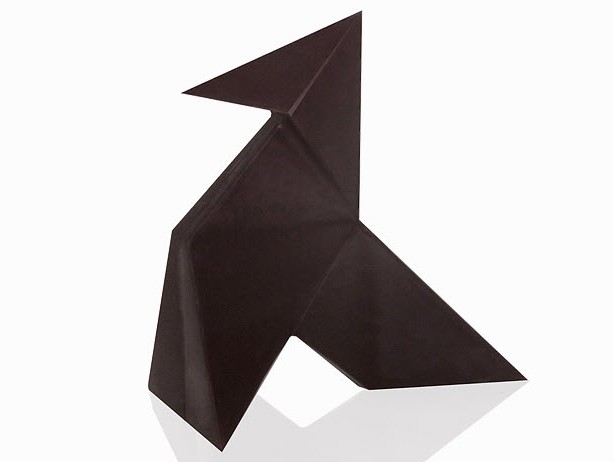
Not content with just designing chocolate tubes, matchsticks, tablets, and a carrousel, Potel has created a chocolate origami chicken for Easter. Marie-Hélène brought it out to show to us, but alas! we didn’t get a chance to taste it.

Chocolats Mococha
89, rue Mouffetard
75005 Paris
Tel.: 01.47.07.13.66
Métro: Censier Daubenton (Line 7)

Open Tuesday through Sunday from 11:00 a.m. to 8:00 p.m.

Christophe Potel’s chocolates will be for sale at Mococha until June 30.

* * * * * * *

We participate in Wanderfood Wednesdays. Head over there to explore food from around the world!

* * * * * * *

Like our blog? Join us on Facebook!

Swedish Products at the Paris Cookbook Fair

March 20th, 2013
Facebook Twitter Linkedin
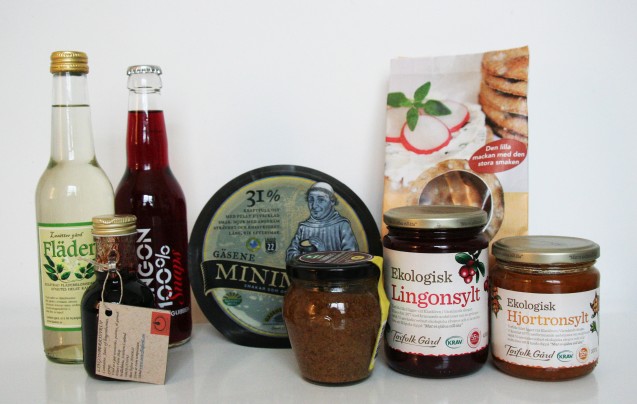
Assortment of Swedish foods

Assortment of Swedish Foods
Photograph by www.DiscoverParis.net

The Festival du Livre Culinaire was held from February 22 – 24 this year at the Carrousel du Louvre. While there I had the opportunity to visit the Husmansbord stand. The folks there had lots of Swedish food on display, and I got a chance to taste some. What a treat!

Carbonated Elderflower Beverage

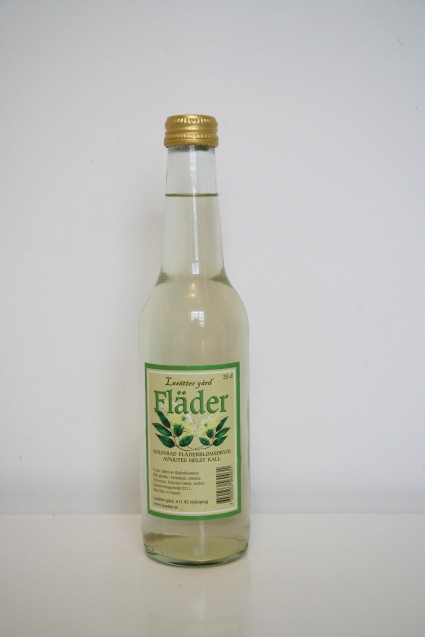
Fläder
Photograph by www.DiscoverParis.net

The first product was a soft drink called Fläder, which means “elder” in English. Sweet and refreshing, it was a carbonated elderflower beverage that tasted somewhat like lychee and pear.

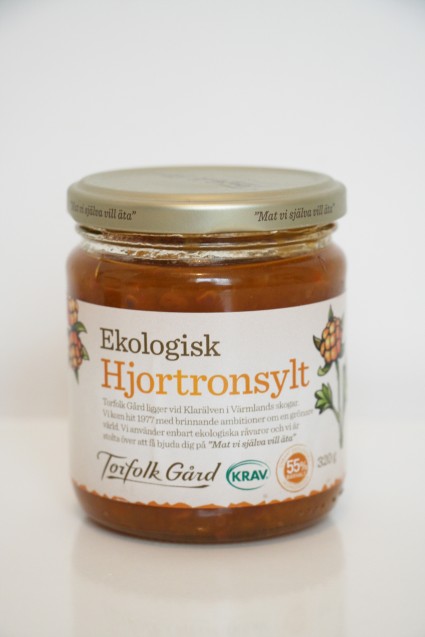
Hjortronsylt

Hjortronsylt
Photograph by www.DiscoverParis.net

I was given a jar of hjortronsylt (cloudberry jam) to take home and try. The jam had a golden color and contained lots of seeds and cloudberry pulp. It was intensely sweet and tasted mild like honey from the flowers of a meadow. I tried it with Scottish oatcakes and Minimunk cheese (described below) and found that it went well with both.

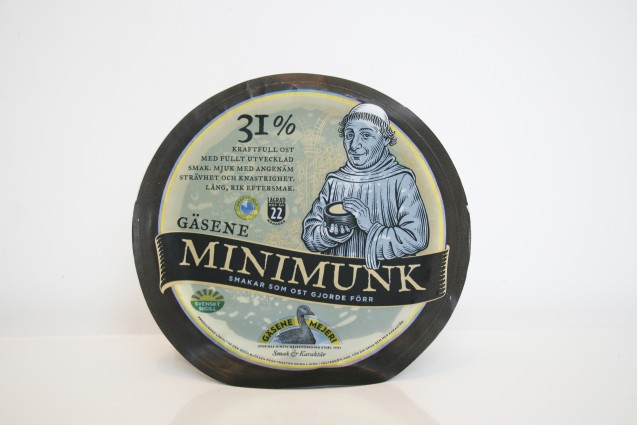
Minimunk

Minimunk
Photograph by www.DiscoverParis.net

And speaking of Minimunk cheese, I was given a portion to take home to try. This cheese has been produced from cow’s milk from farms within a 2 1/2 mile radius of the dairy. Aged at least 22 months, it contains 31% fat. The producer claims that it is a powerful cheese with fully-developed flavor, but having tasted French cheeses whose odors almost knocked me backward, I judged it to be fairly mild. Its taste was buttery and tangy at the same time. When I cut into it, it crumbled and flaked. I enjoyed it with cloudberry jam and also tried it with Majsknäcke (described below).

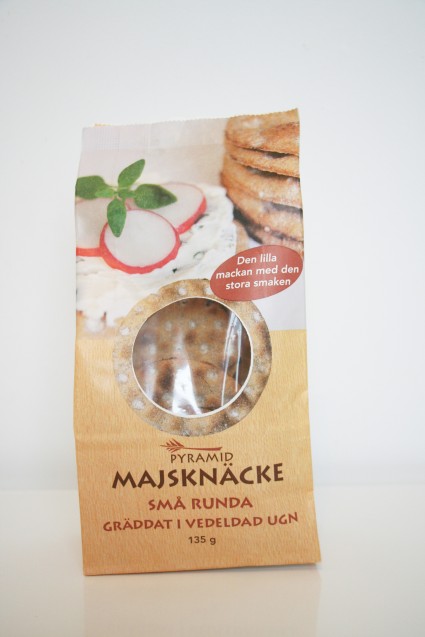
Majsknäcke

Majsknäcke
Photograph by www.DiscoverParis.net

Majsknäcke means corn crispbread in Swedish. These were very dry rounds of wholegrain corn and wheat flour that had been baked in a wood-fired oven. They had lots of crunch. I could taste the corn, but it wasn’t predominant. The crackers make an excellent accompaniment to the Minimunk and provide a crunchy counterpoint to the soft cheese.

Affären, a Swedish food store in Paris sells a wide variety of Swedish specialties, although they may not have these specific products. Call them to inquire!

* * * * * * *

We participate in Wanderfood Wednesdays. Head over there to explore food from around the world!

* * * * * * *

Like our blog? Join us on Facebook!
The Big Bang Boom Bloggers’ Meet-up and Tweeps’ Tweet-up Is Now History

March 14th, 2013
Facebook Twitter Linkedin
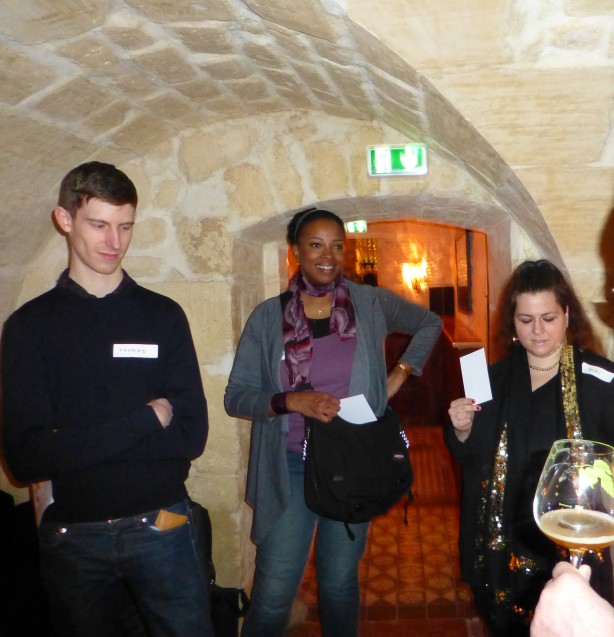
Mary Kay Bosshart - Adrian Leeds - Rosemary Kneipp - Tom Reeves -  Lisa Rankin - Thomas Butler - Donna Morris - Marie Gantois

Mary Kay Bosshart – Adrian Leeds – Rosemary Kneipp – Tom Reeves – Lisa Rankin – Thomas Butler – Donna Morris – Marie Gantois
Photograph by www.DiscoverParis.net

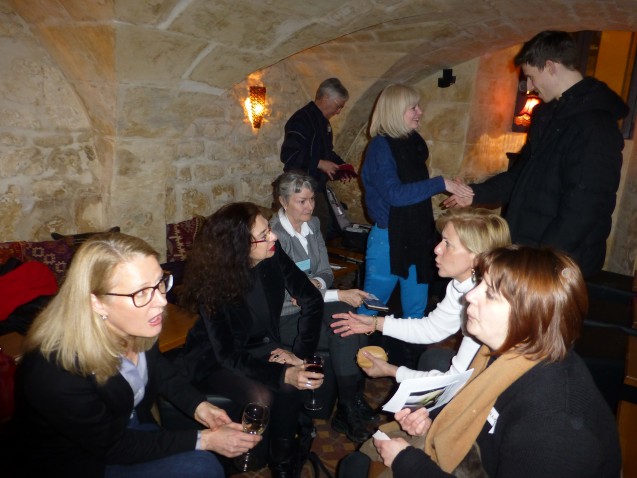
The Big Bang Boom Bloggers’ Meet-up and Tweeps’ Tweet-up is now history, and what an event it was! Bloggers and tweeps braved freezing weather and icy streets on Tuesday evening to attend the social mixer that we hosted at the Caveau Montpensier. A big thank-you goes out to Jeb, the owner, for providing space for us to meet, and to Priscila Pilon (Weekend in Paris) and Forest Collins (52 Martinis) for their invaluable advice and suggestions about how to organize this event.

Thomas Butler - Elizabeth Milovidov - Niki Borofski jpg

Thomas Butler – Elizabeth Milovidov – Niki Borofski
Photograph by www.DiscoverParis.net

The event was a great opportunity for people to come together, renew old acquaintances, and to make new ones! The following persons attended:

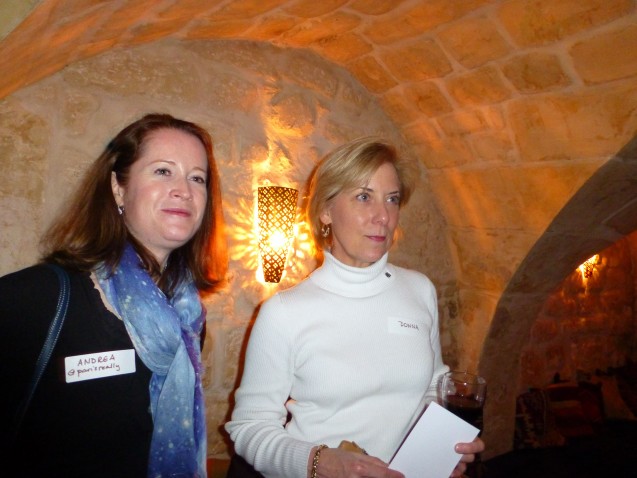
Andrea Carroll and Donna Morris

Andrea Carroll and Donna Morris
Photograph by www.DiscoverParis.net

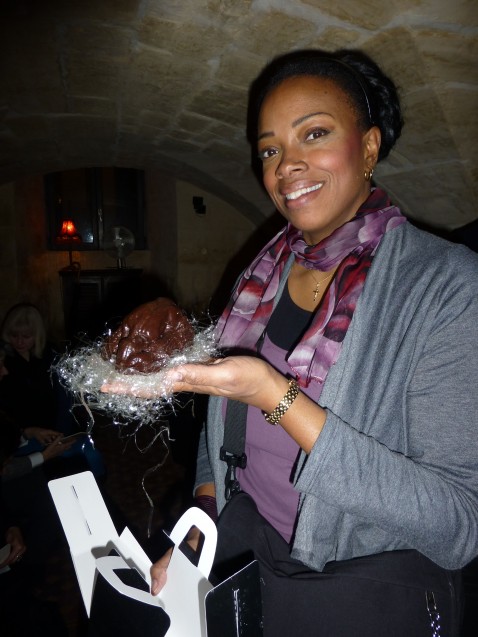
Elizabeth Milovidov with Chocolate Sculpture

Elizabeth Milovidov with Chocolate Sculpture
Photograph by www.DiscoverParis.net

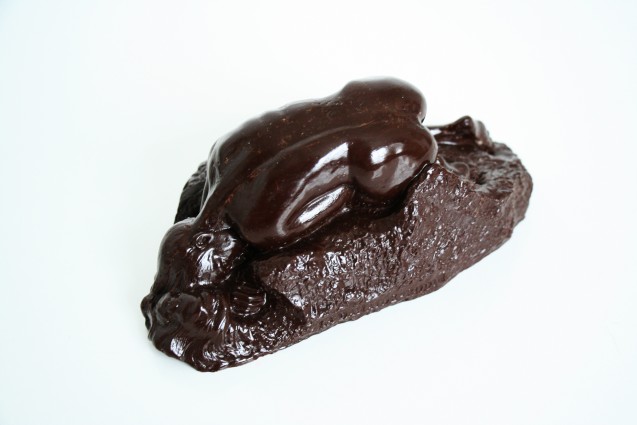
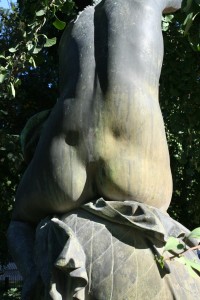
The big attraction for the evening—and probably the real reason why people showed up in spite of the freezing weather—was the chance to win a scale-model chocolate statue of Auguste Rodin’s La Danaïde made by chocolatier Jean-Charles Rochoux. Elizabeth correctly identified the statue from the intriguing image of its fesses (buttocks) that we posted on our Web site two weeks before the event. Congratulations, Elizabeth!

La Danaïde by Auguste Rodin

Chocolate Replica of La Danaïde by Auguste Rodin
Photograph by www.DiscoverParis.net

The giveaway was timed to promote the launch of our exciting new game called Guess the Fesses—it is an online quiz that tests your knowledge of sculptures that grace the Paris landscape. Designed to be fun, the correct answers are revealed immediately after each guess. At the end of the quiz, if you want to learn more about the sculptures, you can take our free virtual tour of Paris!

Guess the Fesses

Guess the Fesses
Mystery Fesses N° 1

Photograph by www.DiscoverParis.net

Now that your interest is piqued, click here to begin!

* * * * * * *

Like our blog? Join us on Facebook!
Tasting Cupcakes at the Paris Cookbook Fair

March 13th, 2013
Facebook Twitter Linkedin

The Festival du Livre Culinaire was held from February 22 – 24 this year at the Carrousel du Louvre. There were publishers from around the world displaying their culinary books and non-stop conferences and cooking demonstrations for three days.

Alisa Morov

Alisa Morov
Photograph by www.DiscoverParis.net

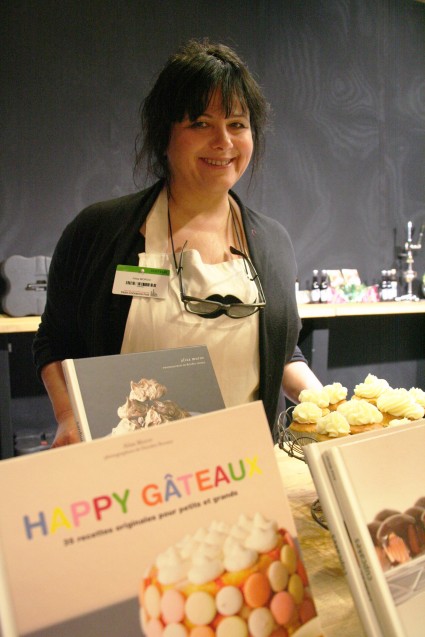
The first demonstration on Saturday featured Alisa Morov, an American who moved from Los Angeles to Paris in 2002 to found Sweet Pea Baking. Alisa showed the audience how to bake cupcakes. This may sound easy, but according to Alisa, it can be frustrating if you don’t combine the ingredients properly. Baking is chemistry, and Alisa explained how to do it correctly.

Sifting the Flou

Sifting the Flour
Photograph by www.DiscoverParis.net

Alisa said that some people who buy her cupcake cookbook (Sensational Cupcakes, Simon and Schuster, UK) complain that they don’t get good results. She said this is because they combine all of the ingredients at once, rather than following the step-by-step instructions. The trick is to combine the ingredients in stages so that they get a chance to react with one another chemically. And here was her big tip: use real buttermilk in the cupcakes, not a buttermilk substitute, such as regular milk mixed with lemon juice. Buttermilk, she said, is one of the ingredients that helps the cake rise.

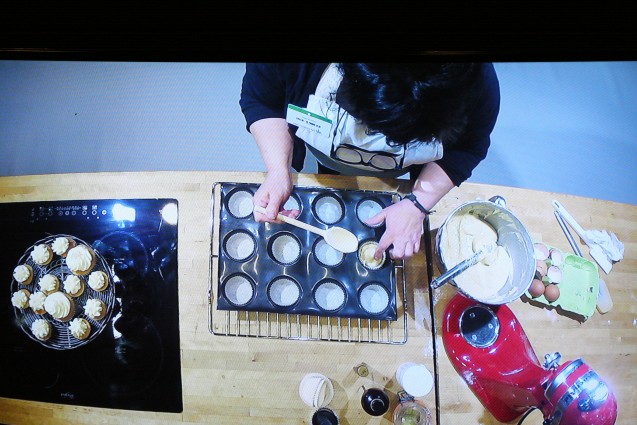
View from TV Camera

View from TV Camera
Photograph by www.DiscoverParis.net

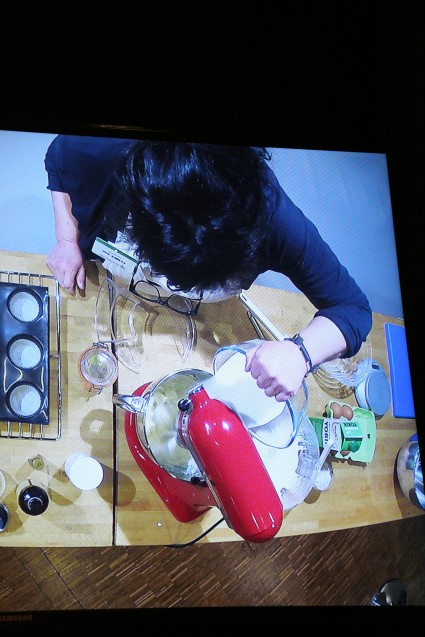
And so we watched as she added flour, baking soda, baking powder, sugar, real vanilla, eggs, butter, buttermilk…all in the correct order…

Putting Batter into the Cups - TV View

Putting Batter into the Cups – TV View
www.DiscoverParis.net

…and then put the batter into the cupcake pan and pop the pan into the oven. Each cup was lined with a paper cupcake liner. Alisa said that cupcake liners are not necessary with modern non-stick pans, but that people like to peel the paper liner off their cupcake…it’s like opening a gift!

Squeezing Pastry Bag

Squeezing Frosting from the Pastry Bag
Photograph by www.DiscoverParis.net

Then she made buttercream frosting and squeezed the frosting from a pastry bag onto a batch of cupcakes that had already been made (the other cupcakes were still in the oven)…

Cupcakes by Alisa Morov

Cupcakes by Alisa Morov
Photograph by www.DiscoverParis.net

…and distributed them. We each got one!

The cupcake tasted rich and buttery. It had wonderful flavor but was too rich for my taste. Alisa staunchly defends the use of butter and heavy cream in her cupcakes and frostings, and she made comments during her presentation indicating that these products are not meant to be diet food. I found myself wondering why, in this era when Americans are becoming alarmingly obese from eating fat-filled and sugary foods, Alisa appears to blithely ignore the dangers that fat and sugar pose to health…clogged arteries and diabetes…just to name two.

As is true for everything, moderation is key to consuming these cupcakes—particularly if you have a weakness for sweet and buttery baked goods!

* * * * * * *

We participate in Wanderfood Wednesdays. Head over there to explore food from around the world!

* * * * * * *

Like our blog? Join us on Facebook!
A Fashion Cruise along the Canals of Paris

March 10th, 2013
Facebook Twitter Linkedin
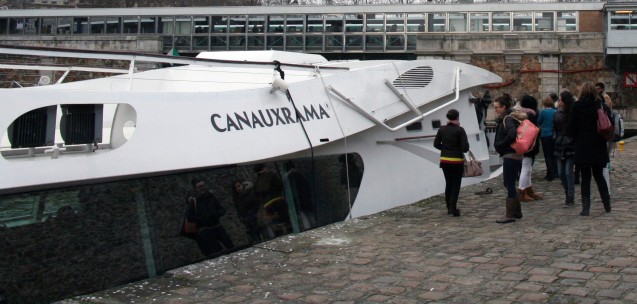
Our Boat

Our Boat
Photograph by www.DiscoverParis.net

On Saturday, March 2 I stepped aboard a boat for a fashion cruise down the central canal of Paris. Organized by Seine-Saint-Denis Tourisme the 3½-hour cruise was an opportunity to learn about the history of the textile industry along the canal as well as listen to two presentations about fabric design and watch a parade of fashions created by a young designer.

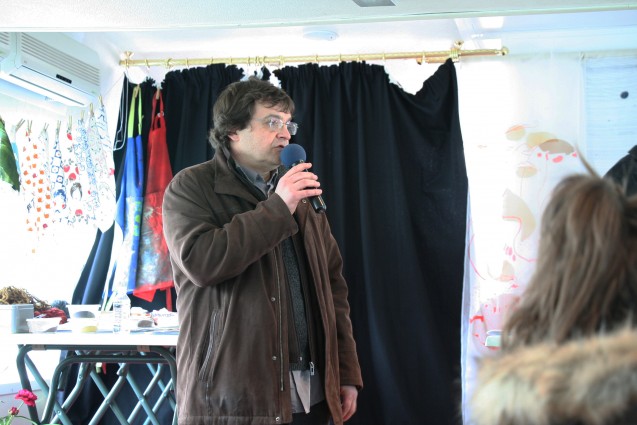
Patrick Bezzaloto

Patrick Bezzaloto
Photograph by www.DiscoverParis.net

Our boat left a dock in the town of Pantin and proceeded southward along the Canal de l’Ourcq towards Paris. Along the way, architect and historian Patrick Bezzaloto gave running commentary about the industrial buildings that we passed by. For example, he pointed out the blanchisserie Elis, a company that furnishes uniforms for the hotel and restaurant industry, and the usine Lefaux that once manufactured jute bags used for packaging agricultural products.

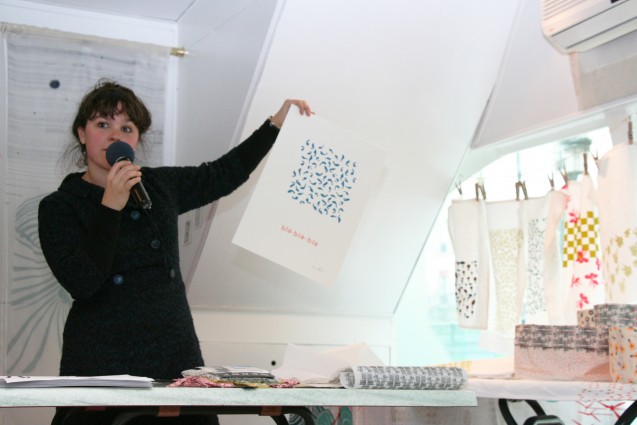
Alice Laroche

Alice Laroche
Photograph by www.DiscoverParis.net

Next, fabric designer Alice Laroche gave a demonstration of serigraph printing, a method of using a stencil to apply ink onto fabric. Some of her clients include Maison Georgette (accessories and decoration), Tout Compte Fait (children’s wear), LeSportsac (handbag, luggage, and accessories), Obaïbi (infant wear), and Leroy Merlin (home improvement).

Caroline de Tugny

Caroline de Tugny
Photograph by www.DiscoverParis.net

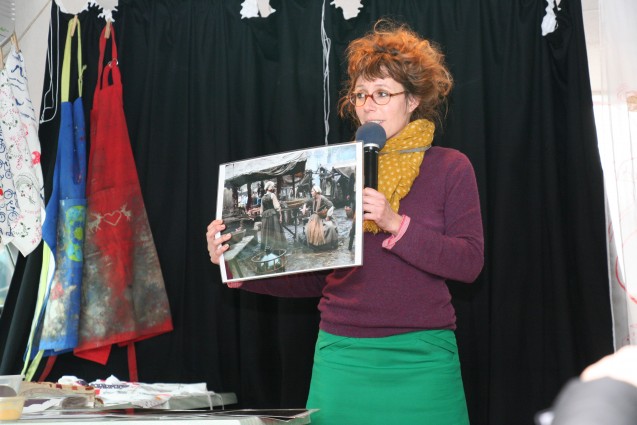
Textile designer Caroline de Tugny gave a talk about her work in creating period costumes for the cinema. She has worked for such productions as Le Pacte des Loups by Christophe Gans, Le Parfum by Jean-Jacques Annaud, and Potiche by François Ozon. She is currently working on Luc Besson’s new film Malavita.

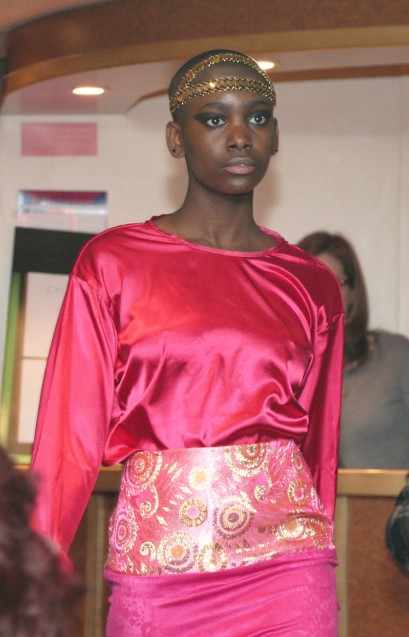
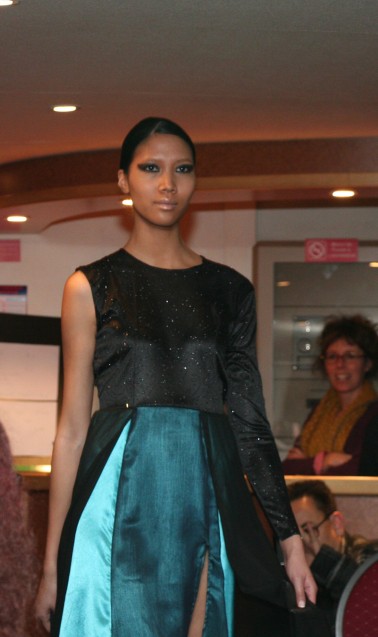
After the boat passed through the Bassin de la Villette, we entered into the Canal Saint Martin. At that point the fashion show began. Models paraded down the central isle of the boat wearing the latest designs by 19-year-old stylist Fahaid Sanober.

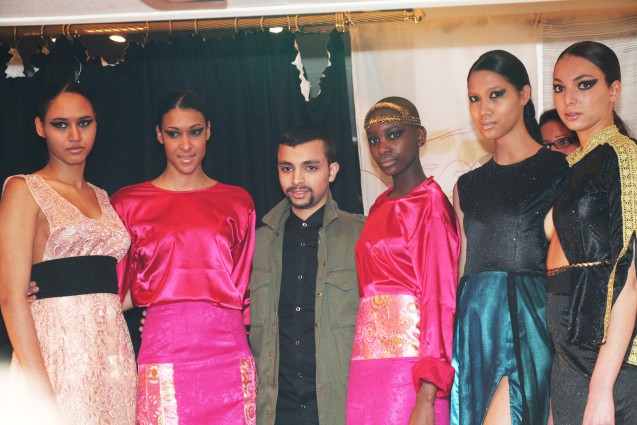
Fahaid Sanober and His Models

Fahaid Sanober and His Models
Photograph by www.DiscoverParis.net

Of Pakistani and Moroccan origin, Sanober hails from the nearby town of La Courneuve. He became interested in fashion at the age of 14 when he saw a show on television of the fashion designs of John Galliano. He declares that he finds inspiration in strong, independent women who made an impact in history, such as Josephine Baker and Bonnie Parker.

Disembarking

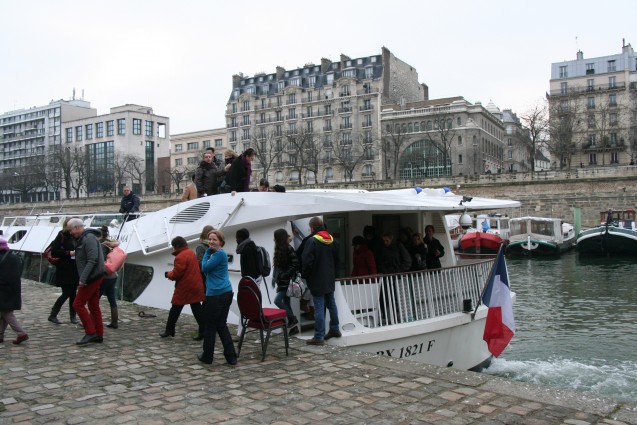
Following the fashion show, our boat docked at the Port de l’Arsenal, just south of Place de la Bastille. It was a fascinating excursion!

* * * * * * *

Like our blog? Join us on Facebook!