Wandering Educators, “a global community of informed, engaged educators who share their travel experiences, explore their fellow wandering educators’ travel experiences, and dialogue about international education and travel,” has just published an interview with me. A book review of Paris Insights – An Anthology is scheduled to follow soon. Thanks to Dr. Jessie Voigts for her interest in Paris Insights and for asking me to share information about it with the Wandering Educators community!
Wandering Educators Interviews Tom Reeves
November 21st, 2010La Cuillère Suisse
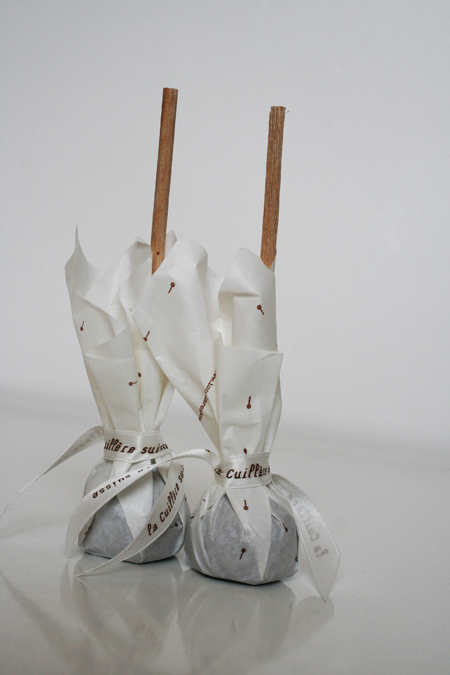
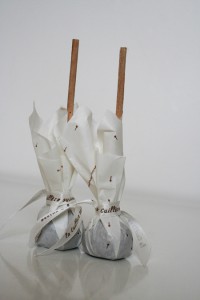
November 17th, 2010One of the stands that we visited at the recent Salon du Chocolat was La Cuillère Suisse. Founded by two women, Barbara Delsaux and Valériane Tinguely, the company specializes in one form of chocolate, and one form only. It is a hardened sphere of chocolate, roughly 1 1/2″ in diameter, mounted on a stick like a lollipop. The idea is to dip the chocolate ball into a cup of hot milk and stir. Then — voilà — you have a cup of hot chocolate!
The chocolate for the Cuillère Suisse is produced by Durig Chocolatier of Lausanne, Switzerland.
We took two cuillères home with us to test them out. We each poured 7 oz of hot milk into a cup, dipped the chocolate into the milk, and stirred. Sure enough, the chocolate began to dissolve into the milk. At one point, as the chocolate melted, we tasted it straight from the lollipop. It was wonderfully sweet, dark, and rich. However, when we finished stirring and tasted the beverage, we found the flavor disappointingly weak. We think that a maximum of 4 oz of milk is required for a rich, thick serving of hot chocolate.
Priced at four Swiss francs a pop (pun intended!), the Cuillère Suisse is an expensive treat. I believe that one would do better to buy a jar of chocolate shavings from any shop that sells chocolate in this form. A couple of heaping tablespoons in a cup of hot milk will make an entirely satisfactory rich, hot chocolate without the gimmickry of a wooden swizzle stick stuck into a chocolate ball.
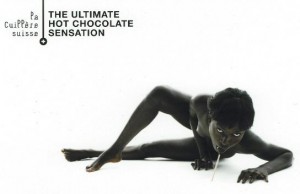
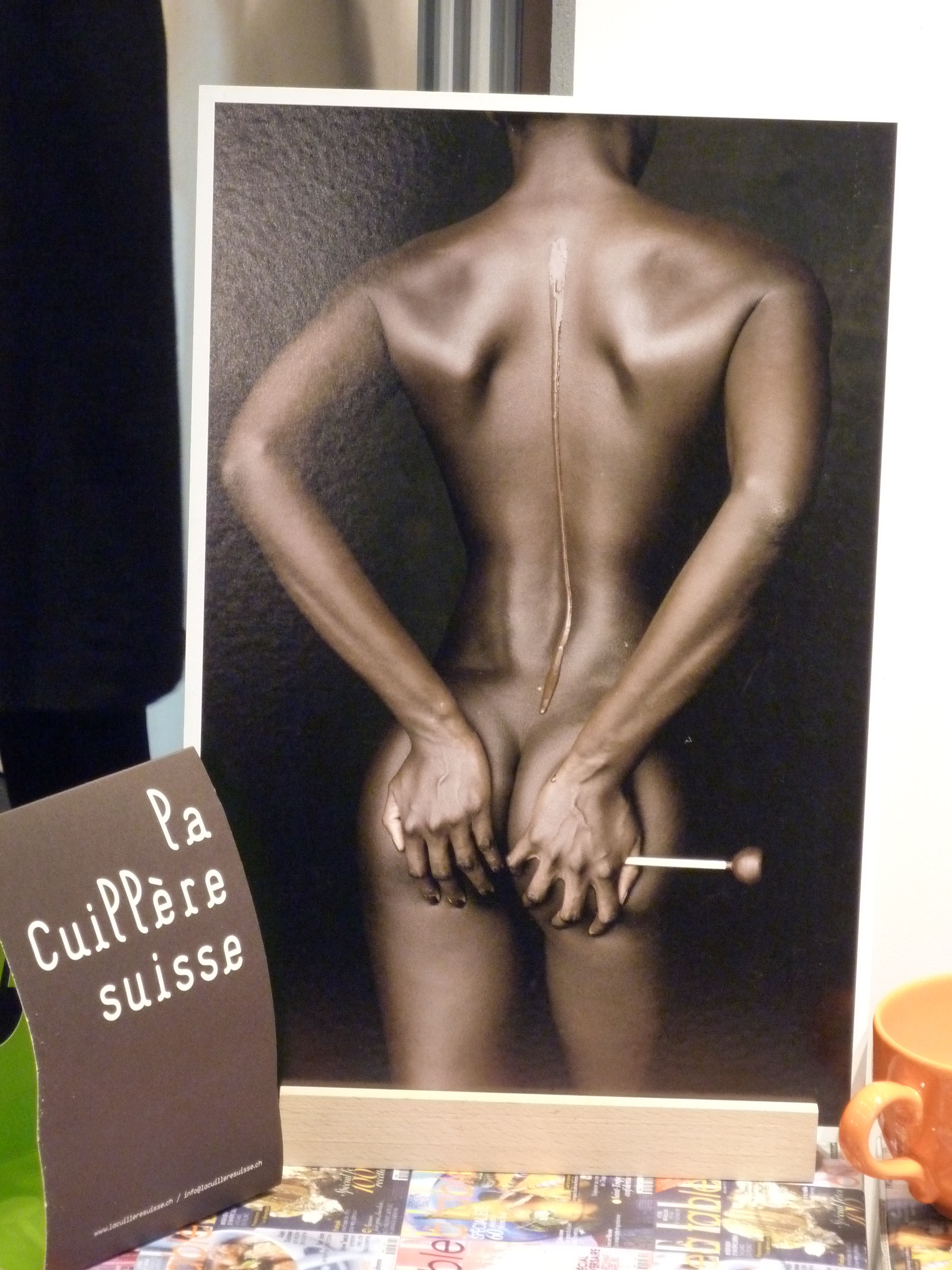
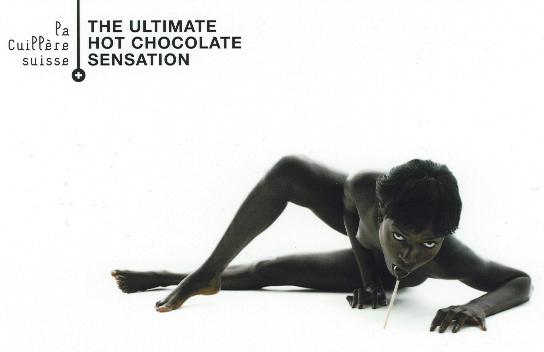
Perhaps the Cuillère Suisse founders realized that in order to sell what is, in my mind, an expensive, impractical product, they needed to launch a campaign to sex up its image…literally! At their stand they distributed postcard-sized photographs of a stark-naked black woman in various erotic and sexually suggestive poses. One image displays what appears to be a rivulet of melted chocolate trickling down her spine. At the same time, she is gripping her buttocks and holding a Cuillère Suisse.
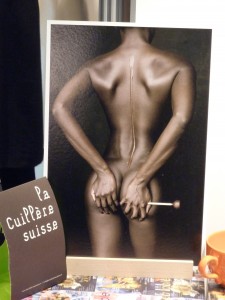
I think that most of the images on these postcards are inappropriate for promoting what is, after all, just a beverage. Also, the fact that yet another chocolate company is using a naked, black woman to advertise its product is irksome. (Suchard, for example, often uses naked, black women to lend an “exotic” aura to its chocolate.) Moreover, the use of this model in these immodest poses suggests to me that La Cuillière Suisse has advanced beyond the portrayal of erotic nudity into pornographic nudity to promote its product.
We participate in Wanderfood Wednesdays. Head over there to explore food from around the world!
Like our blog? Join us on Facebook!

Dorothy’s Gallery Hosts Artistic Mix
November 16th, 2010
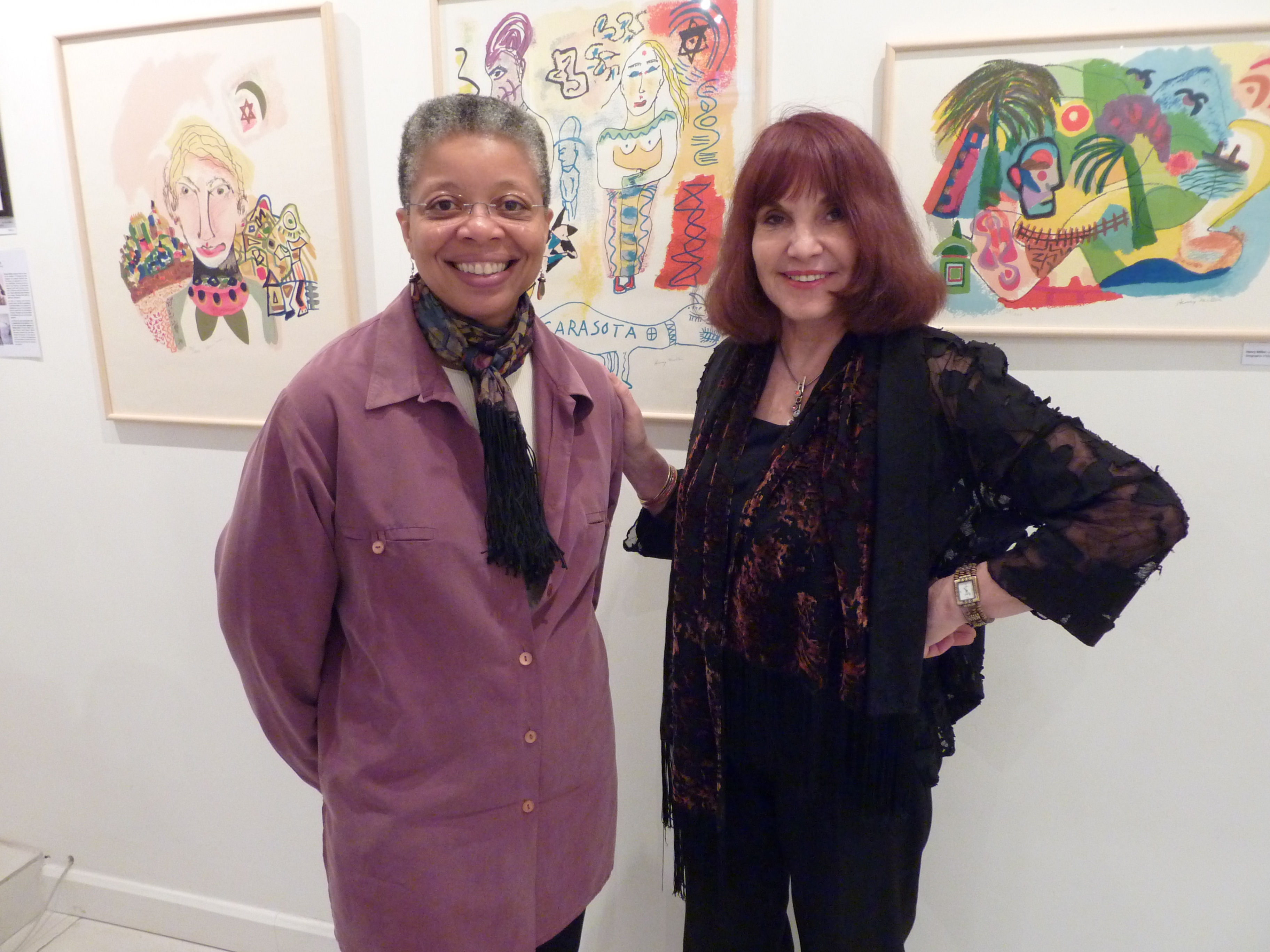
Monique Wells, Co-founder of Discover Paris!
and Dorothy Polley, Owner of Dorothy's Gallery
in front of works by Henry Miller
(c) Discover Paris!
November at Dorothy’s Gallery finds Dorothy hosting an interesting mix of artists, from abstract to surrealist, from figurative to photographic. The exposition, entitled De Henry Miller aux jeunes artistes d’aujourd’hui, features eight artists, and includes three serigraphs by the late Henry Miller. Known primarily as a novelist, Miller was also a painter who turned out several thousand watercolors in his lifetime.
The exposition contains three photographs of Miller taken by the late French photographer Denise Bellon. Two show Miller with his third wife Eve McClure, while the third shows him with French writer Joseph Delteil.
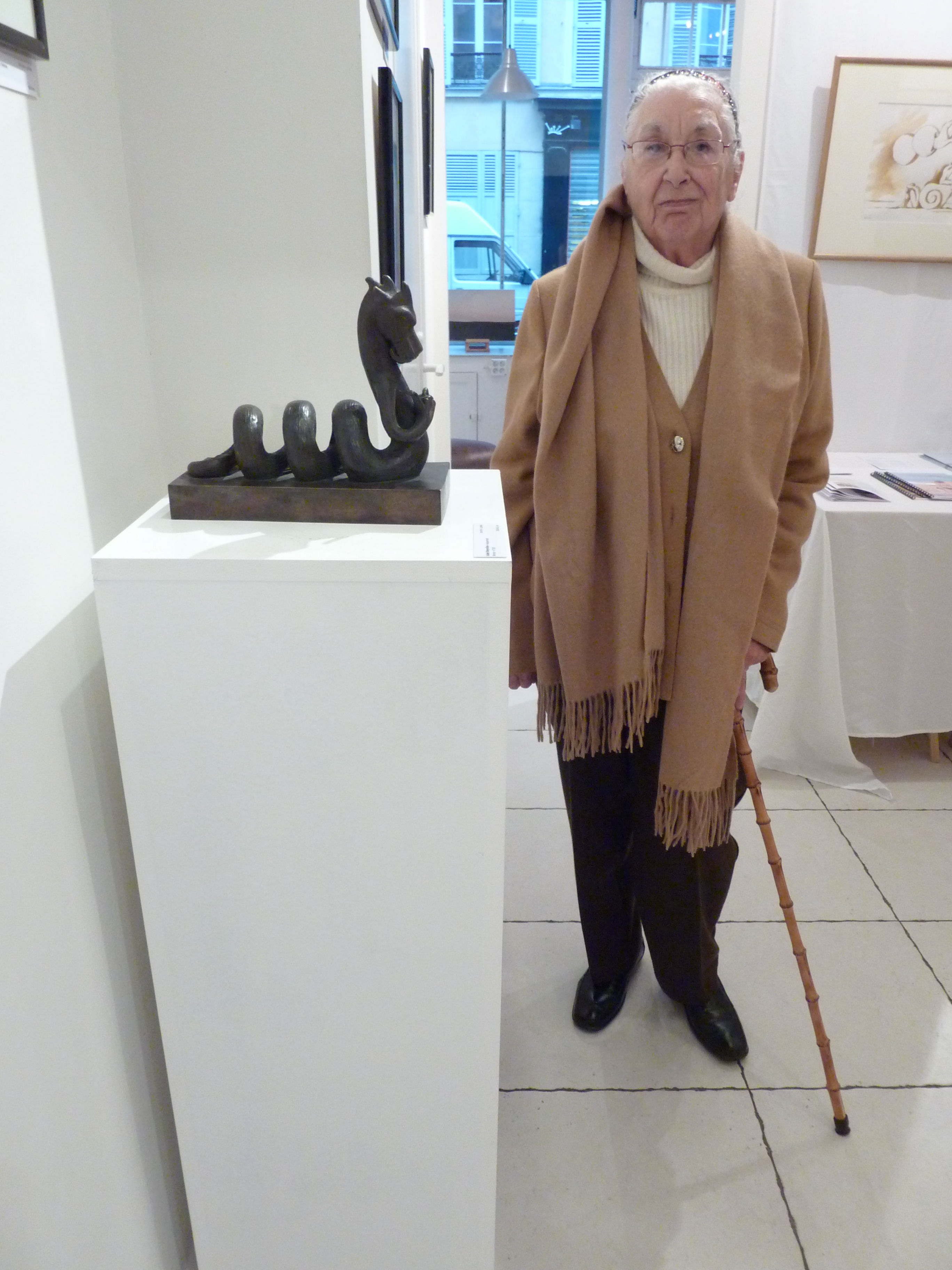
Isabel Meyrells produces sculptures in bronze and terra cotta. Ten of her works are placed around the gallery and seem to pop into and out of one’s visual field to demand attention like little elves in a forest. Her Autoportrait is a bronze Chinese dragon tamping his pipe with his finger. When I asked her why she thought that the dragon resembled her, she replied that this was a good dragon that inspires good sentiments and does not frighten. In another room, her sculpture of a dolphin shedding large tears as it climbs a flight of stairs gives one pause for thought.
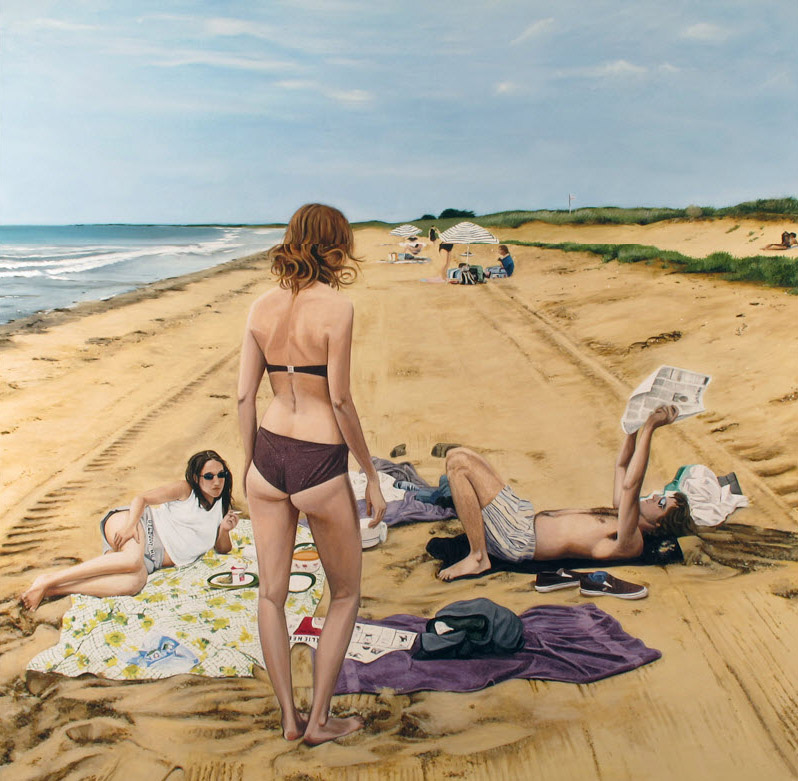
Thomas Levy-Lasne is the only artist at this exposition who represents figurative painting. He produces images with ambiguous themes, such as Marie, a comely, large-breasted woman dressed only in denim pants. While one might be tempted to think that she is available, the artist explained to me that her facial expression indicates she does not want to be desired. Levy-Lasne’s Vacance portrays a group of three young people awkwardly positioned on a sandy roadway on a beach. The idea that they might actually be enjoying their vacation seems improbable.
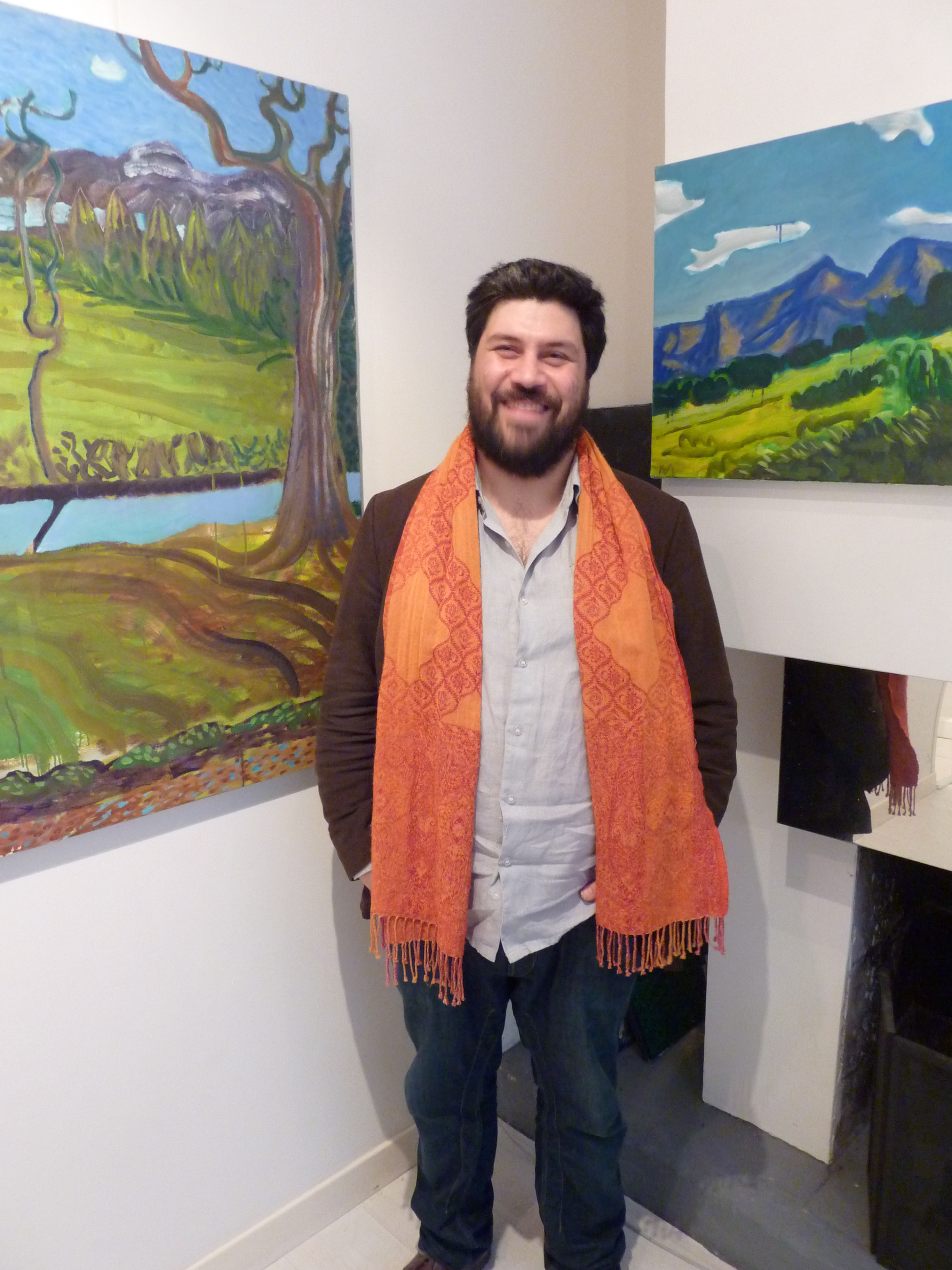
Mariano Angelotti paints landscapes devoid of people. His haunting Piscine, a scene that he painted when he was in the south of France, depicts a swimming pool that overlooks the Mediterranean Sea on a moonlit night. His painting Route portrays a two-lane highway thrusting through the Patagonian countryside, giving a keen impression of the remoteness of that part of the world.
The three other artists, with whom I did not get a chance to talk, are Artur do Cruzeiro Seixas, whose surrealist images show humans and animals in various stages of transformation; Benjamin Marquès, whose imaginary cartographs conjure up images of continents that might be very dangerous places to visit; and Emmanuelle Fèvre, whose painting entitled Obama for President recalls those hopeful days in 2008 when change was in the air.
Dorothy’s Gallery
27, rue Keller
75011 Paris
Metro: Bastille
Open from Wednesday to Saturday from 1:00 p.m. to 7:00 p.m. and Tuesday and Sunday from 4:00 p.m. to 7:00 p.m.
The exhibition ends on November 29, 2010.
Chef Tetsu Goya
November 13th, 2010Chef Goya opened L’Epicure 108 restaurant in 1992, serving French and Alsatian cuisine. He has two seasonal menus, one for spring and the other for winter.
He enjoys preparing wild game for his customers—game fowl in September and October and large game in November and December. We recently dined there on Scottish grouse and truffled beef tail, and wrote a review about it for this month’s Le Bon Goût.
Access to the article is available to paid subscribers of our newsletter Paris Insights. To enter a subscription, click here.
Like our blog? Join us on Facebook!
Fresh-Roasted Coffee at Brûlerie Daval
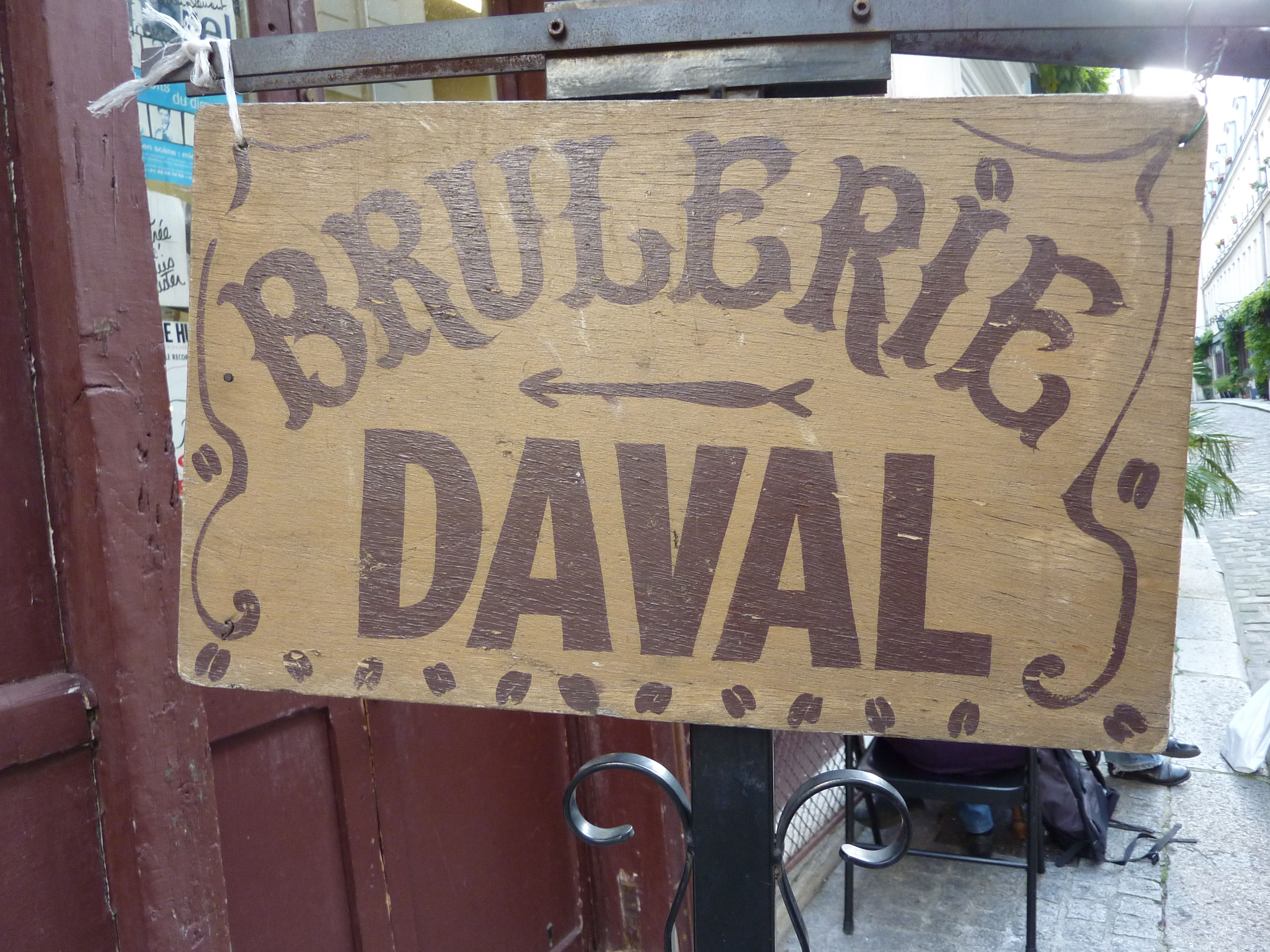
November 10th, 2010Passersby on rue Daval will not readily spot this shop selling fresh-roasted coffee. To find it, they have to turn down cour Damoye, a beautiful little passageway that leads to place de la Bastille.
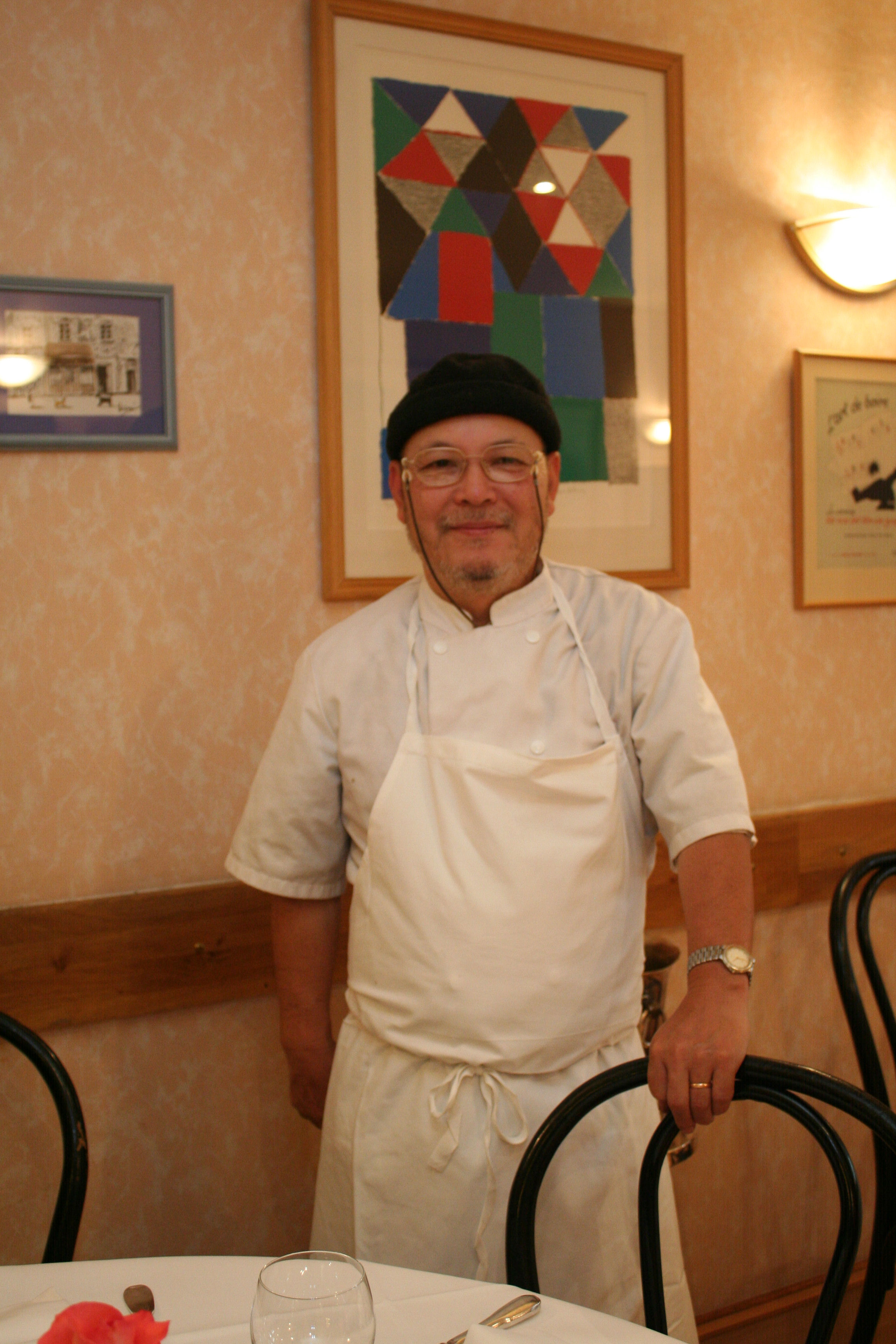
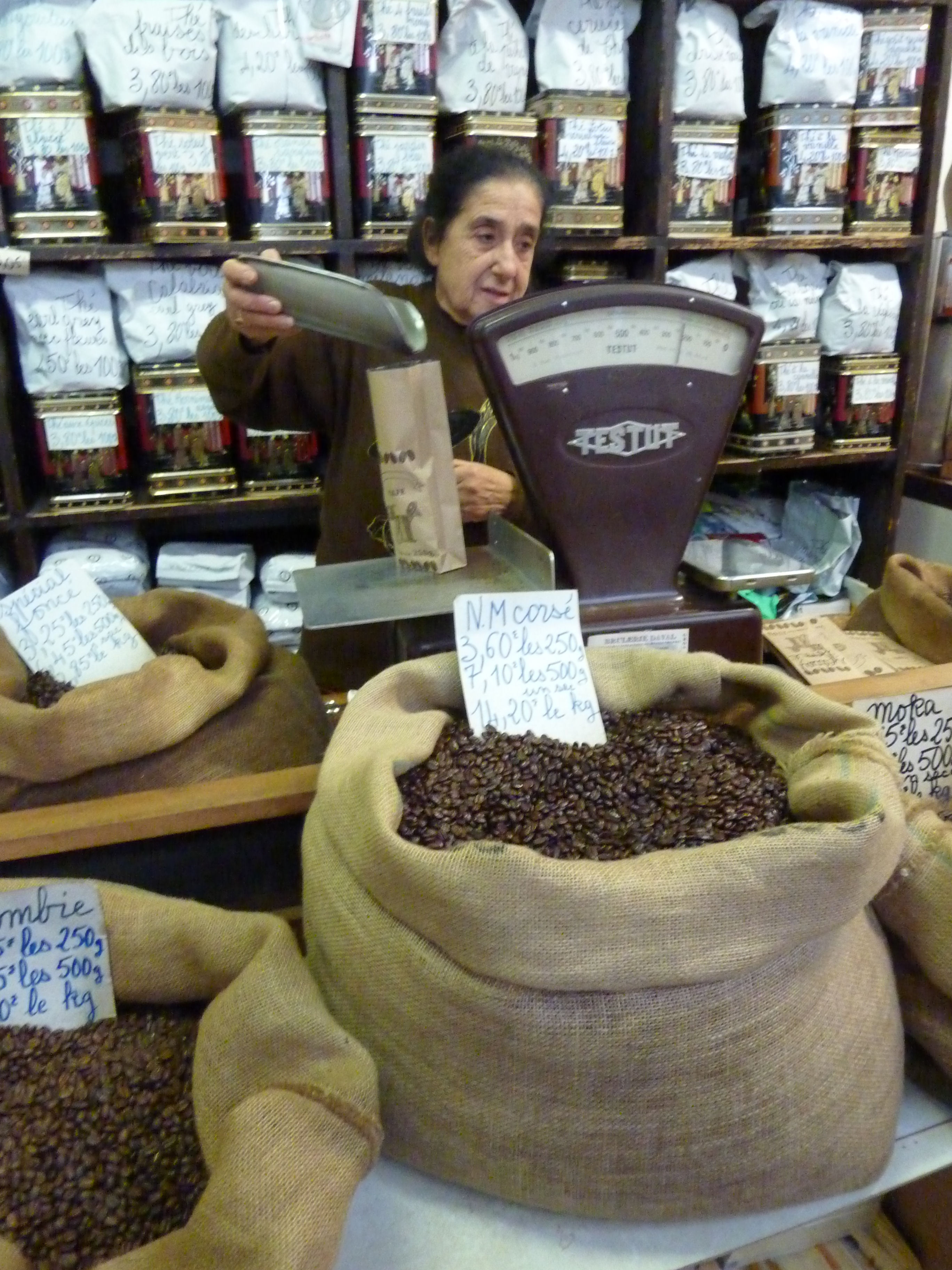
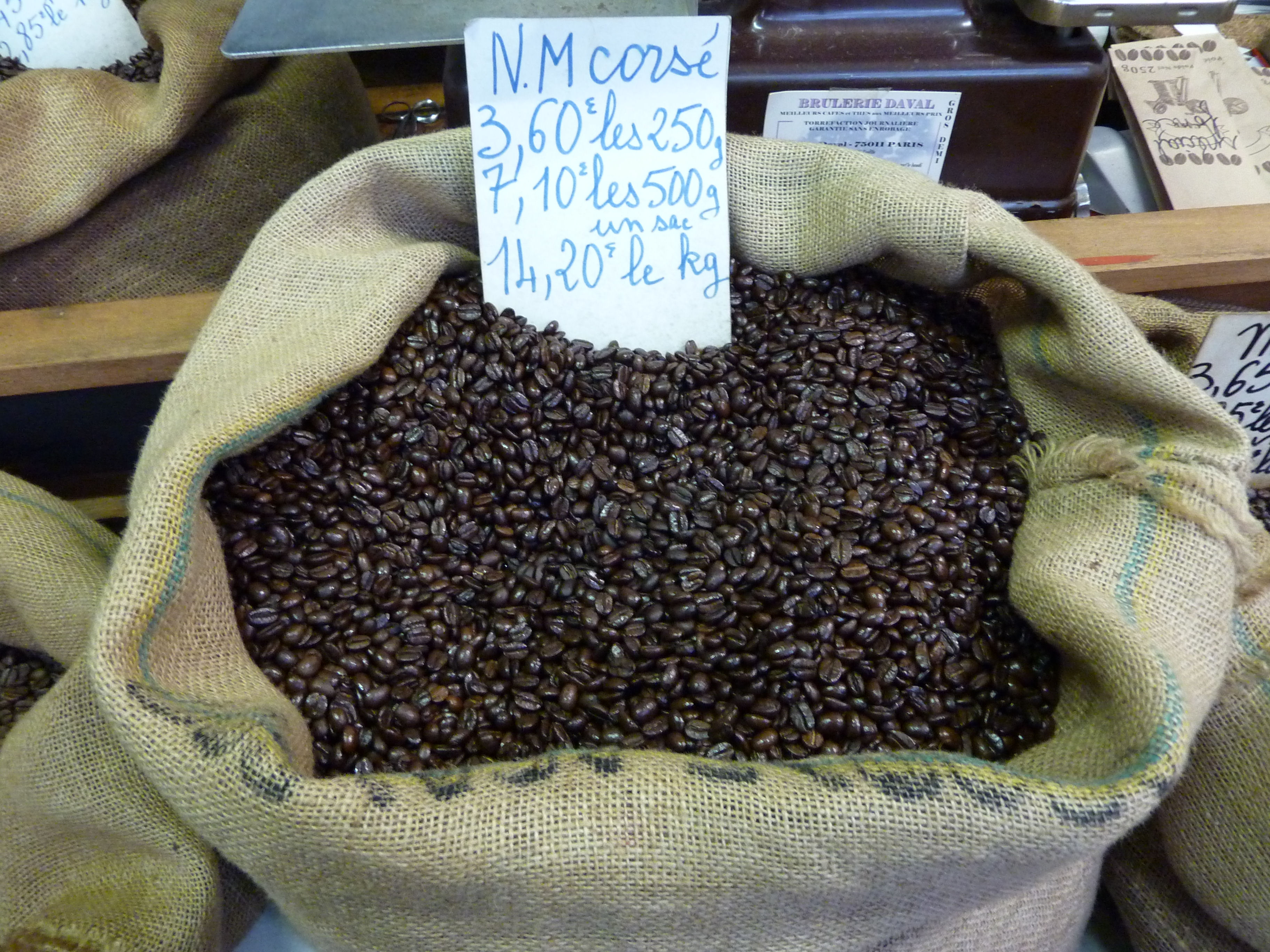
Madame D’Amico opened the Brûlerie Daval with her husband shortly after the end of WWII. It has an old-time look, with open bags of roasted coffee beans on the counter displaying signs with hand-printed labels indicating the names and prices of the coffee. Bins of tea rise up on shelves behind the counter. Inside the shop there is a small table that can accommodate two coffee drinkers. A few tables and chairs stand on the sidewalk terrace in front of the store.
Madame D’Amico sells mostly blended coffees. She states that it is almost impossible to find an unblended coffee that is perfectly equilibrated: these may have too much perfume or too much acidity; if they have good flavor, they are not strong bodied; if they are strong bodied, they don’t have enough flavor; and so on.
I purchased 250 grams of “Nouveau Mélange Corsé” for 3.60€. Madame D’Amico would not divulge the specific coffees in the blend, stating only that one of the coffees was from Central America and the other was a Moka. I can understand her reticence at revealing the recipe. After all, top chefs do not want to reveal their secrets either!
Nouveau Mélange Corsé is an Italian roast—its beautiful dark-brown beans glisten with oil. Back at the apartment, I ground the beans and prepared the brew in a French coffee press. The coffee had a bold, robust flavor. As I drank it, I remembered learning that when coffee beans are dark roasted—as these are—it is mostly the roast that one tastes, not the beans themselves.
The second time I went in to buy coffee, Madame D’Amico quoted a few lines of poetry from Rimbaud and expressed her admiration for Beaudelaire. I ordered the “W. goût délicieuse,” which is a lighter roast than the Nouveau Mélange Corsé. I asked Madame D’Amico what the “W” stood for. She said that it is simply the name that she gave it so that customers could identify it if they wanted to order it again. I have not had a chance to brew and taste this one, as I have not yet finished drinking the Nouveau Mélange Corsé.
Madame D’Amico told me that she gets lots of customers from Japan. Apparently, her shop has been listed in Japanese guidebooks and reviewed in the Japanese press. She also said that a number of customers have requested that she ship coffee to them.
Brulerie Daval
12, rue Daval
75011 Paris
Tel.: 01.48.05.29.46
Open every day except Mondays from 10 a.m. to 1 p.m. and 3 p.m. to 7 p.m.
We participate in Wanderfood Wednesdays. Head over there to explore food from around the world!
Like our blog? Join us on Facebook!
Discover Paris! and the Toni Morrison Society Conference in Paris
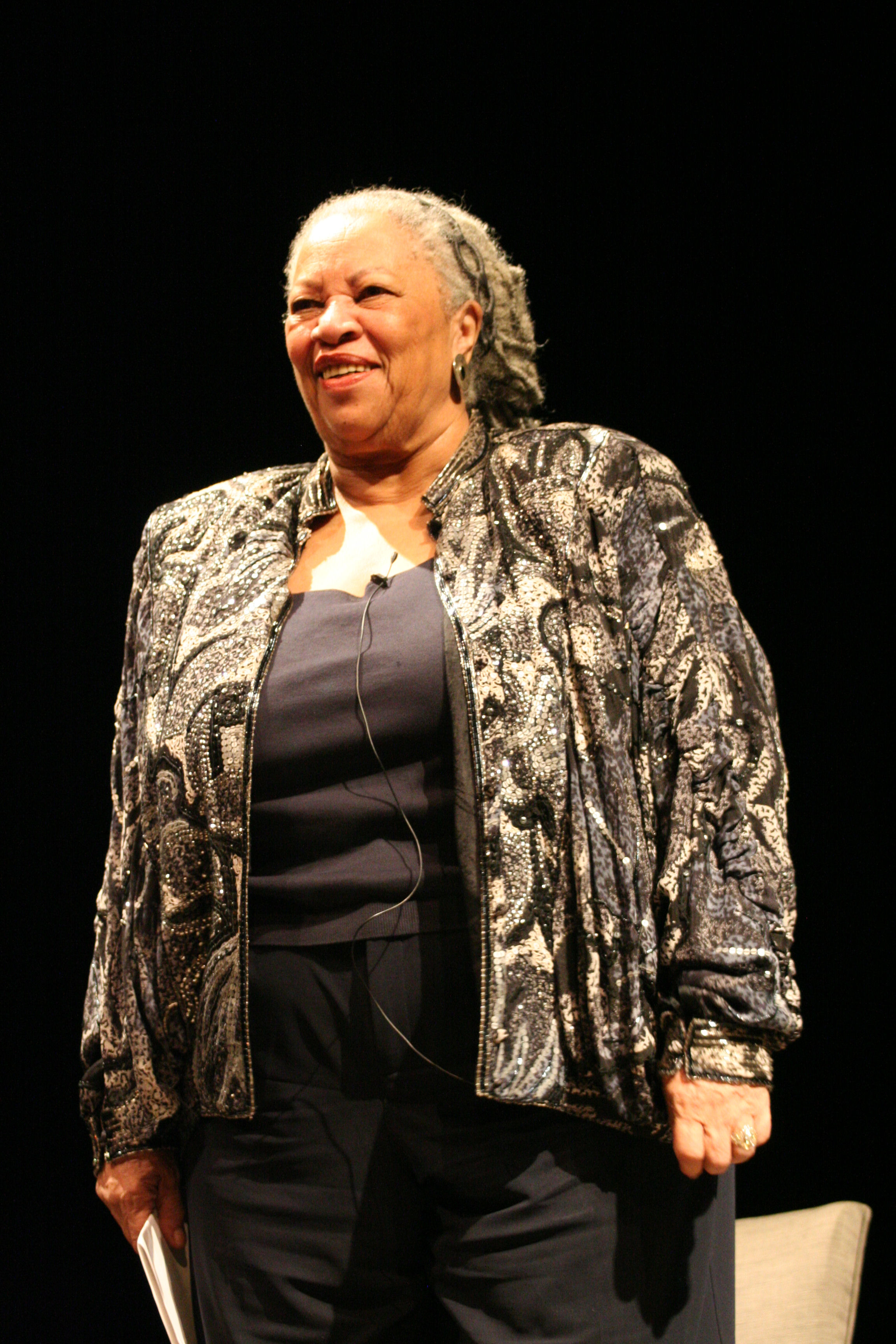
November 7th, 2010The Toni Morrison Society is holding its sixth Biennial Conference in Paris, France from November 4-7. Called Toni Morrison and Circuits of the Imagination, it is the first conference that the group has hosted outside the United States in its seventeen years of existence. Highlights of the event were the induction of Toni Morrison into the Legion of Honor; her receipt of the “Medaille de Grand Vermeil” from the City of Paris; a celebration of the 40th anniversary of the publication of Morrison’s novel The Bluest Eye; and the dedication of a bench on rue Louis Delgrès, which is one of the sites in Paris where the city commemorates the abolition of slavery in France’s colonies.
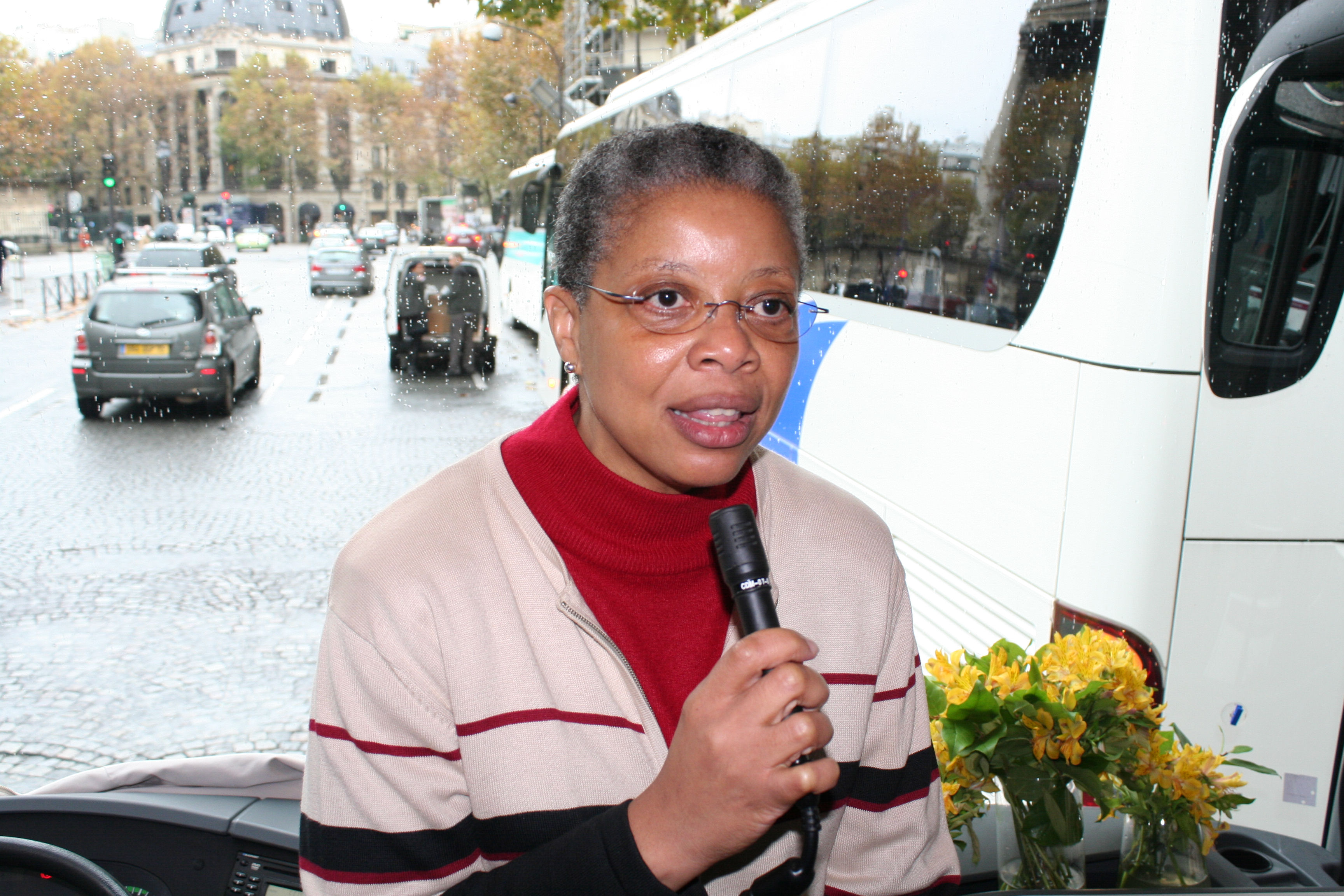
Discover Paris’ role in the four-day conference was to give a tour of sites relevant to African / Diaspora history in the French capital. Monique Y. Wells, co-founder of the travel planning service, provided commentary to approximately one-third of the conference attendees during a three-hour bus tour that covered the city yesterday. Wells not only reminded participants of events such as the 1956 Congress of Negro Writers and Artists that was held at the Sorbonne, but also regaled the group with little-known facts about African-American personalities who lived in Paris during the 20th century. In particular, the story of painter Beauford Delaney’s final “Paris years” struck a chord with the group. Wells recently founded a non-profit association called Les Amis de Beauford Delaney to resurrect the memory of this painter.
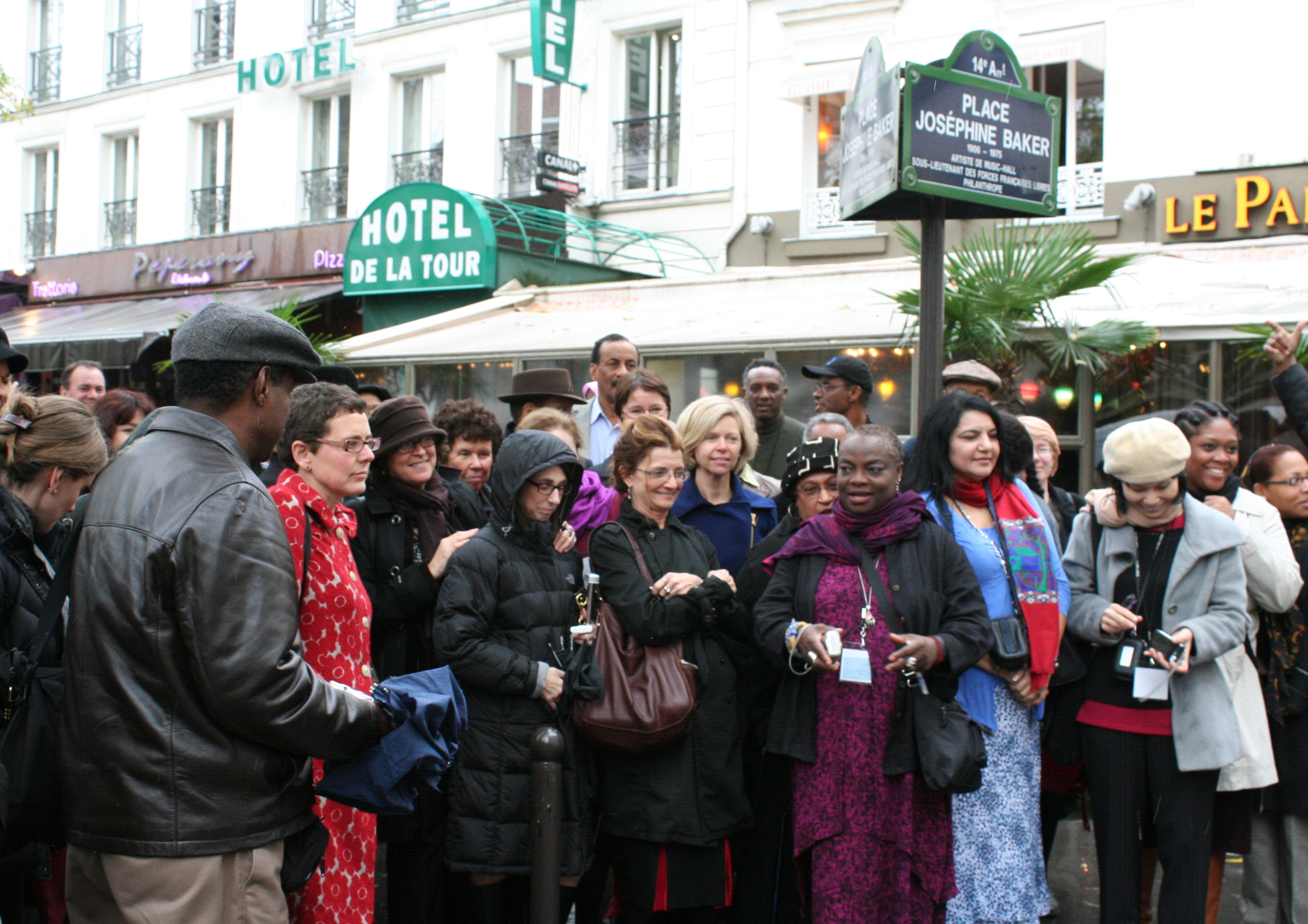
Though it rained for much of the tour, the skies cleared sufficiently to allow the group to stop at Place Josephine Baker for photographs. Upon reboarding the bus, Wells relayed the story of Baker’s last performance run in Paris, which took place at the Bobino theater just a couple of blocks away from the square that now bears her name.
Among the various services that it offers, Discover Paris! has been providing private walking tours, self-guided itineraries, museum visits, and excursions on African-American history in the French capital since 2000. This set of activities has recently been rechristened Entrée to Black Paris™. Its new mission is to increase awareness of the contribution of all African Diaspora peoples to the richness and diversity of contemporary life in the French capital.
When asked to describe her reaction to the opportunity to participate in the Toni Morrison Society conference, Wells said, “It is an honor and a privilege to contribute to this historic event in support of Pulitzer Prize and Nobel Prize winner Toni Morrison and the Toni Morrison Society. Since 2001, Discover Paris! has been working with the conference organizer Professor Janis Mayes on her Paris Noir summer study abroad program. We are very pleased that she selected us to be a part of this program as well!”
Delicious Memories of the Salon du Chocolat
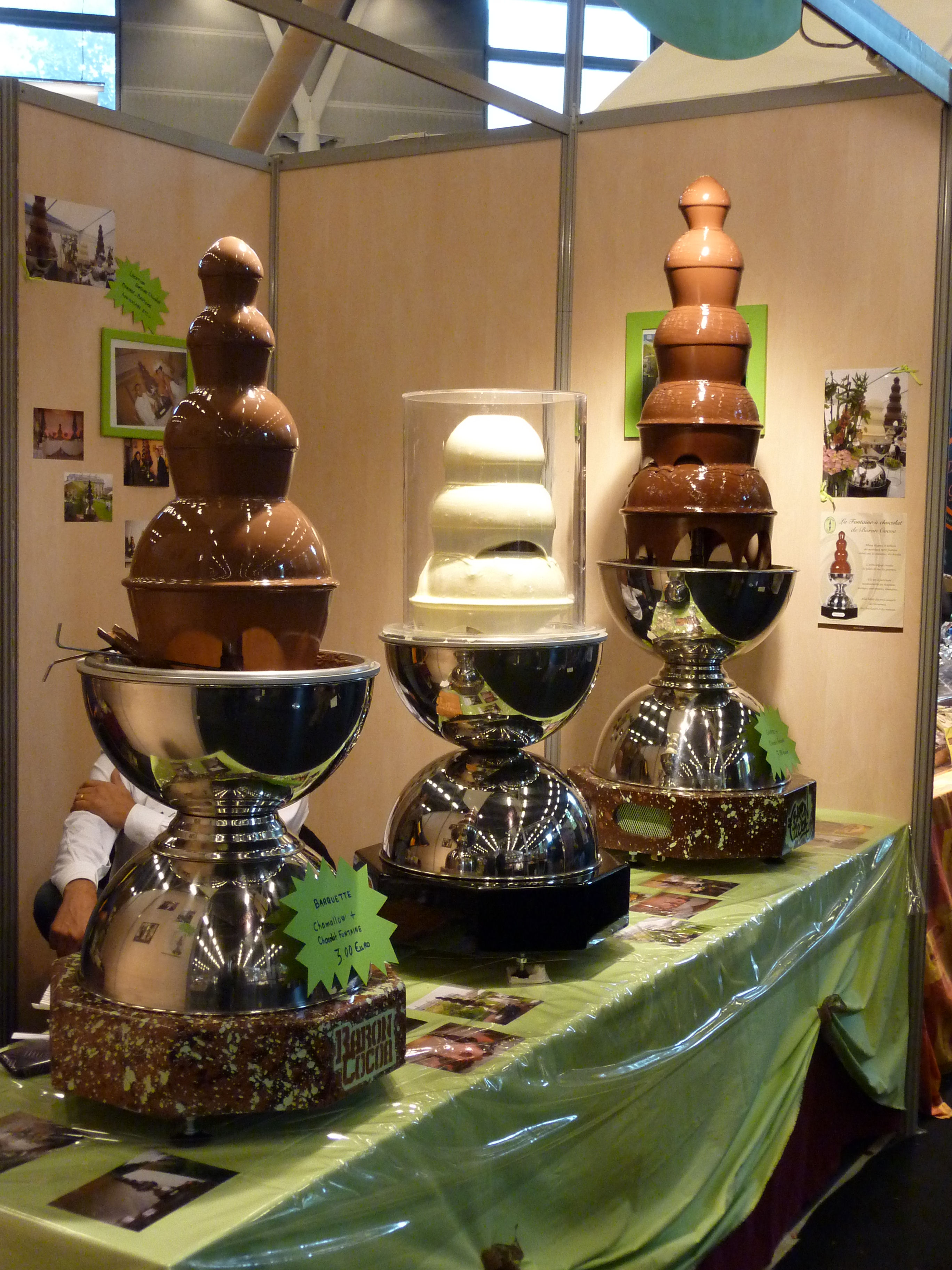
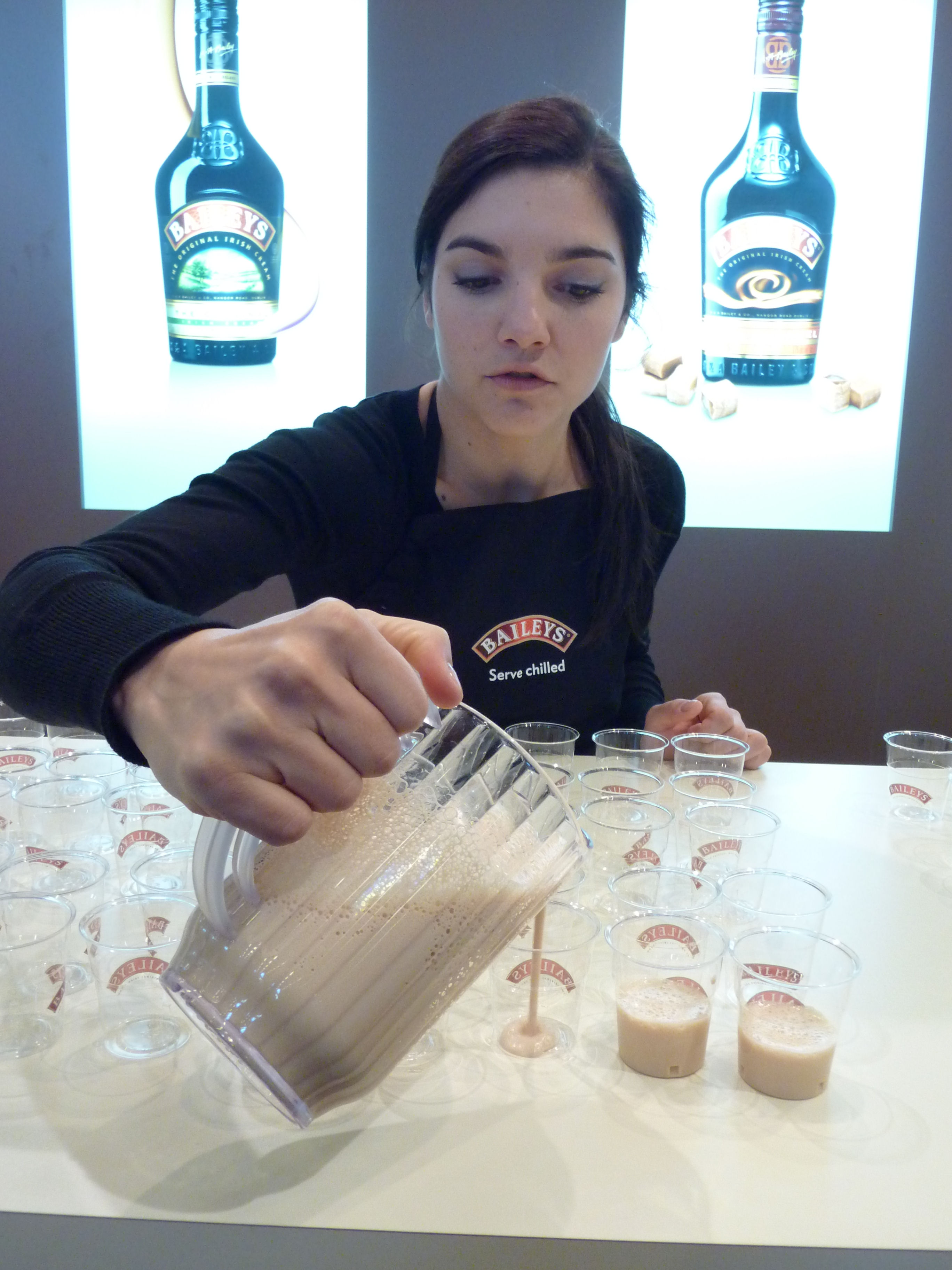
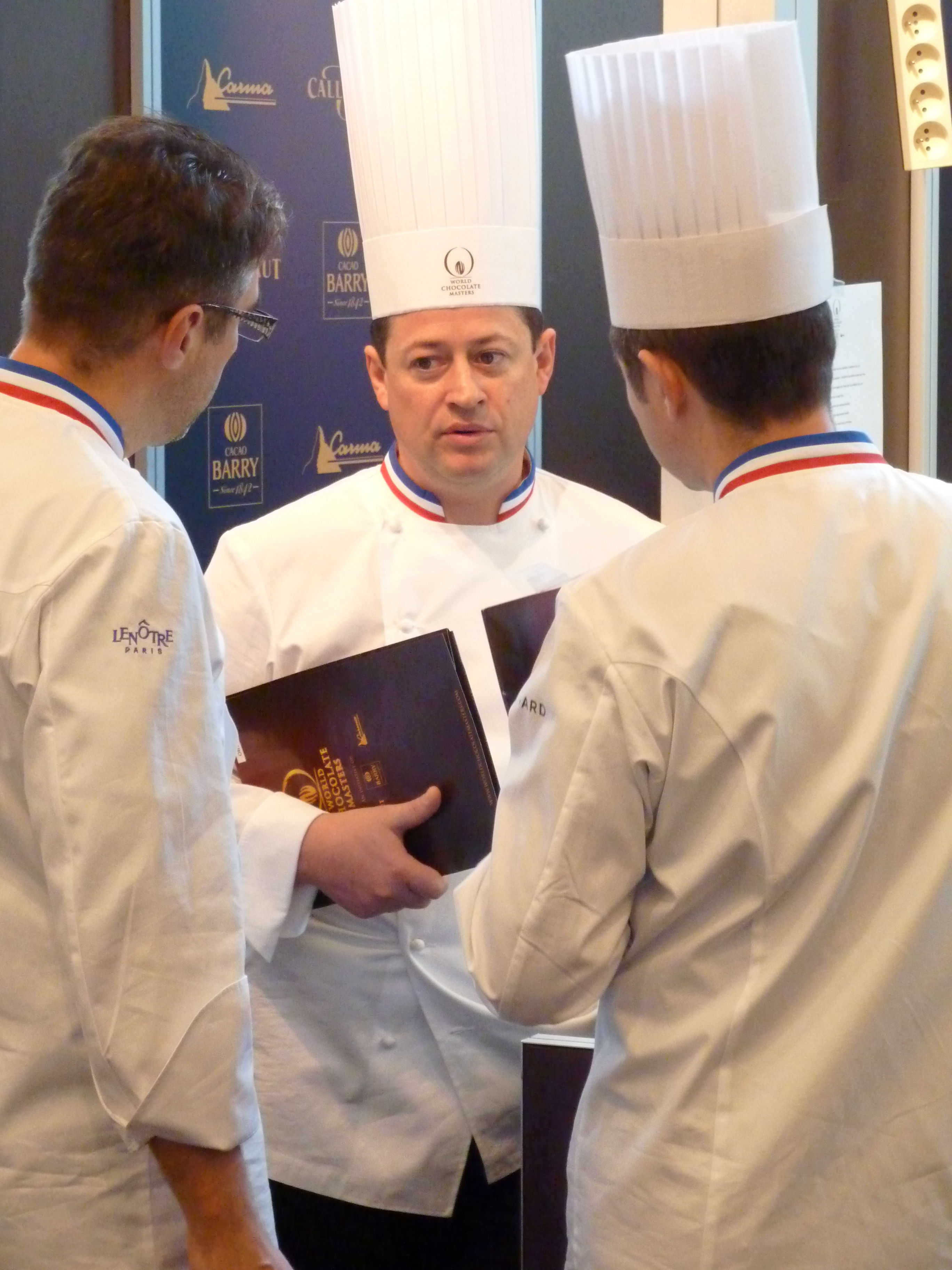
November 3rd, 2010The 16th annual Salon du Chocolat was held last weekend at the Porte de Versailles in Paris. We attended one of the early salons, some 15 years ago or so, and remember that samples of chocolate were distributed in abundance. Though few exhibitors were giving away samples this year, enough free product was handed out to satisfy all but the most demanding of chocolate lovers.
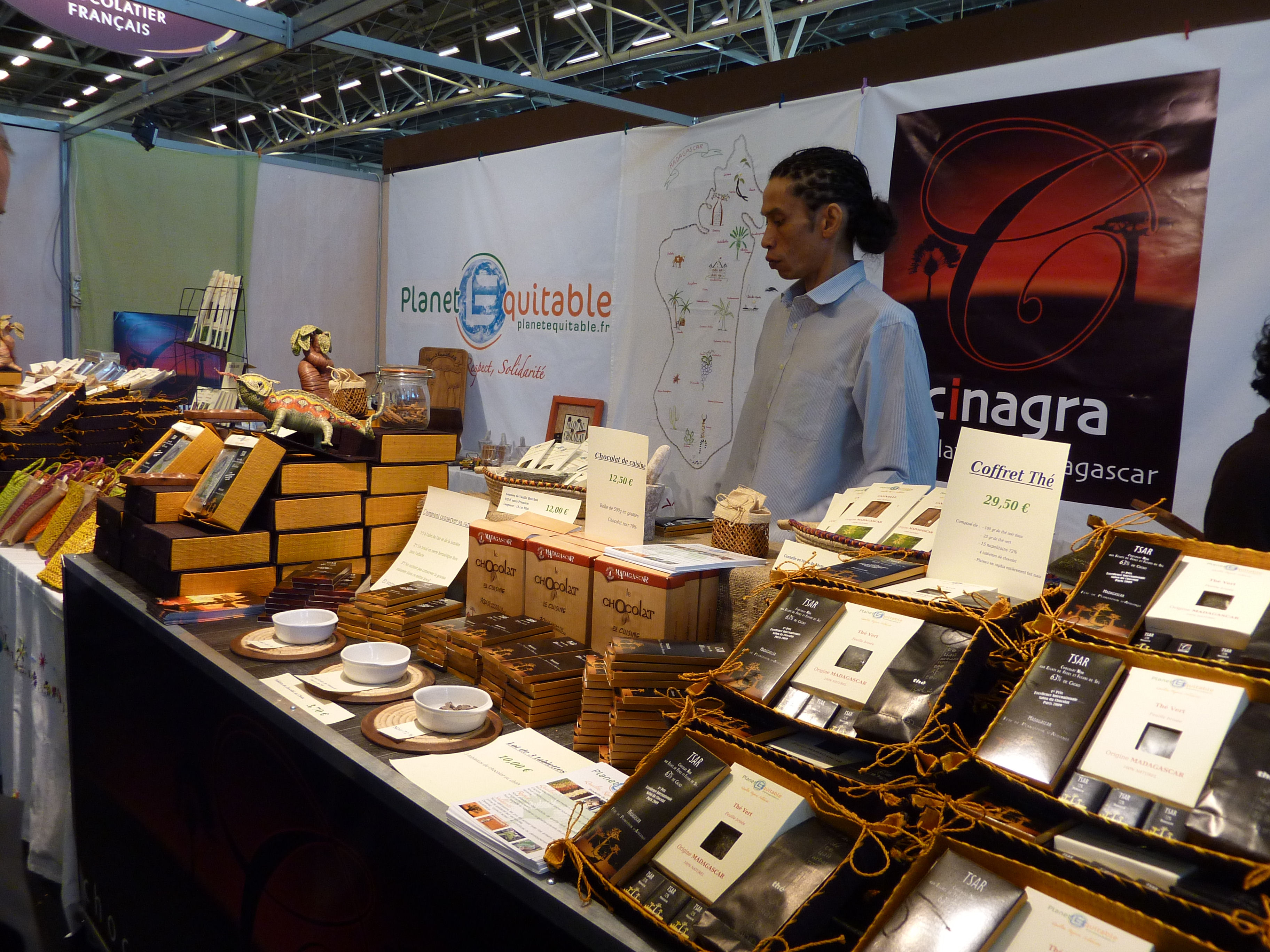
The salon attracts exhibitors from all over the world. It features not only chocolate makers from countries such as France, Switzerland, and Belgium, but also cocoa-bean-growing countries such as Mexico, Bolivia, Madagascar, and Saõ Tomé and Principé.
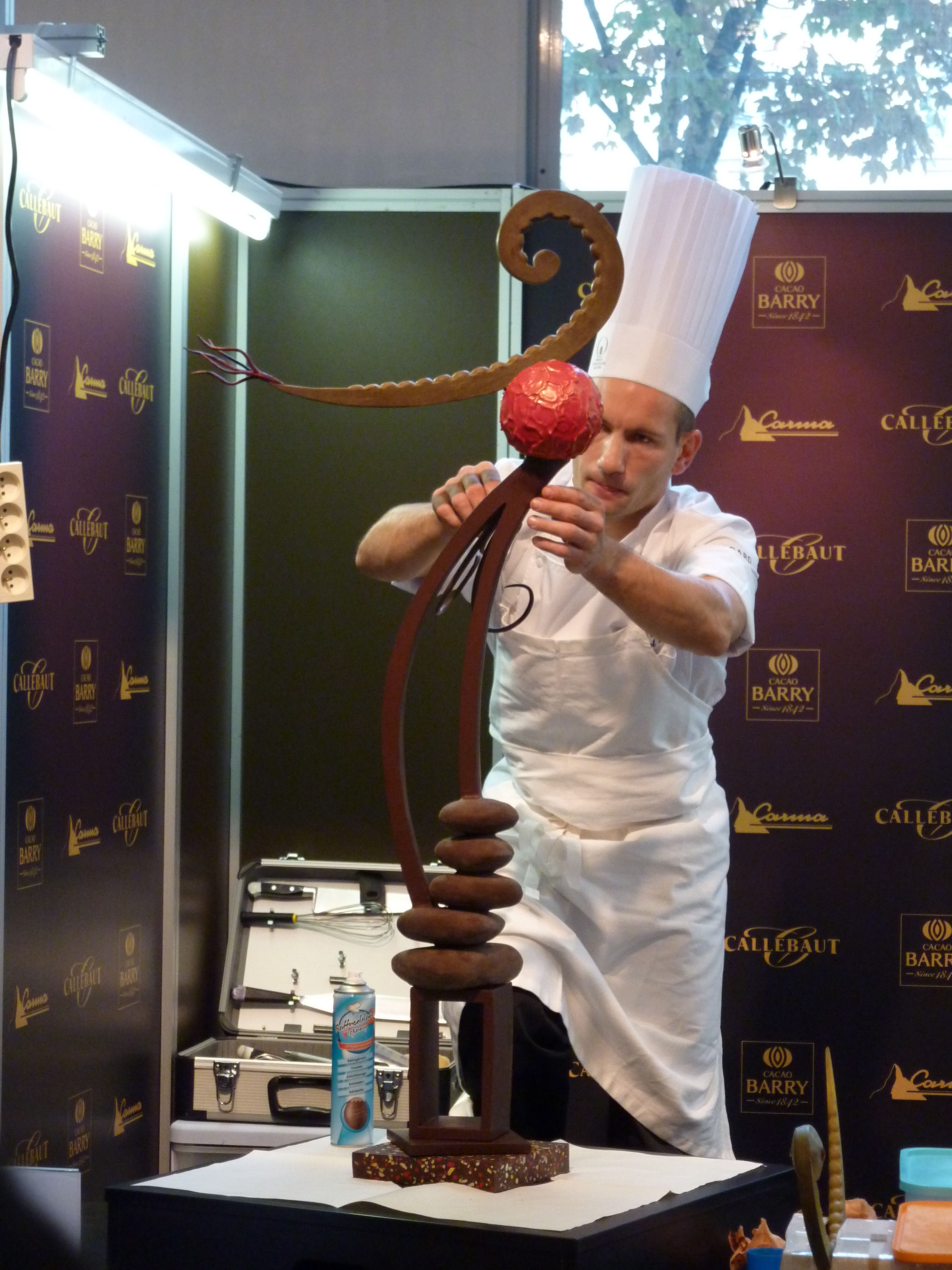
Chocolate was exhibited in all its forms, and it was amazing to see what creative minds can do with it! There were standard chocolate products, such as chocolate bars, chocolate ice cream and chocolate syrups, and standard chocolate shapes, such as domes, squares, rectangles, and disks. But there were also chocolate sculptures and chocolate dresses! The latter were displayed on mannequins and were worn by live models during a fashion show that took place at 5 p.m. each day. Chocolate is more than a delightful sweet, it is a way of life!
The following pictures give an idea of the vastness of the salon and the variety of chocolate-based products that were exhibited.
See you at the salon next year!
We participate in Wanderfood Wednesdays. Head over there to explore food from around the world!
Like our blog? Join us on Facebook!
A Lively Tweet-up in Paris this Evening
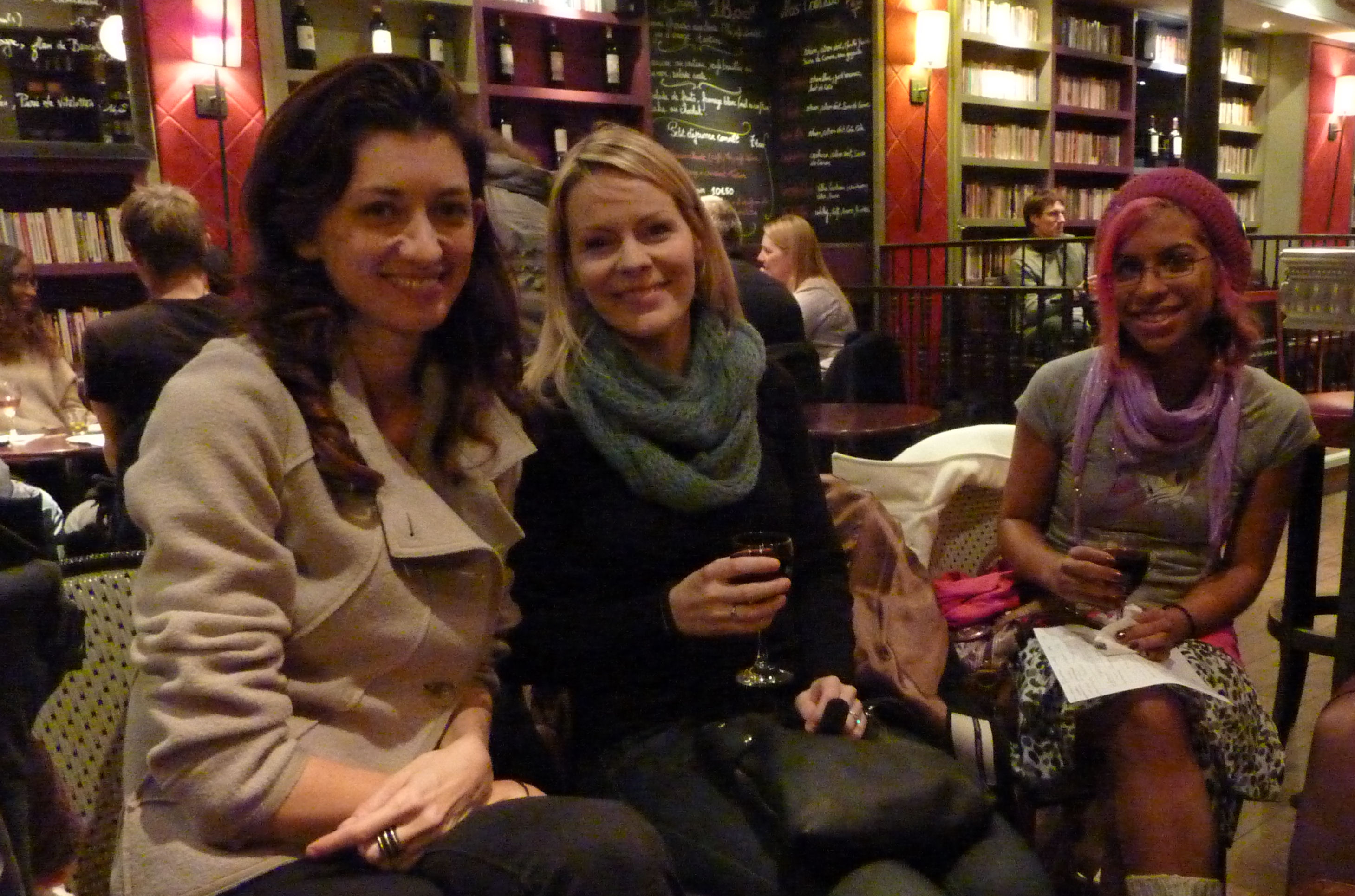
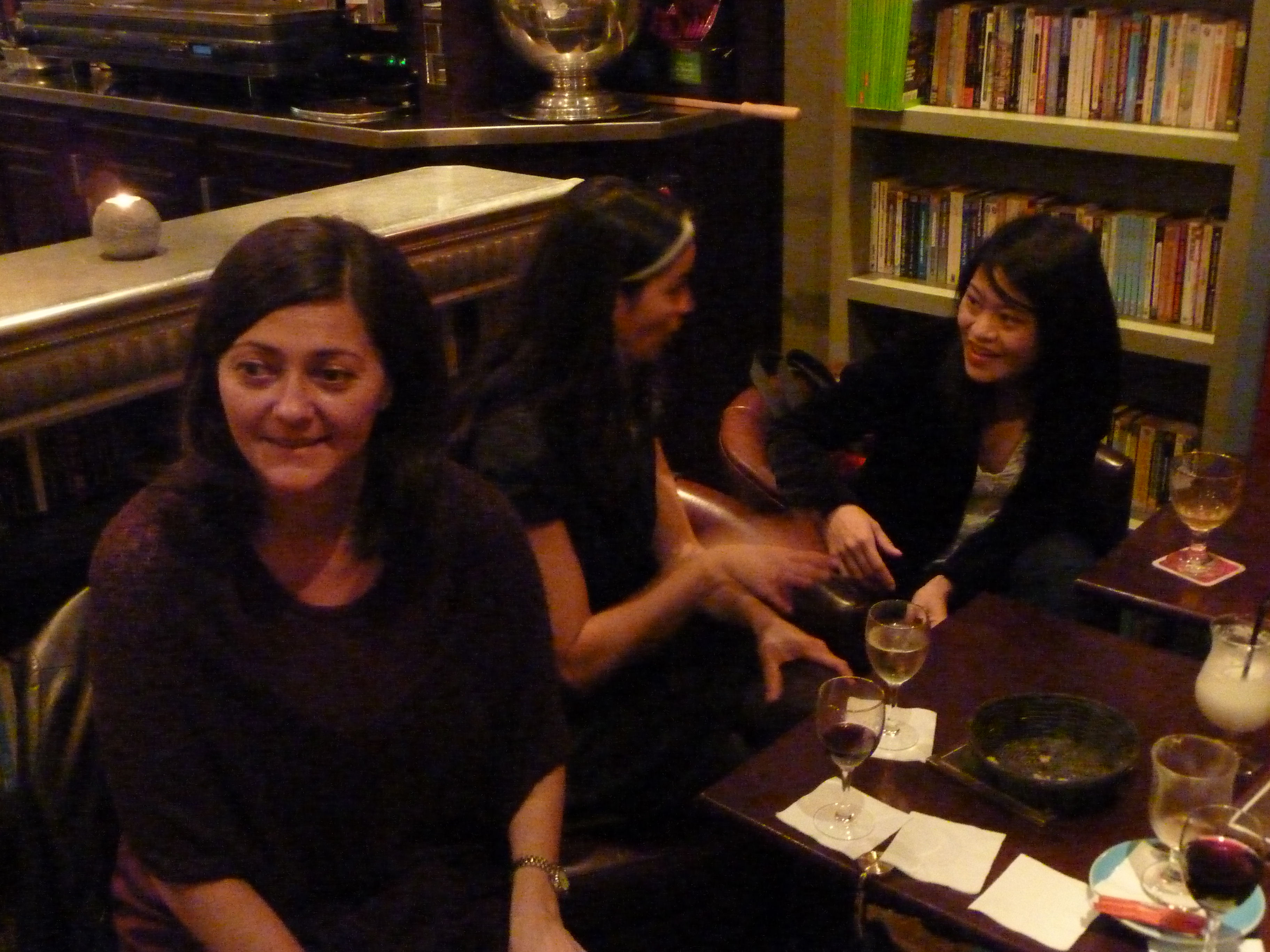
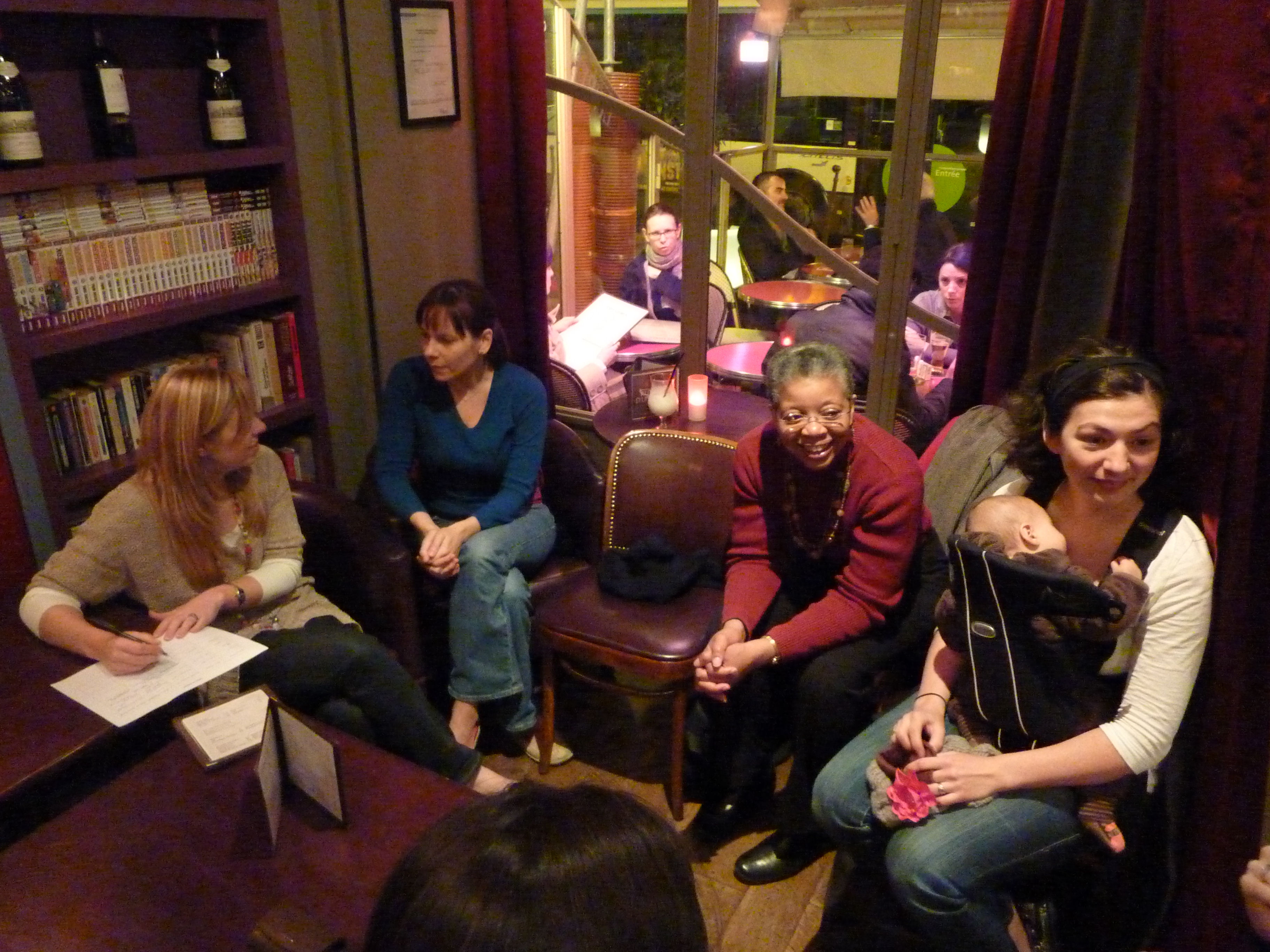
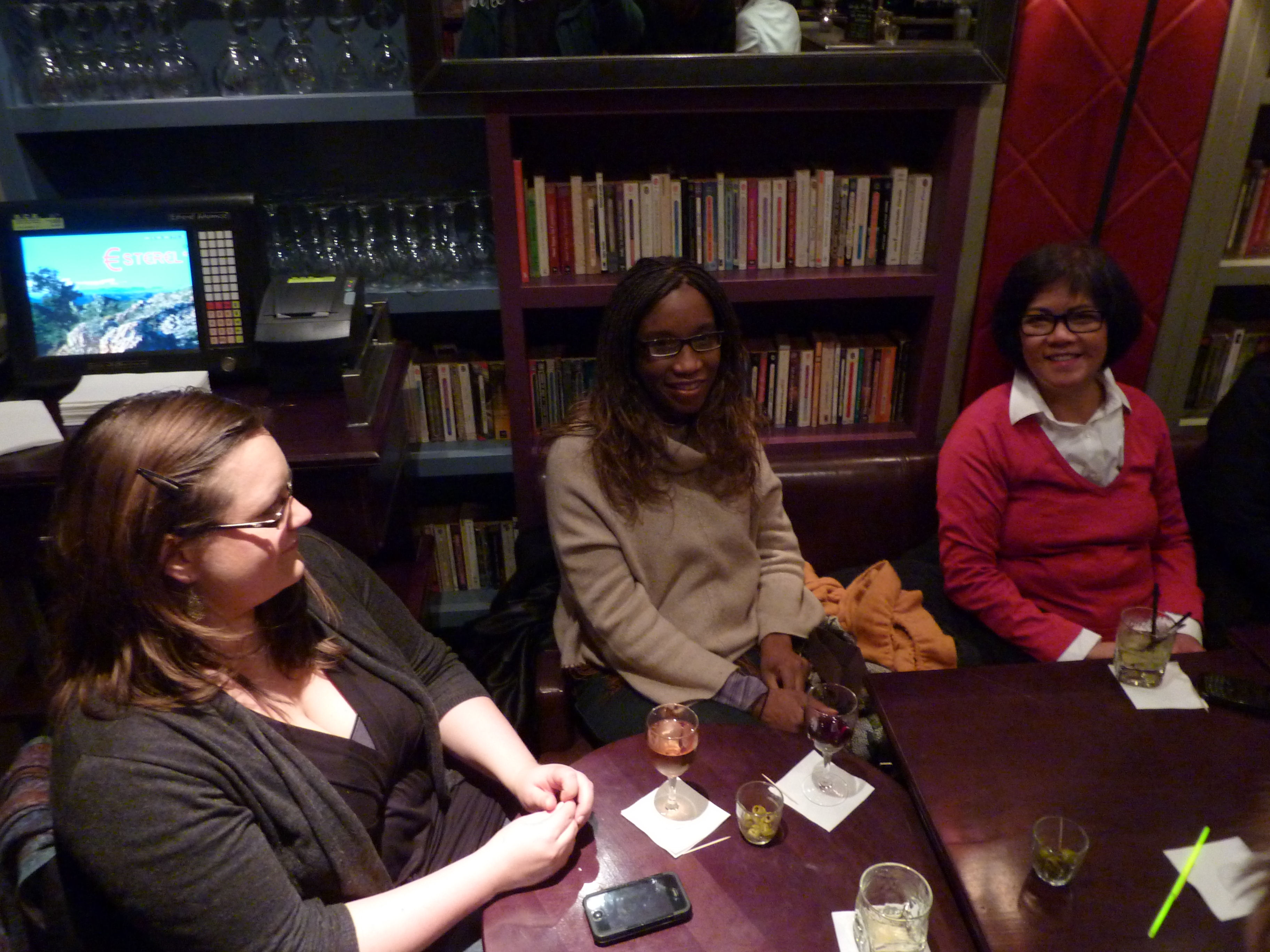
November 2nd, 2010At least twenty-five Paris tweeps met at Café Livre on rue Saint-Martin to communicate in the old-fashioned way—by chatting face-to-face! Yes folks, even the most advanced form of high-speed, electronic communication known to mankind—Twitter—has not (yet) squelched the desire for humans to get together around a table and shoot the breeze.
So large was the group that it was forced to split into two parts, with sub-groups sitting on either side of the café. Even so, movement of individuals across the café from one group to another could be detected!
The café is a handsome place with wooden floors, a bar with a metal counter top, and walls lined with shelves filled with dozens of books. Hence its name Café Livre. But nobody was reading tonight; people were too busy in happy conversation!
There were new faces there amongst the familiar, but rather that trying to sort it all out, here is a list of their names, Twitter identities, and blogs:
Here are some additional pictures of the event:
See you at the next Tweet-up!
Like our blog? Join us on Facebook!
Nadar: From High School Dropout to Iconic Photographer
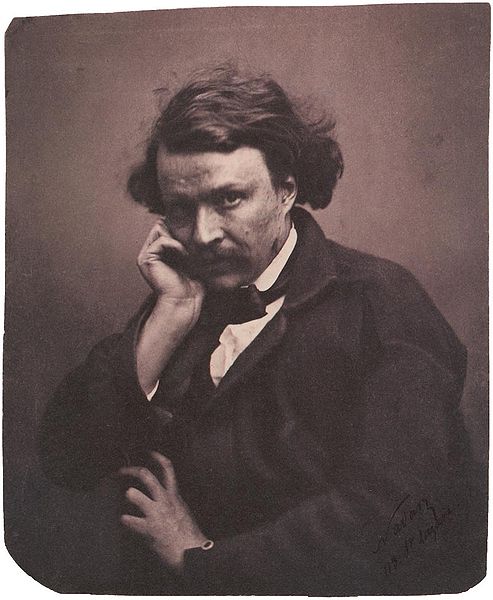
November 1st, 2010November is photography month in Paris. To mark this occasion, we present Félix Nadar, one of the most renowned photographers of the 19th century. Although he dropped out of high school, he went on to become a novelist, journalist, aeronaut, artist, adventurer, caricaturist, and man-about-town. Read about his remarkable life in this month’s Paris Insights.
Access to the newsletter is by paid subscription. Click here to view the newsletter announcement. Click here to enter a subscription.
Bonne lecture!
Like our blog? Join us on Facebook!
Kosher Dark Chocolates at Ardelys
October 27th, 2010Having discussed their delicious lamehadrine milk chocolates on last Wednesday’s posting, we now turn to Ardelys’ parve dark chocolates. We purchased four to sample.
The Jerusalem is a heart-shaped confection—a thick, dark-chocolate shell encasing a smooth, rich, dark-chocolate fondant. The word “fondant” refers to the soft filling of the chocolate. The sales clerk told us that it has the subtle flavor of strawberry. I could taste this, but my partner could not. I also found the chocolate slightly piquant. We both enjoyed this sweet.
The Diamantine is a gianduja (hazelnut and chocolate paste) sold in a tiny foil cup. I found it to have a slightly smokey flavor. My partner said that she did not find it as sweet as other giandujas that she has tasted. Neither of these observations, however, mean that we did not like this délice. Au contraire!
The Jakarta’s thin dark-chocolate shell enrobes a dark-chocolate filling whose pronounced aroma of pineapple we found delightful.
The sales clerk told us that the Sydney has the flavor of whisky. We did not taste this, but, nonetheless, found the dark chocolate fondant quite agreeable. The flavor lingered long after the chocolate had been consumed.
Fondant fillings are not common in traditional chocolates—most chocolates are sold as ganaches. But the Ardelys fondants that we sampled passed our rigorous taste test with flying colors!
We participate in Wanderfood Wednesdays. Head over there to explore food from around the world!
Like our blog? Join us on Facebook!