


A Day at the Races with Gina Rarick – Part V

May 6th, 2012
Facebook Twitter Linkedin
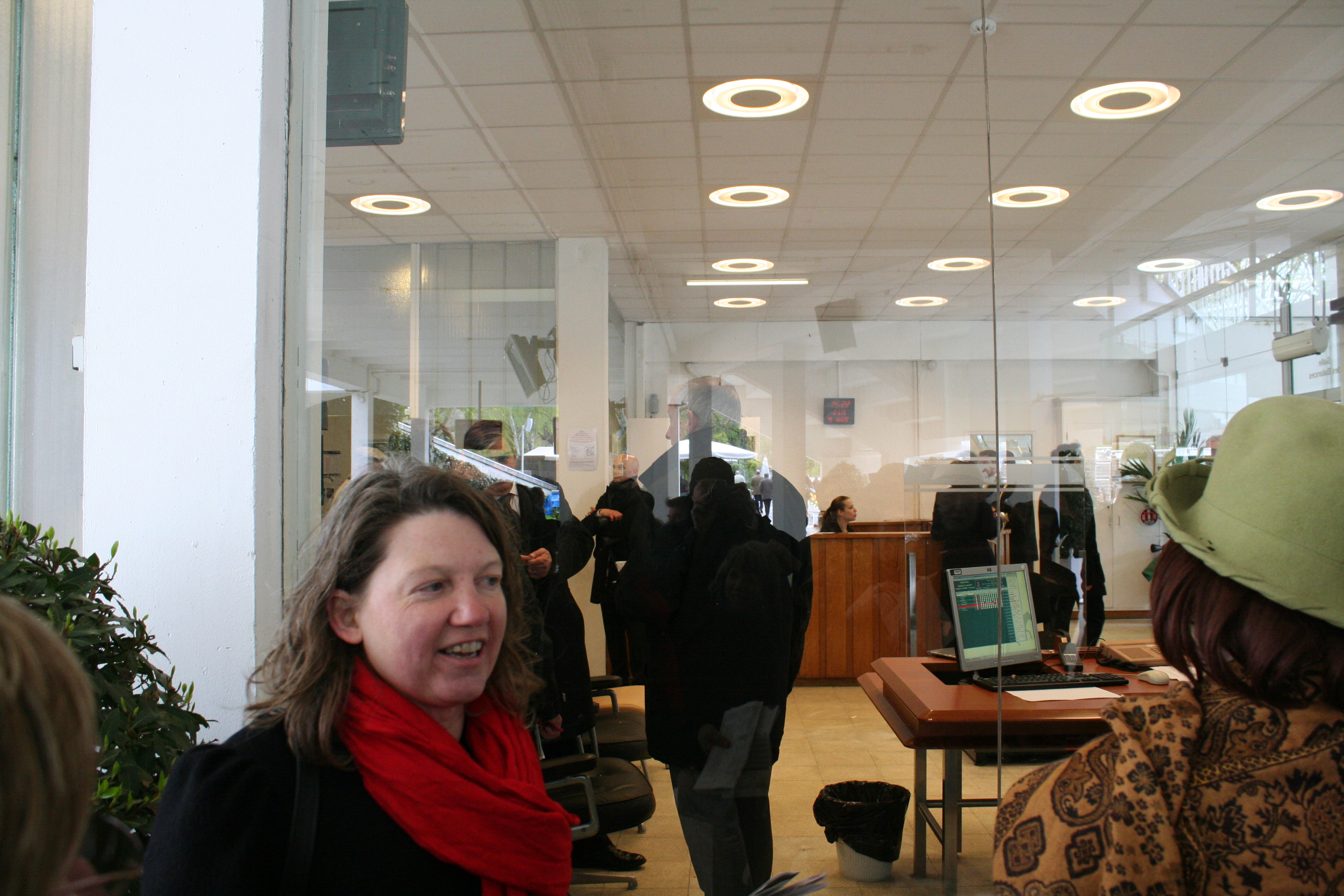
The 2€ Guichet

The 2€ Guichet
Photo by www.DiscoverParis.net

Feeling heady with the possibility of placing a winning bet, I got in line at the 2€ guichet.

Placing a Bet

Placing a Bet
Photo by www.DiscoverParis.net

The gentleman behind the window recognized that I was a novice gambler, and asked me which horse I wanted to bet on. Since I was standing at a 2€ guichet, I decided to place the bet on horse number 2.

He then asked me whether I wanted to bet that the horse would win or place. I figured that since I was placing a 2€ bet on horse number 2, then I should wager that it would come in second, or “place.” It’s as good a system as any for placing a bet!
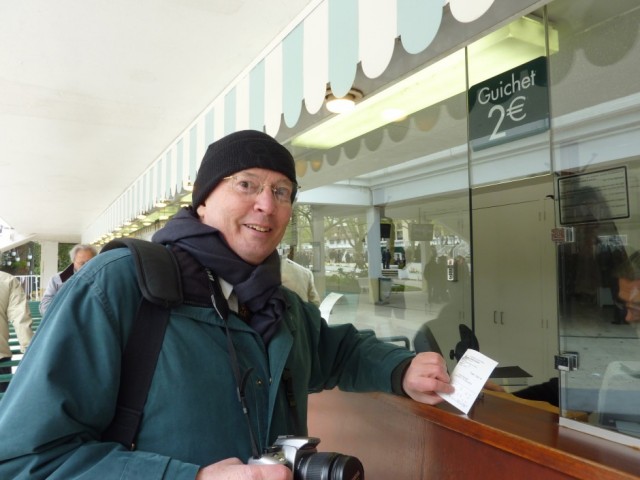
Will This Be the Winning Ticket?

Will This Be the Winning Ticket?
Photo by www.DiscoverParis.net

With the ticket in hand, we went off to watch the race on a monitor.

The Winning Race Number 2 Places Second

The Winning Race!
Number 2 Places Second!
Photo by www.DiscoverParis.net
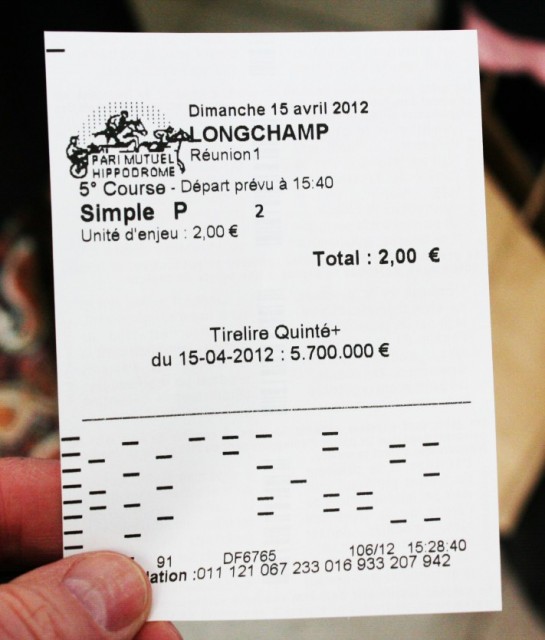
The Winning Ticket

The Winning Ticket
Photo by www.DiscoverParis.net

Number 2 places second! Hooray! Let’s go back to the window and collect our winnings.
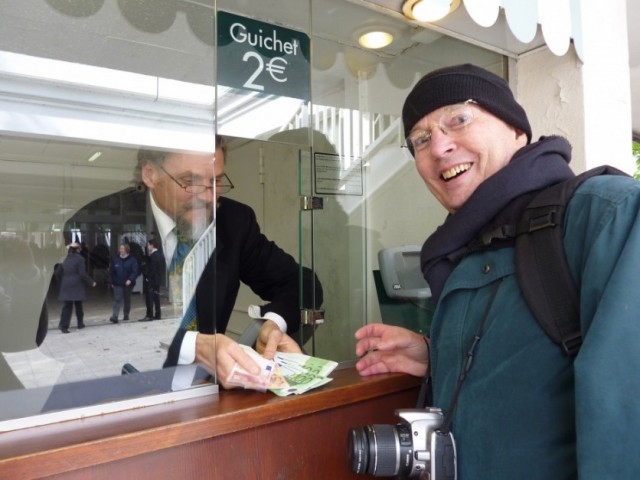
I Won All That!!!

I Won All That!!!
Photo by www.DiscoverParis.net

I handed the ticket to the gentleman and he prepared a wad of 100€ bills. He told us to get our camera ready and brought them up to show me. I watched, mouth agape, as he withdrew them after Monique took the photograph.

It was a good joke! “The hard reality, sir, is that you won six euros…”

Well, six euros is, at least, three times my wager! What a deal!
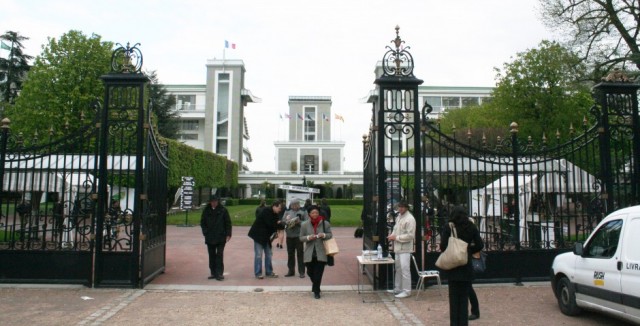
Entry to the Hippodrome

Entry to the Hippodrome
Photo by www.DiscoverParis.net

I pocketed my winnings and we left the racecourse. It had been a great day at the races!

* * * * * * *

Like our blog? Join us on Facebook!

A Day at the Races with Gina Rarick – Part IV

May 5th, 2012
Facebook Twitter Linkedin
Jockey Coming Back from Race

Jockey Coming Back from Race on Her Nervous Horse
Photo by www.DiscoverParis.net

After the horses left the starting gate, we left too, and walked over to the gate where the horses would return after the race. From our position on the racecourse, we were unable to determine which horse had won that particular race, but we did take a picture of the returning jockey whose horse had been so nervous at the start (see Part III for a photo of the nervous horse).

Winning Horse in Winner's Circle

Winning Horse in Winner's Circle
Photo by www.DiscoverParis.net

After each race, the jockey rides the winning horse into the winner’s circle where photographers and admirers gather around to take pictures. In the picture above, the jockey had already dismounted and walked away before we got a chance to photograph him. He didn’t stay to bask in the glory of victory!

Gina Demonstes the Hand Ride

Gina Demonstes the Hand Ride
Photo by www.DiscoverParis.net

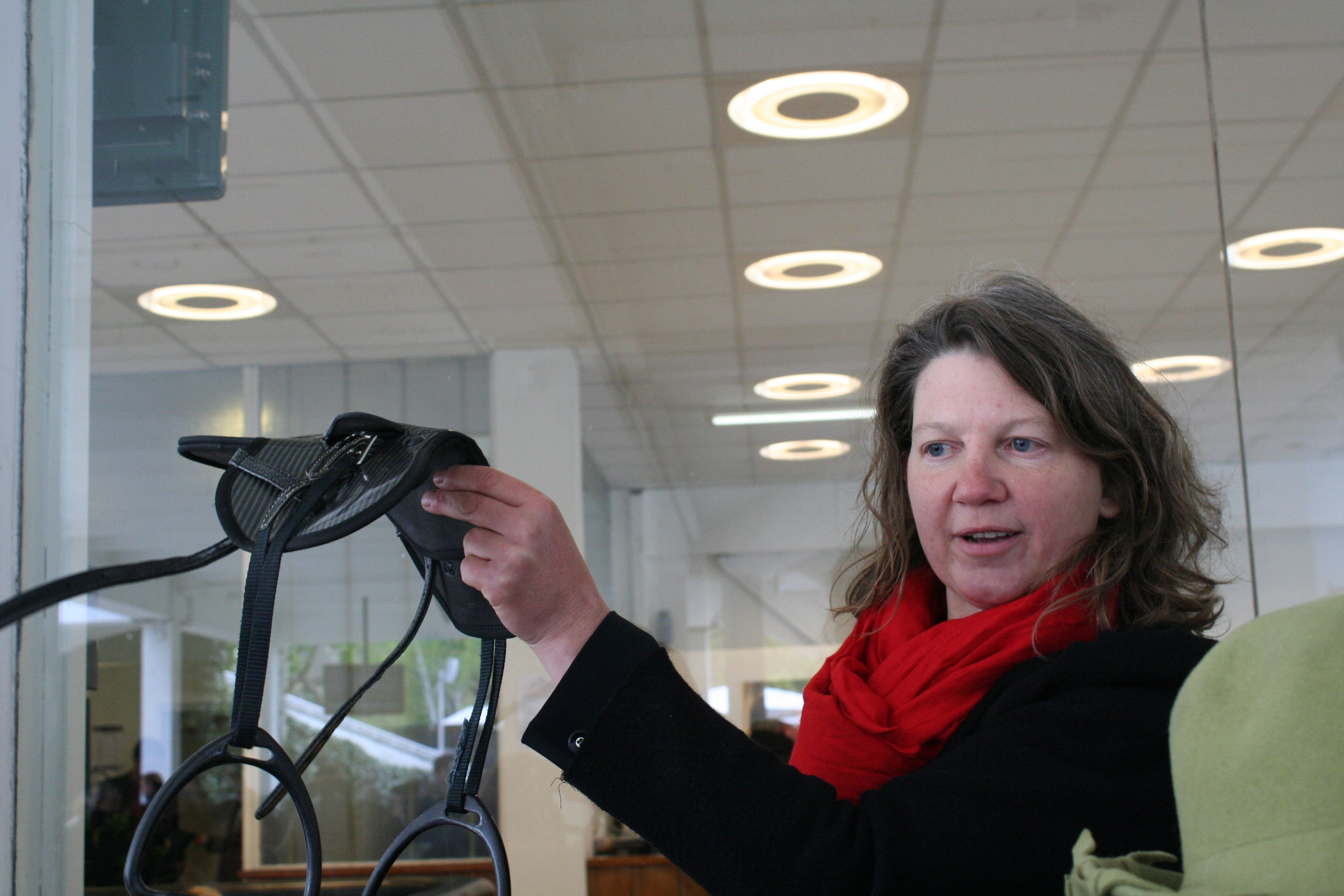
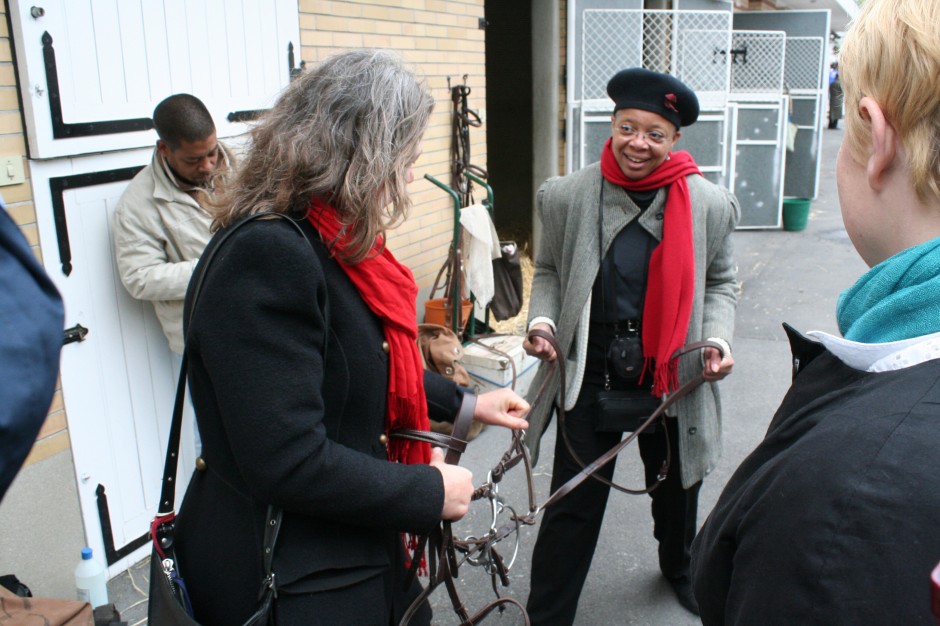
Gina had been telling us about a technique, called the “hand ride,” that jockeys use to get their horses to run faster, especially in the home stretch. Using a harness, she showed Monique how tightening the reins helps the jockey stay in harmony with the movement of the animal. At that point, the jockey shoves the horse’s neck forward with each forward movement of the neck during the gallop, giving extra impetus to the horse’s rhythm, making it run faster. For a video demonstration of the hand ride, follow this link: http://www.youtube.com/watch?v=QVHEoy1o_BY.

After watching a couple of thrilling races and feeling the excitement in the air, I decided to put my money down on a horse. I sensed that Lady Luck would smile on me that day.

Tomorrow: I win big at the racetrack!

* * * * * * *

Like our blog? Join us on Facebook!

A Day at the Races with Gina Rarick – Part III

May 4th, 2012
Facebook Twitter Linkedin
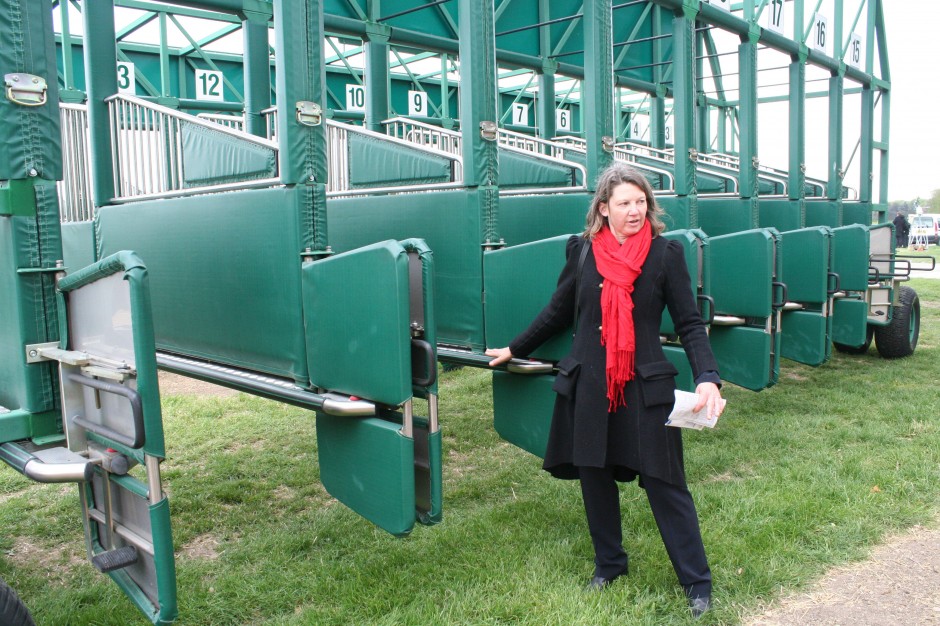
Gina Shows Us the Starting Gate

Gina Shows Us the Starting Gate
Photo by www.DiscoverParis.net

After taking us on a tour of the area where the horses warm up, Gina took us over to the starting gate.

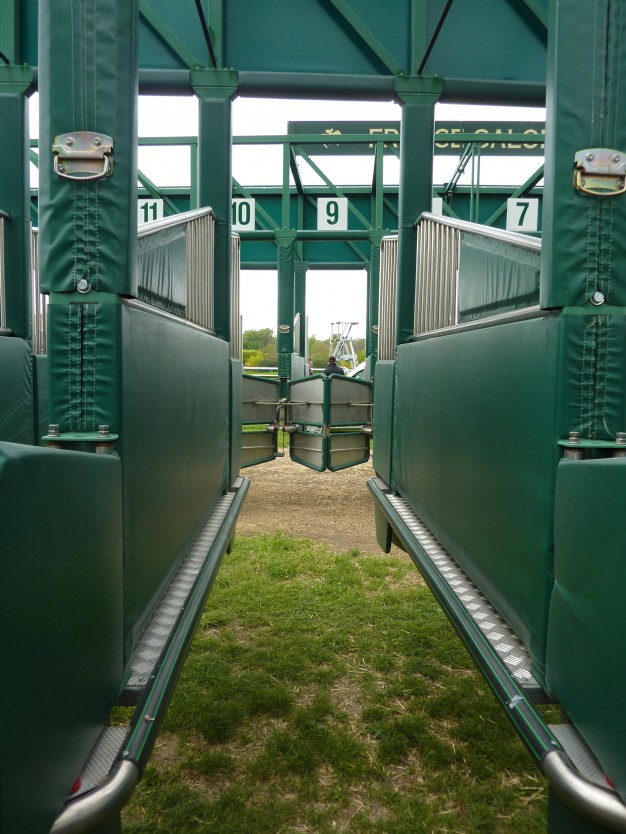
What a Racehorse Sees

What a Racehorse Sees
Photo by www.DiscoverParis.net

Gina told us that sometimes horses don’t want to go into the starting gate, in which case the jockey, sitting in the saddle, will pull on the horse’s tail to get it to move forward into the gate. We witnessed this a number of times. On one occasion, we saw a jockey pulling on the tail of his horse and somehow the horse made a movement, throwing the jockey off. The horse fell, rolling onto the jockey. Ouch! An ambulance pulled up immediately and the jockey was put on a stretcher and taken off the track. And so the race continues! No time to pause to mourn the wounded.

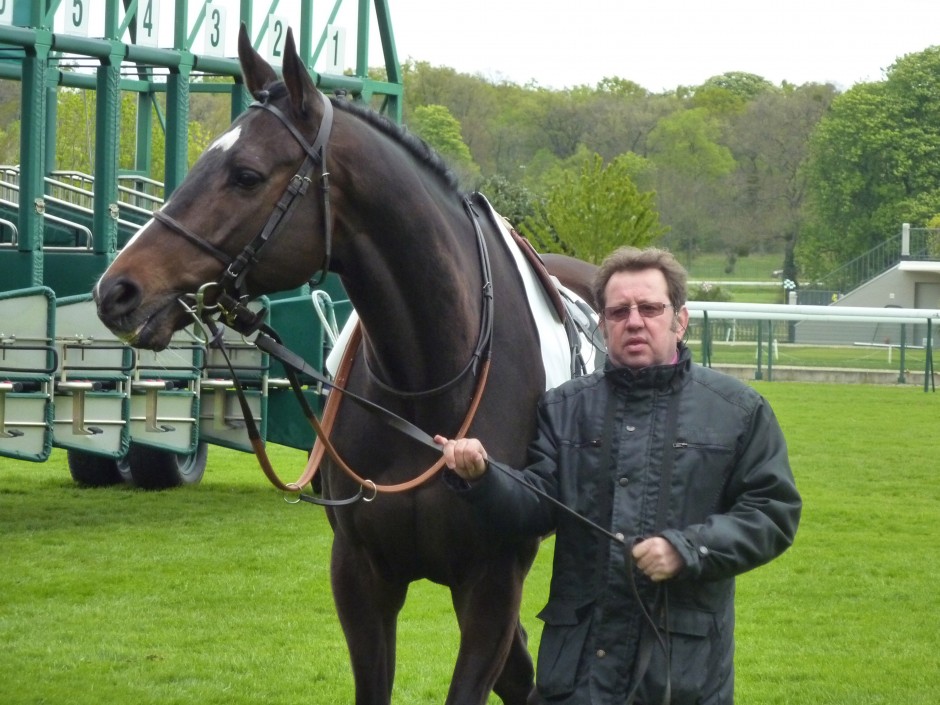
Recalcitrant Racehorse

Recalcitrant Racehorse
Photo by www.DiscoverParis.net

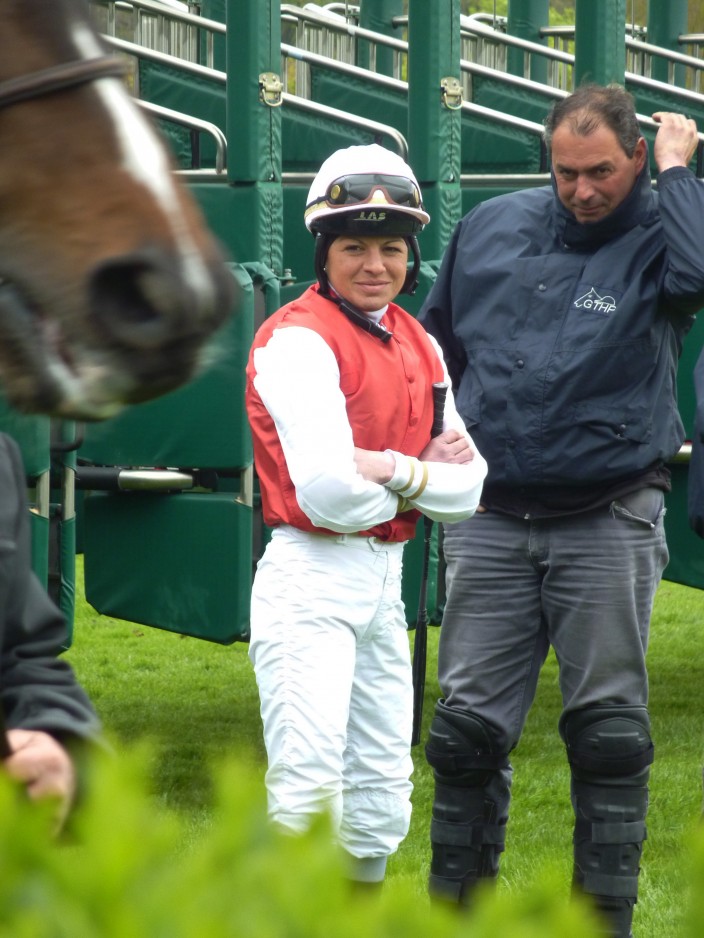
Jockey Waiting for Her Horse

Jockey Waiting for Her Horse
Photo by www.DiscoverParis.net

Standing behind and to the side the starting gate (but separated from the racetrack by a hedge) we could watch the horses and their jockeys prepare for the race. One jockey’s horse was nervous, so the handler walked the horse to calm it. The jockey waited, trying to keep warm in the cold air.

Jockey and Racehorse Move into the Starting Gate

Jockey and Racehorse Move into the Starting Gate
Photo by www.DiscoverParis.net

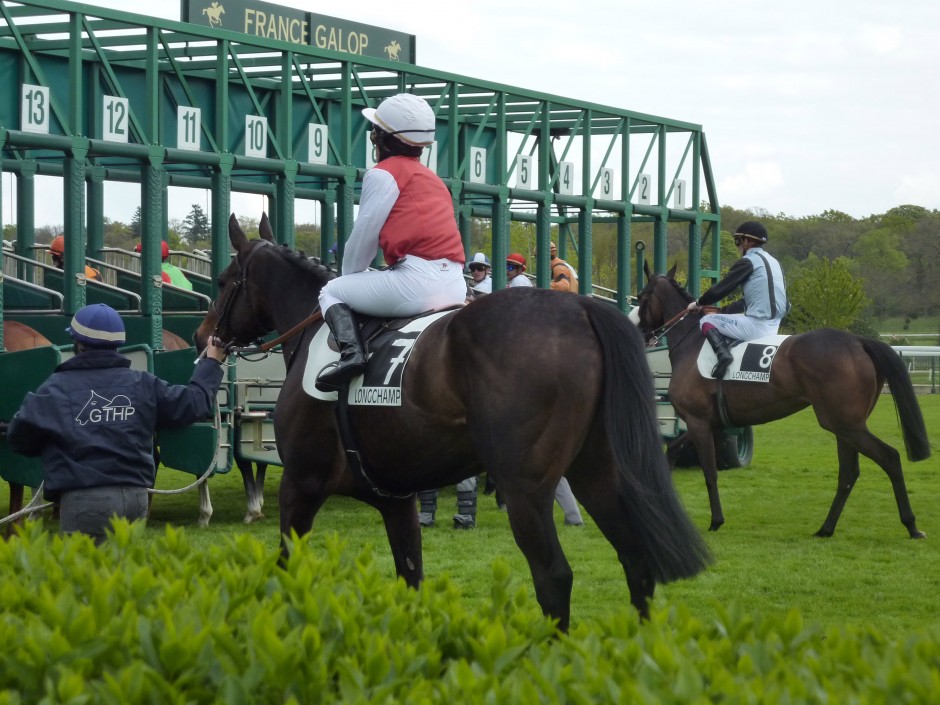
Finally, her horse was ready. She mounted it and moved into the starting gate. Just in time, because everyone else was lining up.

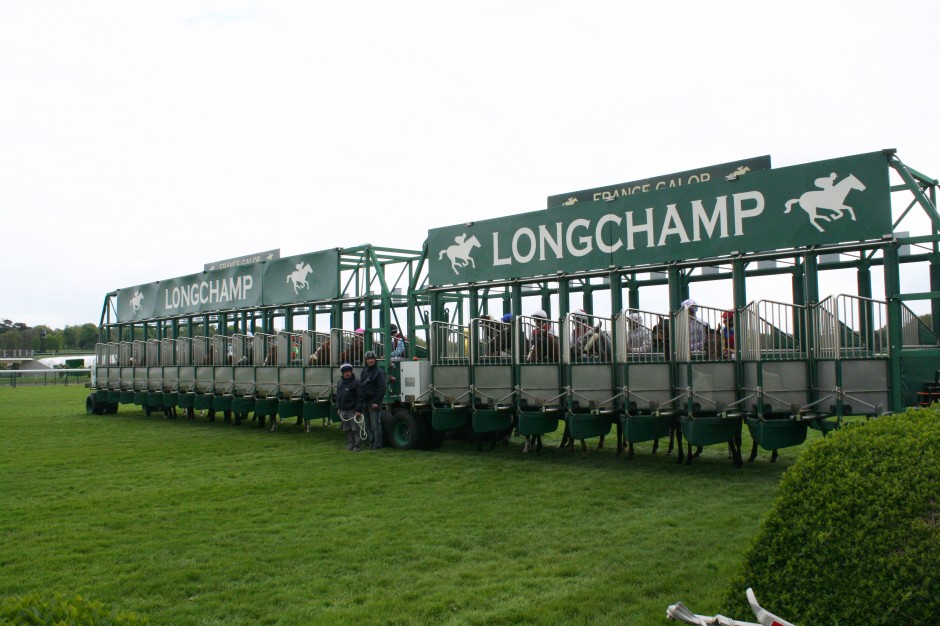
Seconds before the Gates Open

Seconds before the Gates Open
Photo by www.DiscoverParis.net

There was a tense moment before the gates opened. And then suddenly…

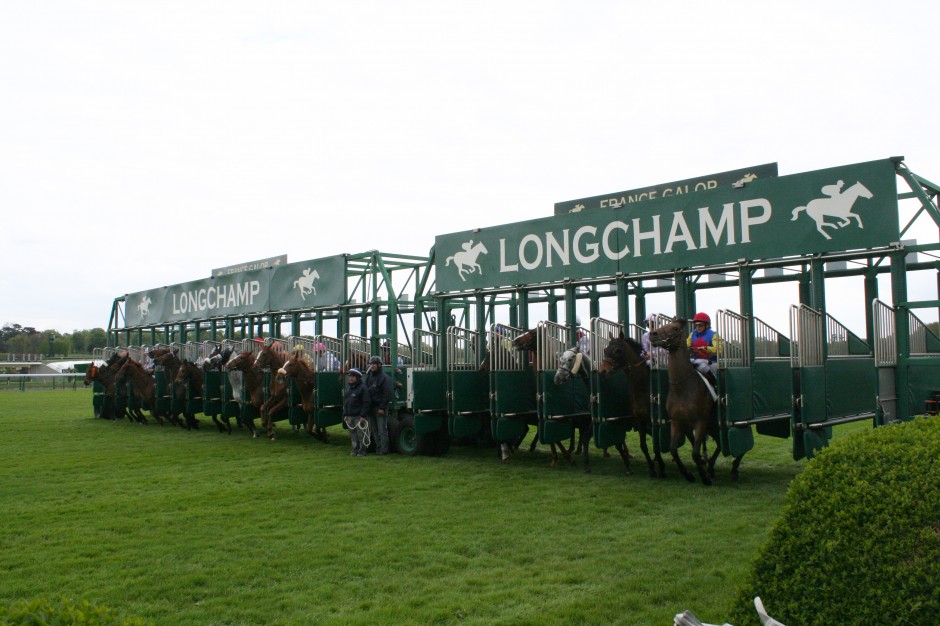
The Start

The Start
Photo by www.DiscoverParis.net

Out of the Gate

Out of the Gate
Photo by www.DiscoverParis.net

…they were off!

Tomorrow: Gina shows Monique how to make the horse go faster!

* * * * * * *

Like our blog? Join us on Facebook!

We’re the First to Review Chez Rochette

May 2nd, 2012
Facebook Twitter Linkedin
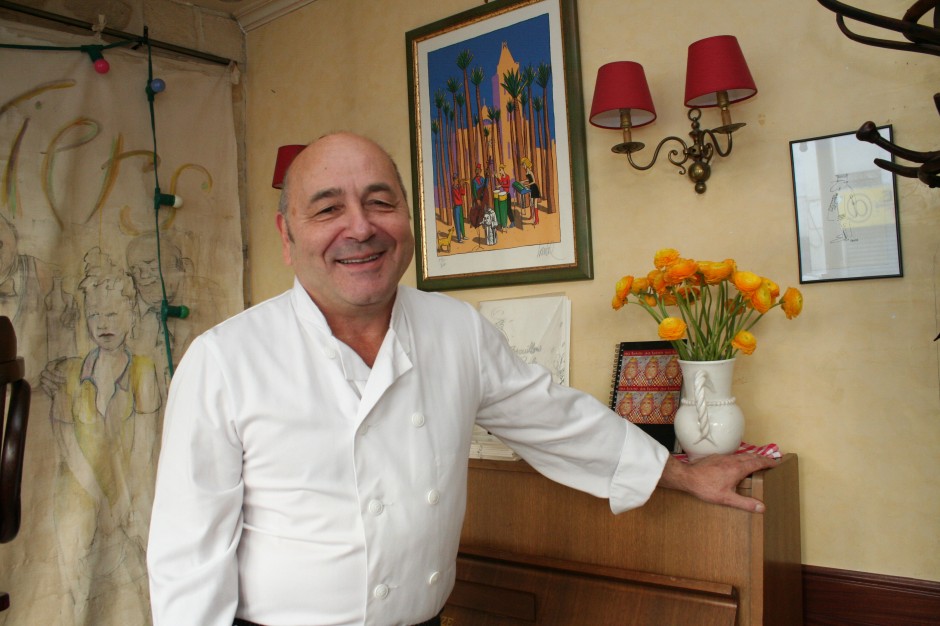
Philippe Rochette

Philippe Rochette, Owner and Chef of Chez Rochette
Photo by www.DiscoverParis.net

Last month, we took a tour of the Saint-Denis food market where we met Philippe Rochette, owner and chef of a nearby bistrot called Chez Rochette. We had the occasion to eat there a few days later and enjoyed a great meal. Read about the delicious food that we dined on in this month’s Paris Insights. Our review is the only full-length review of Chef Philippe’s restaurant that you will find on the Internet.

Chez Rochette
20, rue Gabriel Péri
93200 Saint-Denis
Tel.: 01.42.43.71.44
Metro station: Saint-Denis-Porte de Paris (Line 13)

Our newsletter is published monthly as a downloadable PDF file. It is available only to paid subscribers for an annual subscription fee of $30.

If you are not a paid subscriber and would like to download the newsletter, please click here. Enter promotional code 11473309154 to receive a $5 discount off the price of an annual subscription.

Bonne Lecture…et Bon Appétit!

* * * * * * *

We participate in Wanderfood Wednesdays. Head over there to explore food from around the world!

Like our blog? Join us on Facebook!
An American in Paris – Jenna Thornton

May 1st, 2012
Facebook Twitter Linkedin

Jenna Thornton, Manager of Première Pression Provence

To write this month’s Paris Insights, we interviewed Jenna Thornton, an American in Paris who is passionate about…olive oil! Read about her adventures in France and how her interest in the product developed.

To view a preview of the newsletter, click here.

Our newsletter is published monthly as a downloadable PDF file. It is available only to paid subscribers for an annual subscription fee of $30.

If you are not a paid subscriber and would like to download the newsletter, please click here. Enter promotional code 11473309154 to receive a $5 discount off the price of an annual subscription.

Bonne Lecture!

* * * * * * *

Like our blog? Join us on Facebook!
A Day at the Races with Gina Rarick – Part II

April 29th, 2012
Facebook Twitter Linkedin

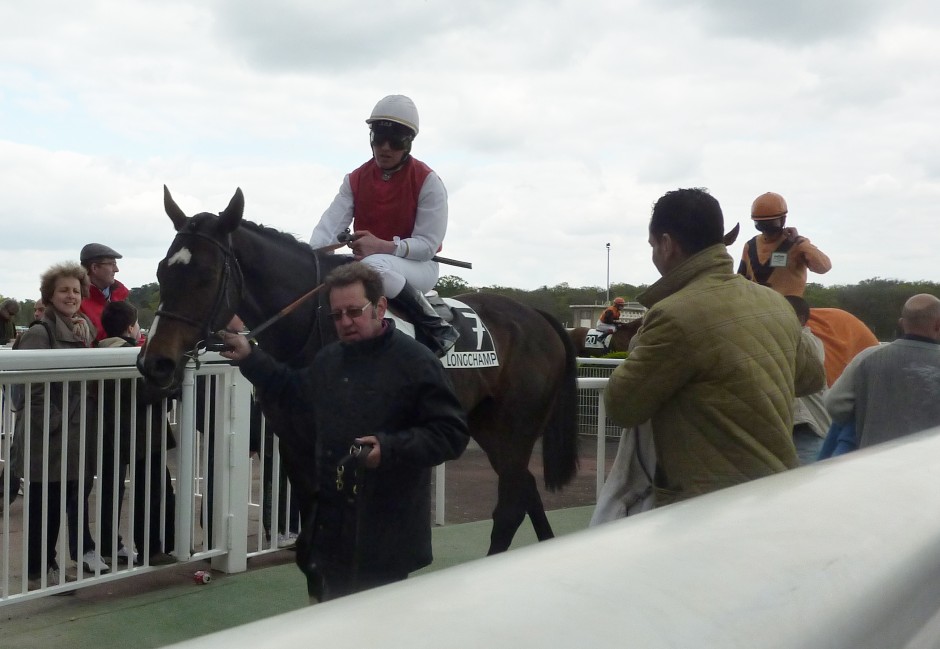
First Race of the Day

Before we left the grandstand for our tour of the racecourse with Gina, we watched the first race.

There weren’t very many spectators sitting in the grandstand, but just before the first race a group of people filed in and sat down in front of us. They were a well-dressed and lively crowd, and when the race started the kids among them began cheering wildly. After the race, they all got up and left, leaving the grandstand empty except for our group. I imagine that they were a family that had invested in one of the horses, and that they came that day to see how well it would run.

Races were spaced out throughout the day, so there was no incentive to remain in the grandstand until the start of the next race.

The Weighing Room

The Weighing Room
Photo by www.DiscoverParis.net

Gina took us downstairs and showed us the weighing room, where the jockeys weigh in before hopping on their horses. She explained the importance of monitoring each jockey’s weight and the weight of the jockey’s saddle.

Pound for pound, Gina said, jockeys are the greatest athletes in the world. After a few years, most jockeys get weary of the strict diet that they have to follow. At that point, they have to decide whether they want to continue in that career.

Gina and Ultralight Saddle

Gina and Ultralight Saddle
Photo by www.DiscoverParis.net

Gina showed us an ultralight saddle that some jockeys like to use. It doesn’t provide any comfort during the high speed, bumpy horseback ride. Ow!

Out of the Stable

Out of the Stable
Photo by www.DiscoverParis.net

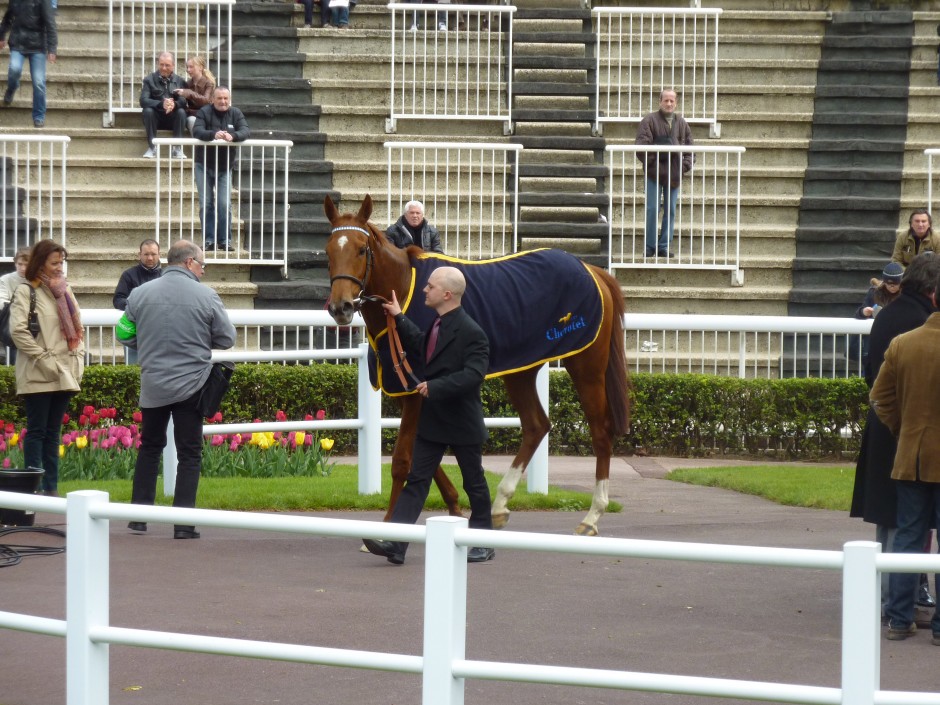
Walking the Horses

Walking the Horses
Photo by www.DiscoverParis.net

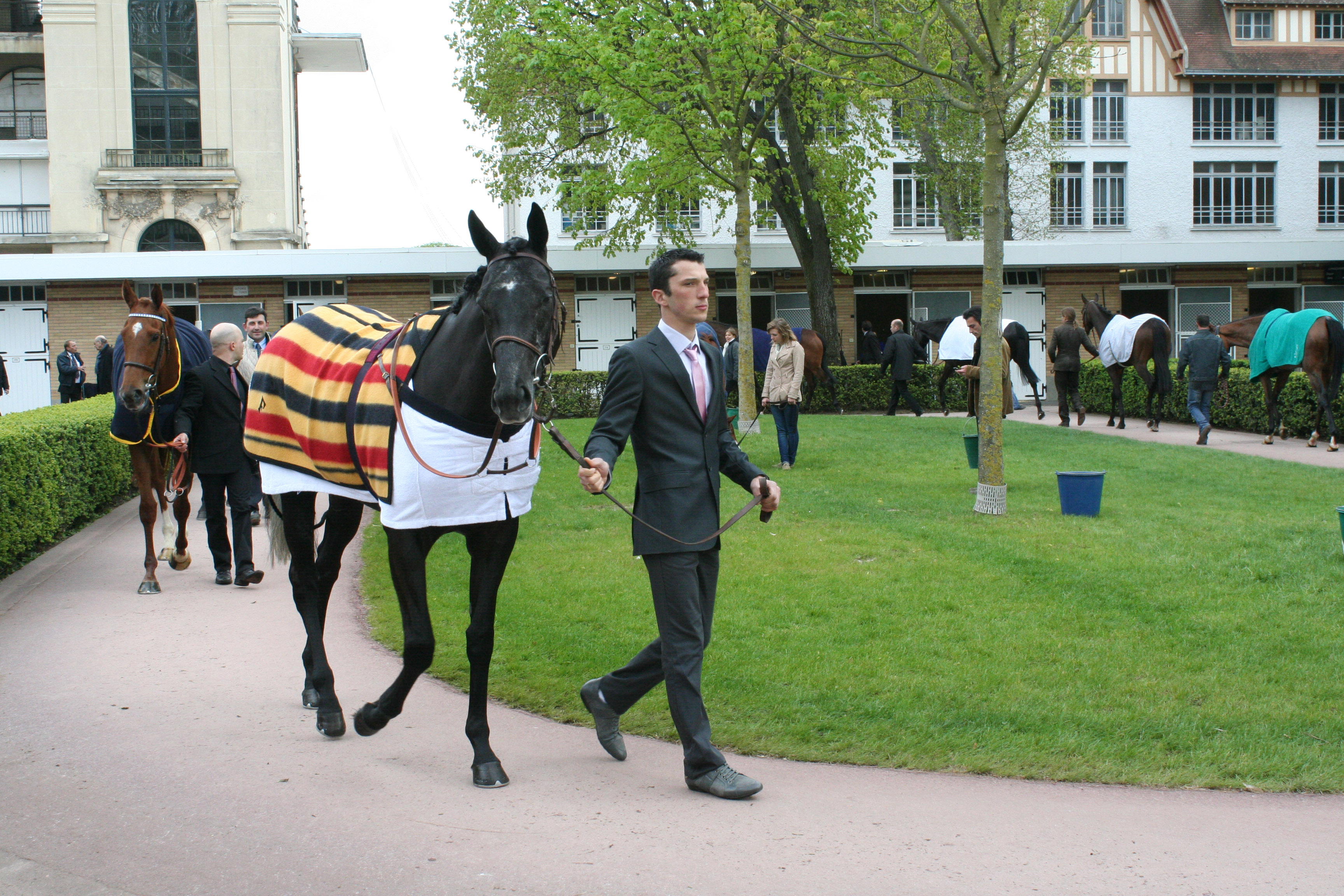
Before a jockey gets on a horse, the animal is brought out of its stable and walked. Gina took us into a restricted area where we saw horse trainers and their assistants walking the horses around in circles.

On the Way to the Track

On the Way to the Track
Photo by www.DiscoverParis.net

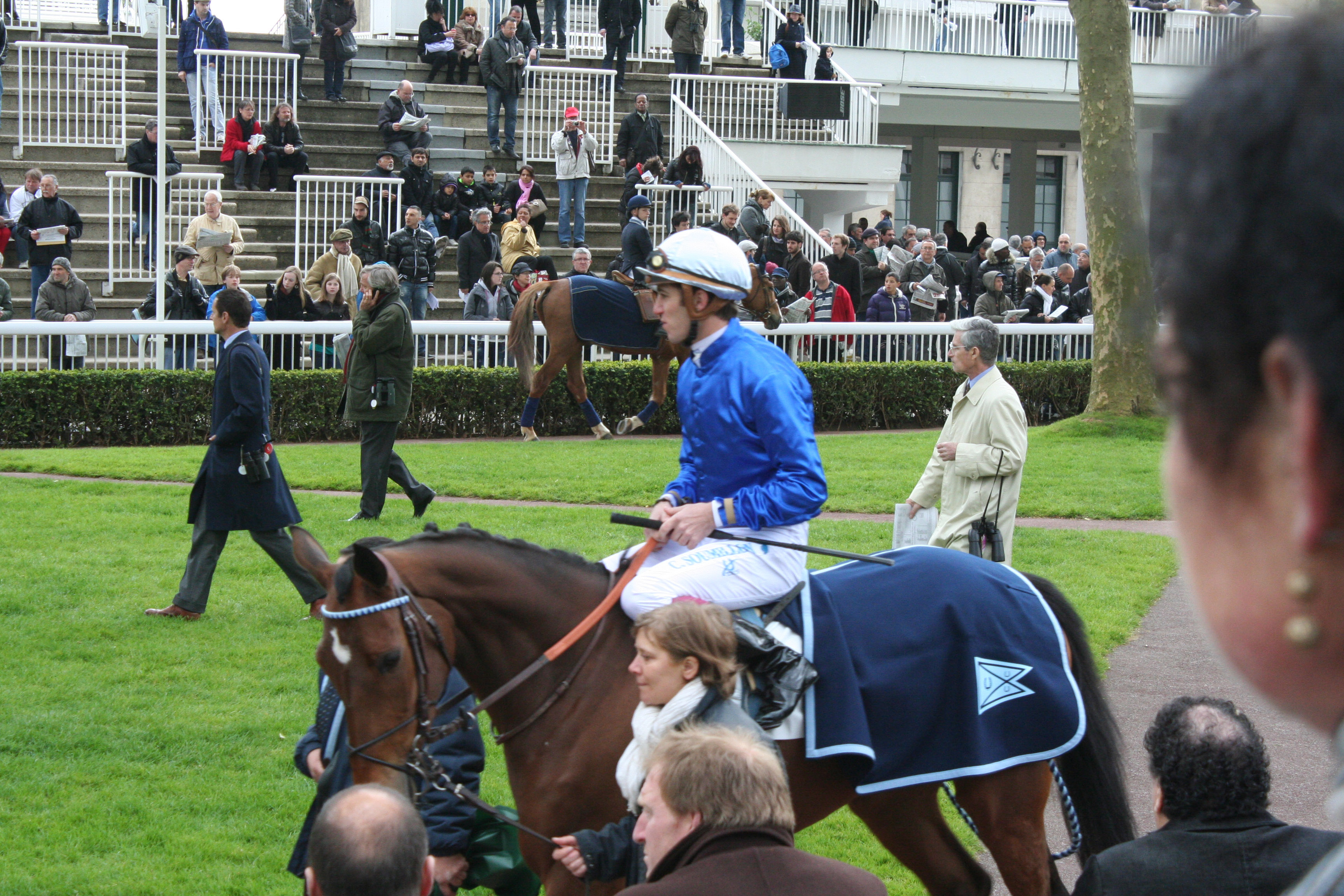
The jockey in this picture has been weighed and his horse is ready. On to the racetrack!

Coming up: A stageside view of the starting gate.

* * * * * * *

Like our blog? Join us on Facebook!
A Day at the Races with Gina Rarick – Part I

April 28th, 2012
Facebook Twitter Linkedin
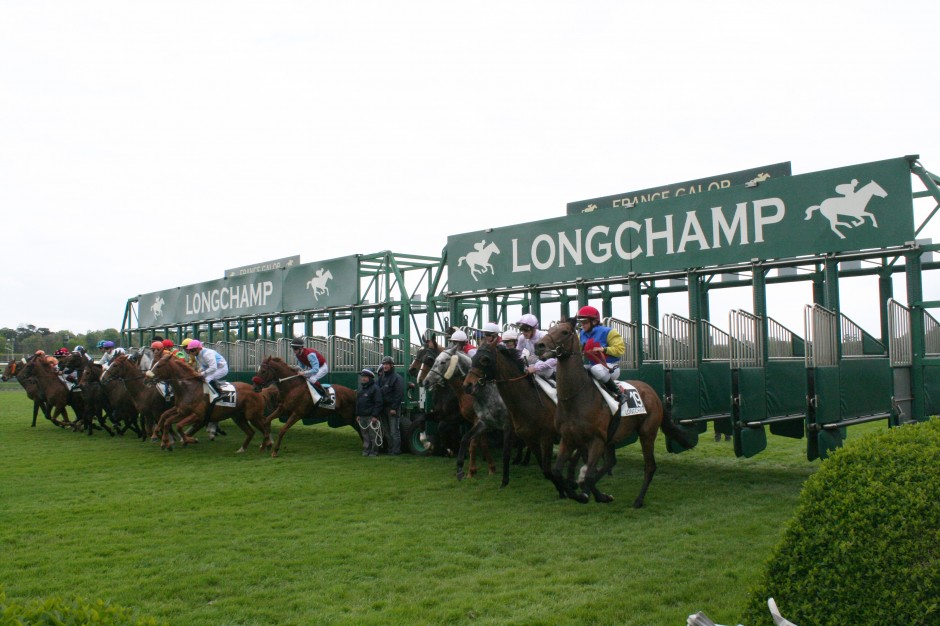
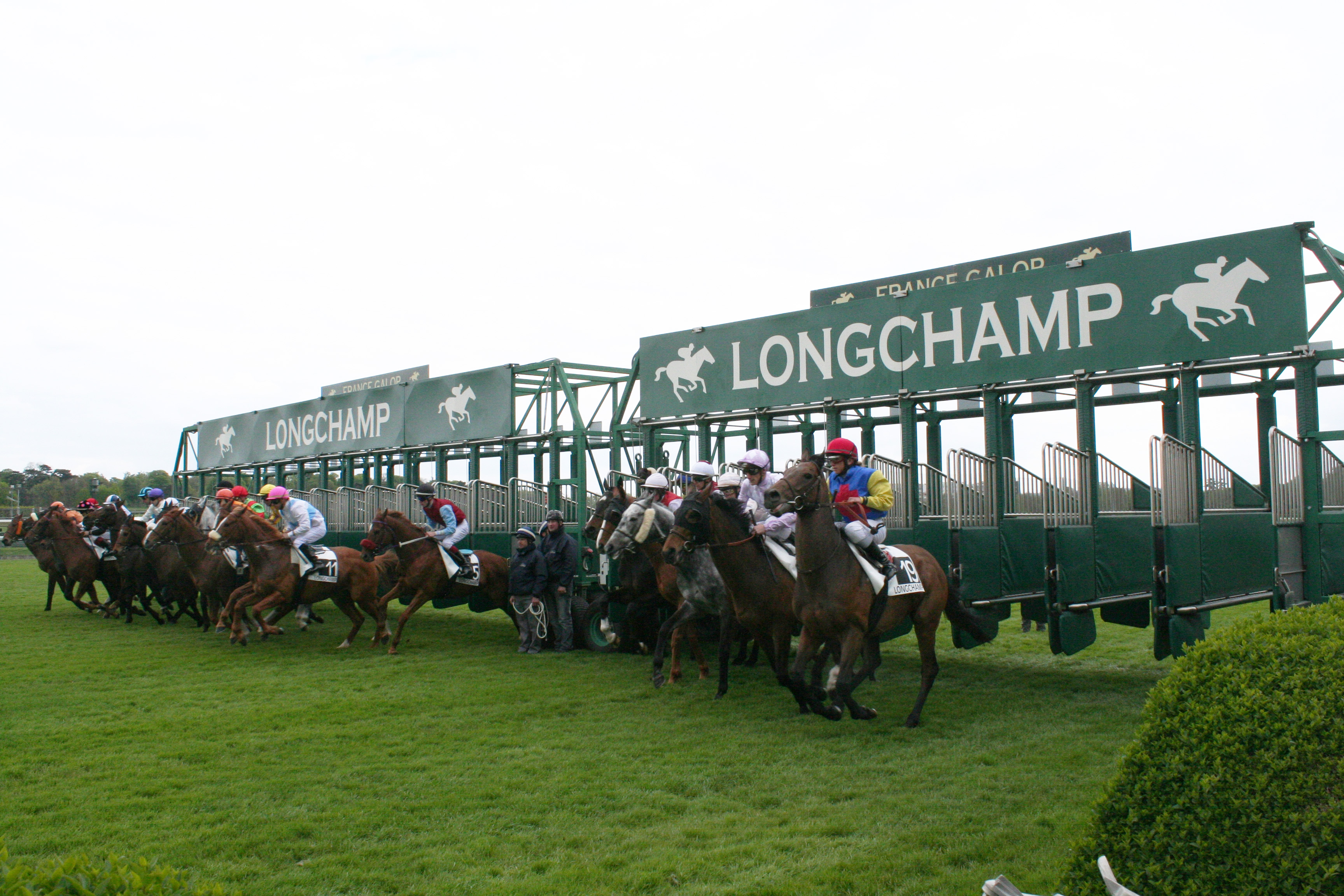
Out of the Gate!

Out of the Gate!
Photo by www.DiscoverParis.net

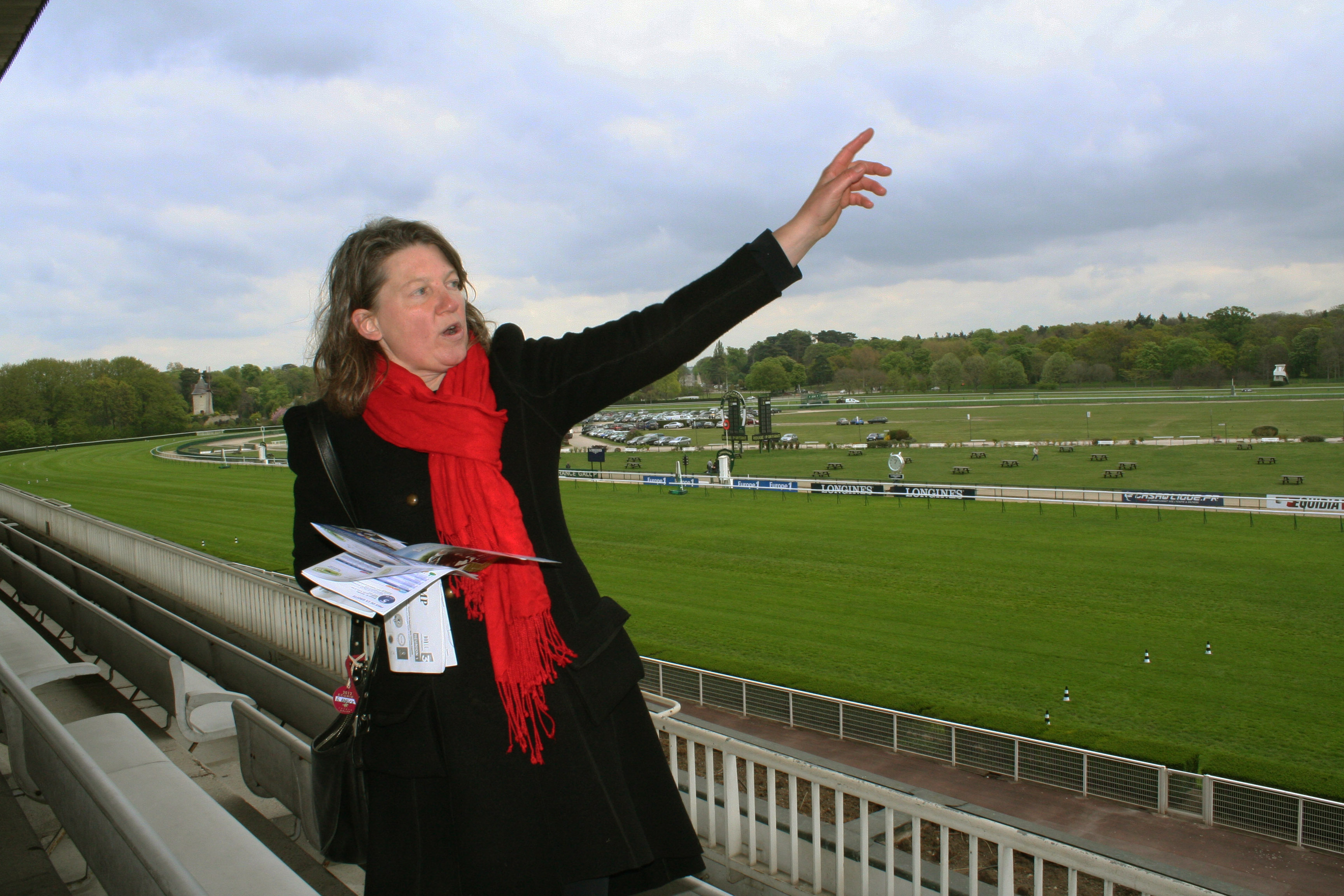
On Sunday, April 15, Monique and I went to the Longchamp racetrack for a guided tour of the hippodrome with Gina Rarick, the only American professional racehorse trainer in France and the first American woman granted a license here. The event was organized by Mark Tronco for the members of the Paris Alumnae/i Network. We met Mark at the entrance to the racecourse and he escorted us into the grandstand, where Gina gave an opening presentation.

Gina Rarick, Racehorse Trainer

Gina Rarick, Racehorse Trainer
Photo by www.DiscoverParis.net

Gina was raised on a dairy farm in Wisconsin. She began a career in journalism at the Milwaukee Journal in 1984. She moved on to the Milwaukee Sentinel and then to Knight-Ridder Financial News in Chicago. Her interest in horses was rekindled in Chicago, where she took riding lessons at a downtown carriage-horse stable. She moved on to the International Herald Tribune in Paris, where she covered major race meetings around the world.

In Paris, her passion for horses continued to grow and she joined riding clubs in the region. She learned to ride racehorses and rode (and won) her first race at the age of 38! She is now a professional thoroughbred racehorse trainer.

Enjoying the Good Life at the Racetrack

Enjoying the Good Life at the Racetrack
Photo by www.DiscoverParis.net

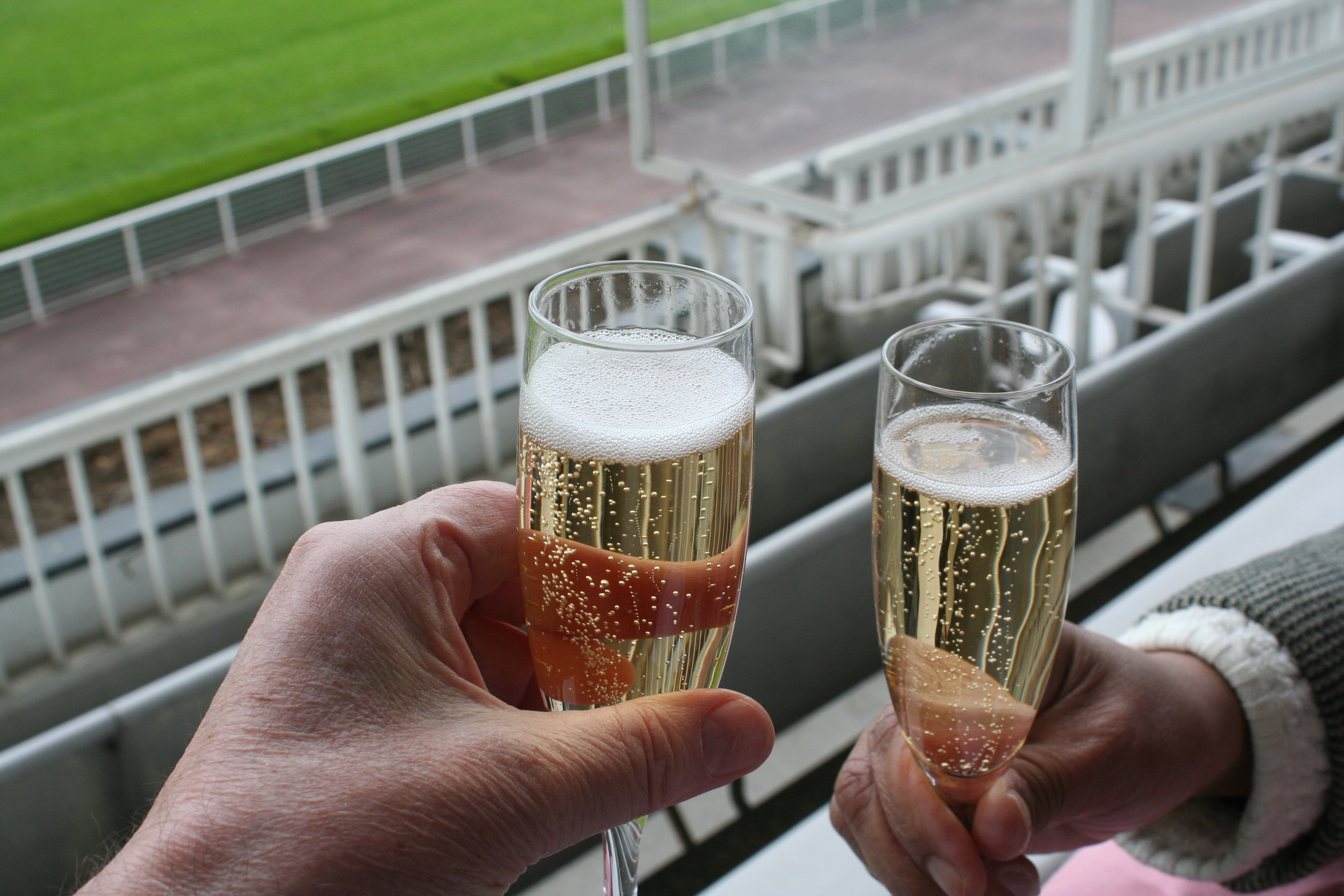
While listening to Gina’s presentation, the members of the group brought out their picnic lunches. Monique and I had packed two pâtés (duck and pork), Comté cheese, fig bread, and…champagne. In spite of the brisk, overcast weather, the day was starting out well!

Next: Gina takes us on a tour.

* * * * * * *

Like our blog? Join us on Facebook!
Wine and Chocolate Pairing at PhiloVino

April 25th, 2012
Facebook Twitter Linkedin
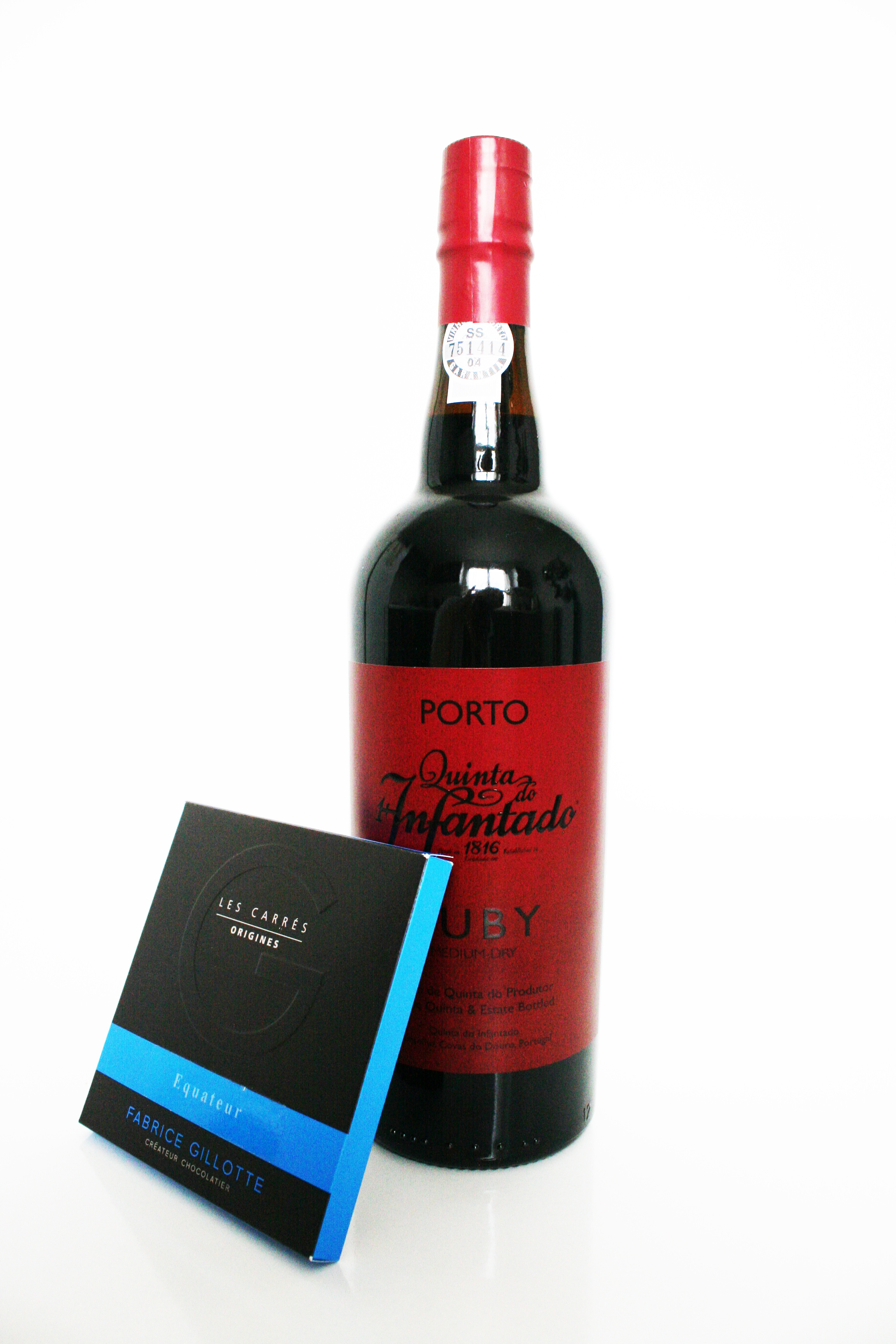
Porto Quinta do Infanada Ruby and Fabrice Gillotte Equateur 72%

Porto Quinta do Infanada Ruby
Fabrice Gillotte Equateur Chocolat 72%
Photo by www.DiscoverParis.net

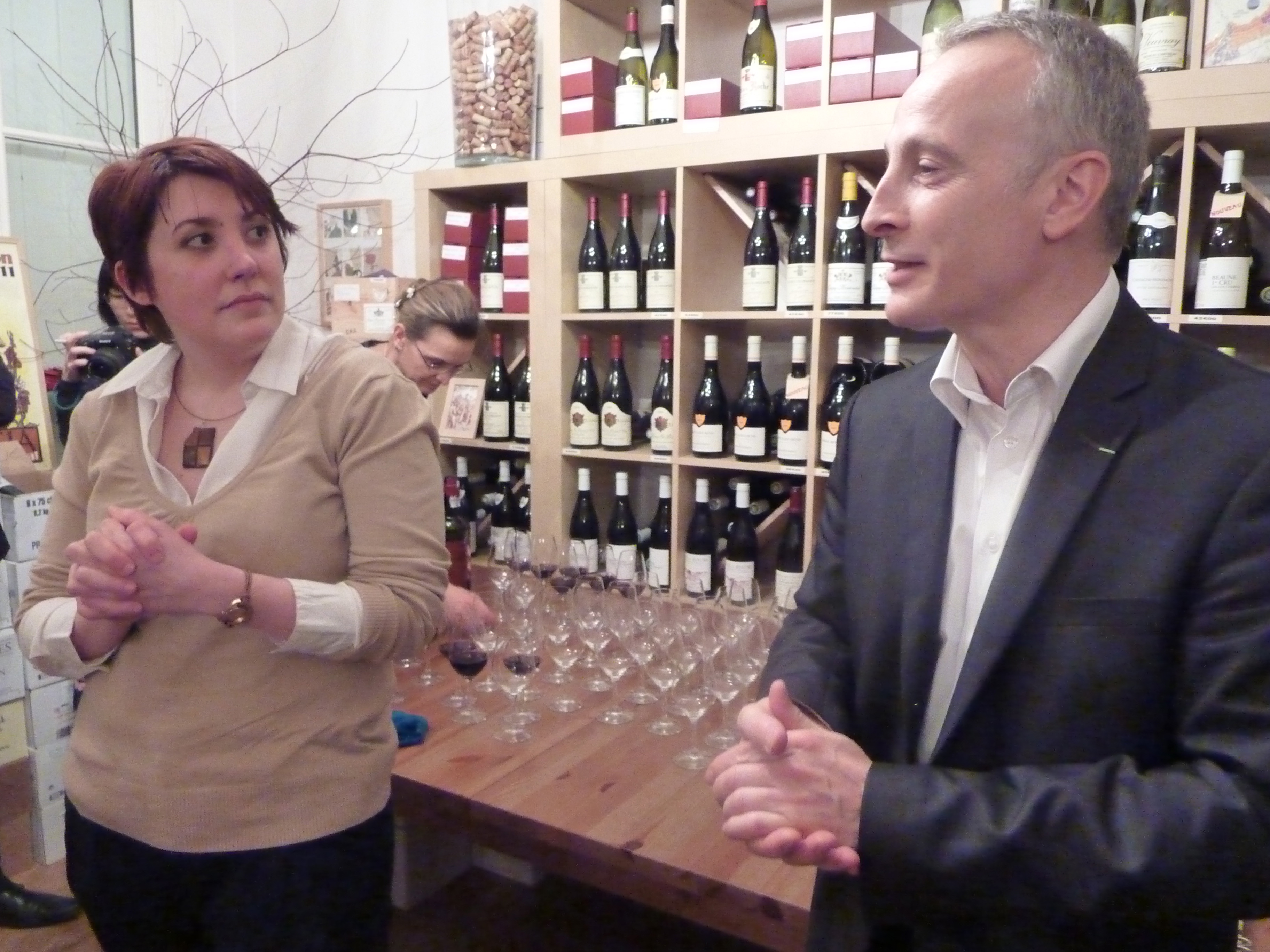
On Thursday, March 29, I attended a wine and chocolate pairing organized by Bruno Quenioux of PhiloVino and Marie Gantois of Mococha.

At the PhiloVino wine shop, a group of about twenty persons gathered to taste three wines that Bruno had paired with three pure chocolates of origin that Marie brought from her shop. (See Marie’s YouTube video of the event here.)

Marie Gantois of Mococha
Bruno Quenioux of PhiloVino
Photo by www.DiscoverParis.net

Apart from enjoying from enjoying the wine, the chocolate, and the company the people who gathered at PhiloVino, the purpose of the tasting was to see what kind of harmony or complementarities we could detect when a certain wine was paired with a certain chocolate. During the event, I was balancing a glass of wine in one hand and a camera, pen, and notebook in the other, so was rather distracted. At the first opportunity, I decided to repeat the tasting exercise at home with the first wine/chocolate pair that was presented that evening.

Yesterday, I purchased a bottle of Porto Quinta do Infantado Ruby from PhiloVino and a tablet of Fabrice Gillotte Equateur Chocolat 72% from Mococha. At home, Monique and I each poured a small glass of port and broke off two squares of the chocolate. We then sipped the wine and noted our impressions.

While Monique found the port soft with a long dry finish, I found it dry, not soft, on the tongue with a peppery finish. Both of us agreed that the wine had a fruity bouquet and was not overly sweet.

We then nibbled the chocolate and noted our impressions. The chocolate was quite bittersweet. Monique declared that it had earthy qualities with a hint of fruit. The best I could perceive was that the chocolate was intense (and at 72%, it should be!).

Finally, we nibbled the chocolate and sipped the wine at the same time.

When I tasted them together, I thought that the chocolate smoothed out the dryness of the wine. Monique said the opposite—that the wine smoothed out the taste of the chocolate. This, for her, was a complementary effect. I thought that the flavors of the wine and chocolate were fighting for dominance, which, for me, meant that the two together were not a harmonious pair.

Regardless of the conflicting opinion, we’ll enjoy this bottle of port over the next several days (without the chocolate, which has already been eaten). It will make a great after-dinner drink!

* * * * * * *

We participate in Wanderfood Wednesdays. Head over there to explore food from around the world!

Like our blog? Join us on Facebook!
A Day Trip to Auvers-sur-Oise with PAN – Part IX

April 21st, 2012
Facebook Twitter Linkedin
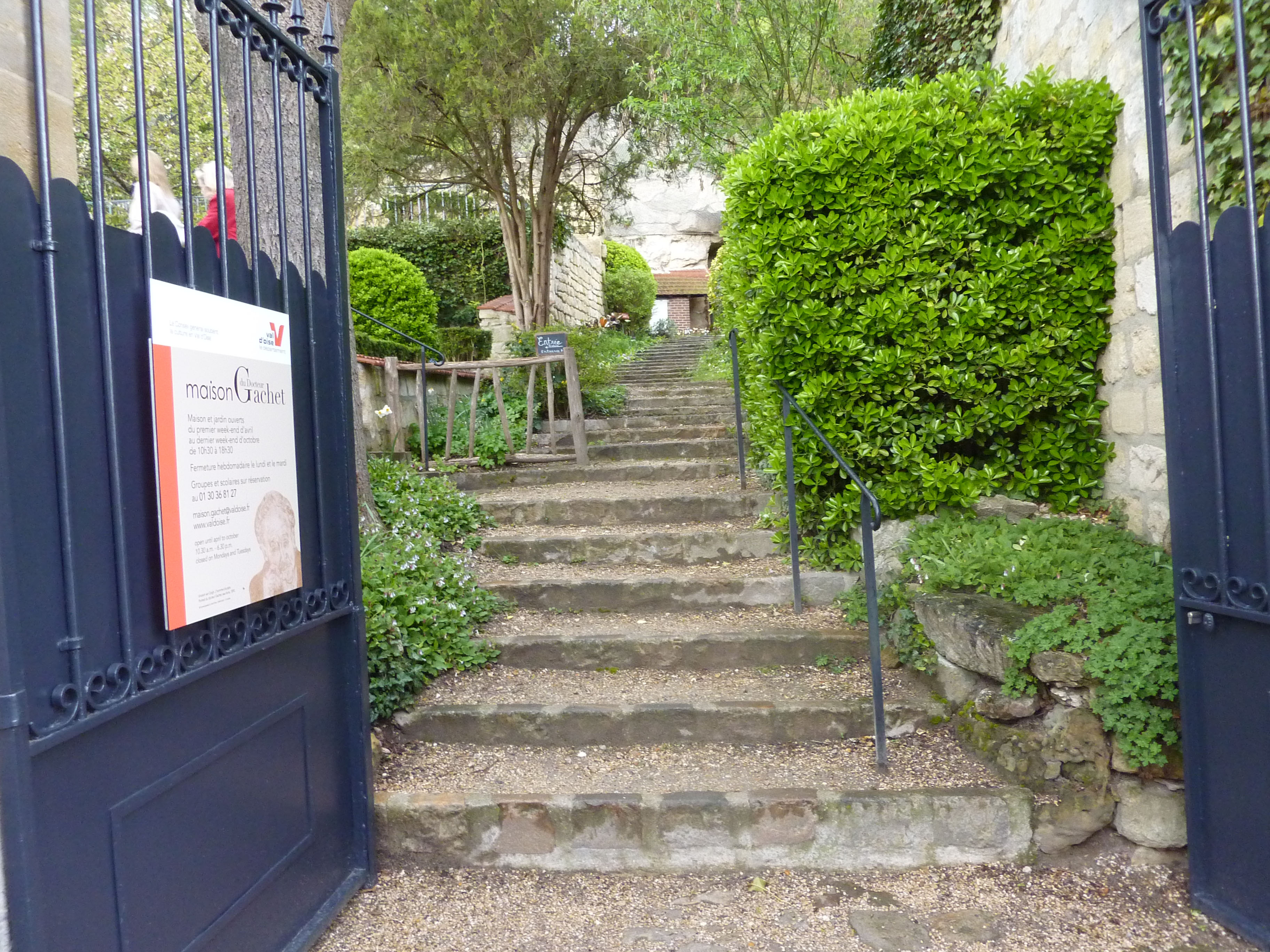
Entrance to the House of Doctor Gachet

Entrance to the House of Doctor Gachet
Photo by www.DiscoverParis.net

We left the Absinthe Museum and trekked across town to see the house of Doctor Gachet. I have always wondered what significance this mysterious doctor had in the story of Van Gogh. I wasn’t quite satisfied with what I learned during the trip, so after I got back to Paris, I did some research on the Internet. Here are the details as I understand them:

Van Gogh had always been a somewhat irascible man, but his emotional state deteriorated dramatically when he was in the town of Arles with painter Paul Gauguin. In a fit of anger following a dispute with Gauguin, Van Gogh cut off his own ear and presented it to a prostitute. He almost bled to death. (A fascinating account of Van Gogh’s ear can be found here.)

Following this incident, Van Gogh was committed to a mental institution in the town of Saint-Rémy-de-Provence. During his stay, he experienced hallucinations and seizures. (An excellent paper on the probable causes of the affliction that tormented Van Gogh can be found here. The paper also refutes the notion that the artist only sold one of his works during his lifetime.)

Van Gogh stayed in Saint-Rémy for about a year, until his brother Theo helped him moved to Auvers-sur-Oise. In Auvers, he would live independently but be under the discreet care of a medical doctor who treated nervous disorders. That doctor was Doctor Gachet.

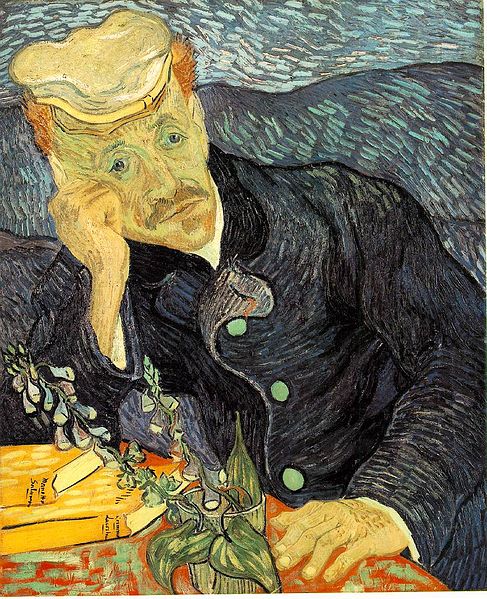
Portrait of Dr Gachet by Vincent Van Gogh

Portrait of Dr Gachet by Vincent Van Gogh

Docteur Gachet was not only a physician, but also an art collector and amateur artist. He felt affinity for Van Gogh and tried to help him. Van Gogh, however, had doubts about Gachet’s ability to help and he wrote to his brother Théo to say that the doctor was “sicker than I am, I think, or shall we say just as much . . . .”

The famous portrait that Van Gogh painted of Gachet attests to the good doctor’s melancholic state of mind, as Van Gogh perceived it.

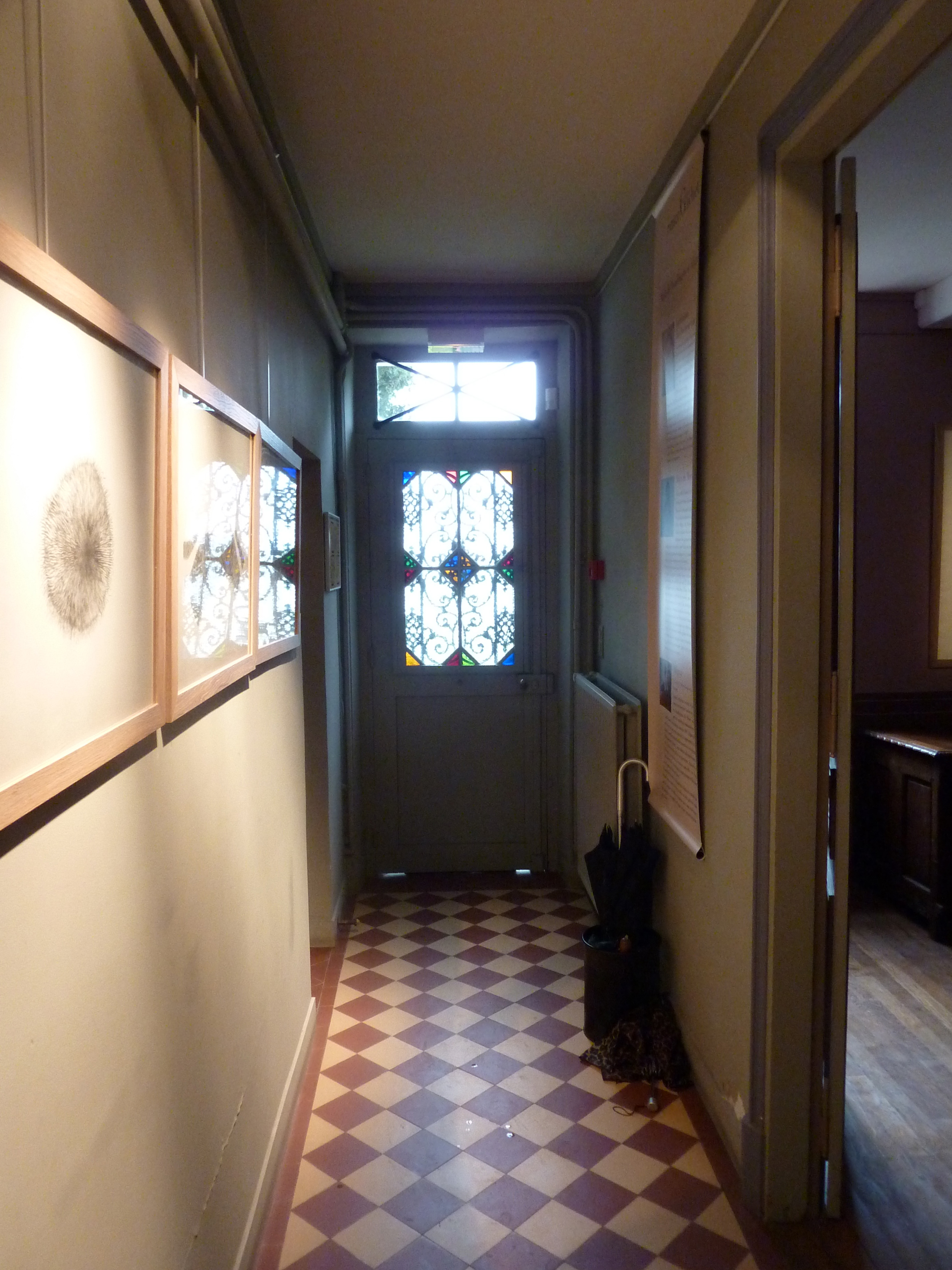
Today, the house of Doctor Gachet is owned by the Conseil Général du Val-d’Oise, a governmental agency. In the spirit of Doctor Gachet’s passion for art, the house is used to exhibit paintings of young artists.

Entrance Hallway of the House of Doctor Gachet

Entrance Hallway of the House of Doctor Gachet
Photo by www.DiscoverParis.net

Following our tour of the house and gardens, we returned to Paris. It had been a wonderful day walking in the footsteps of Vincent Van Gogh!

Coming next week: A day at the races!

* * * * * * *

Like our blog? Join us on Facebook!
A Day Trip to Auvers-sur-Oise with PAN – Part VIII

April 20th, 2012
Facebook Twitter Linkedin
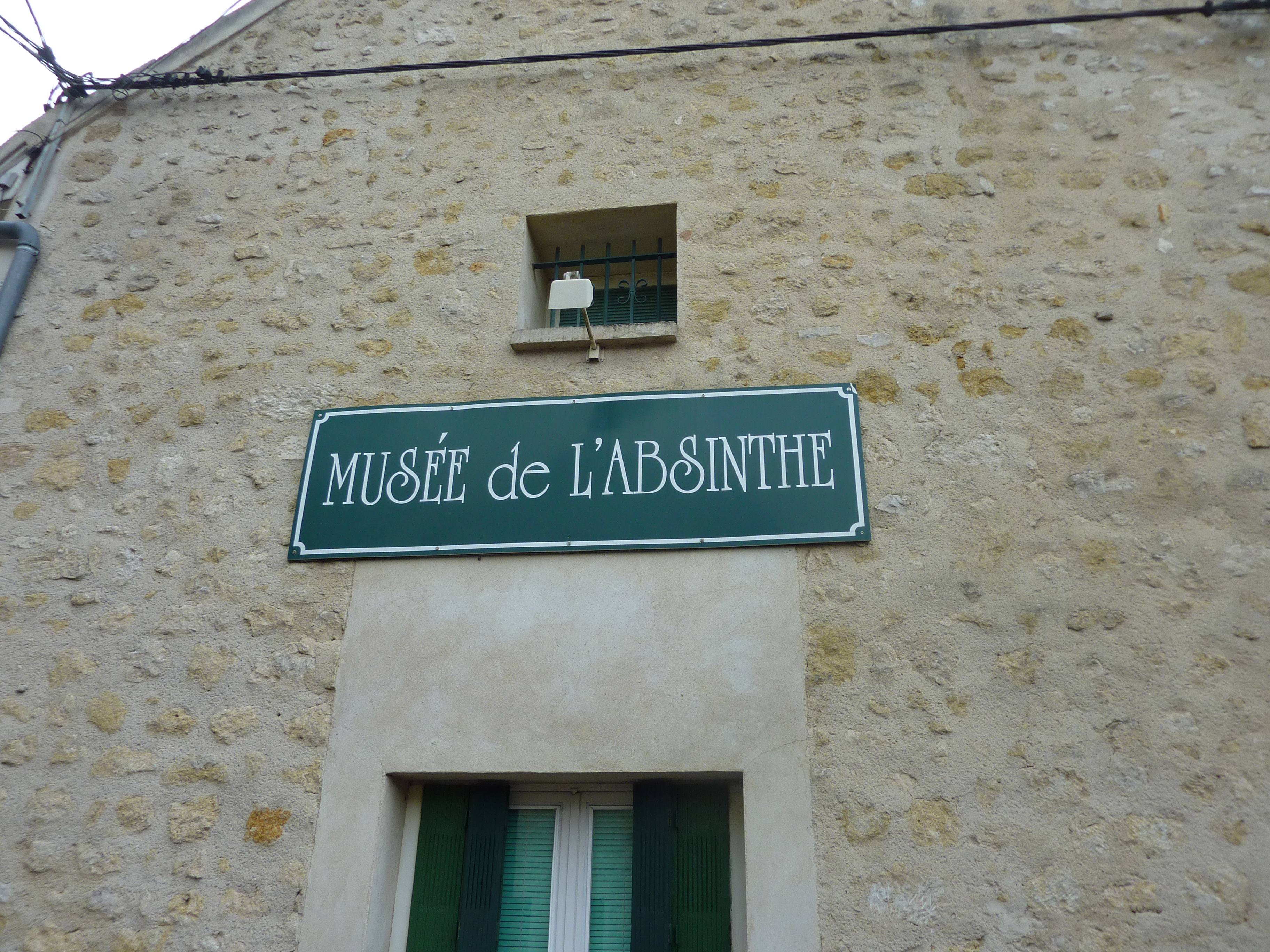
Musée de l'Absinthe

Musée de l'Absinthe
Photo by www.DiscoverParis.net

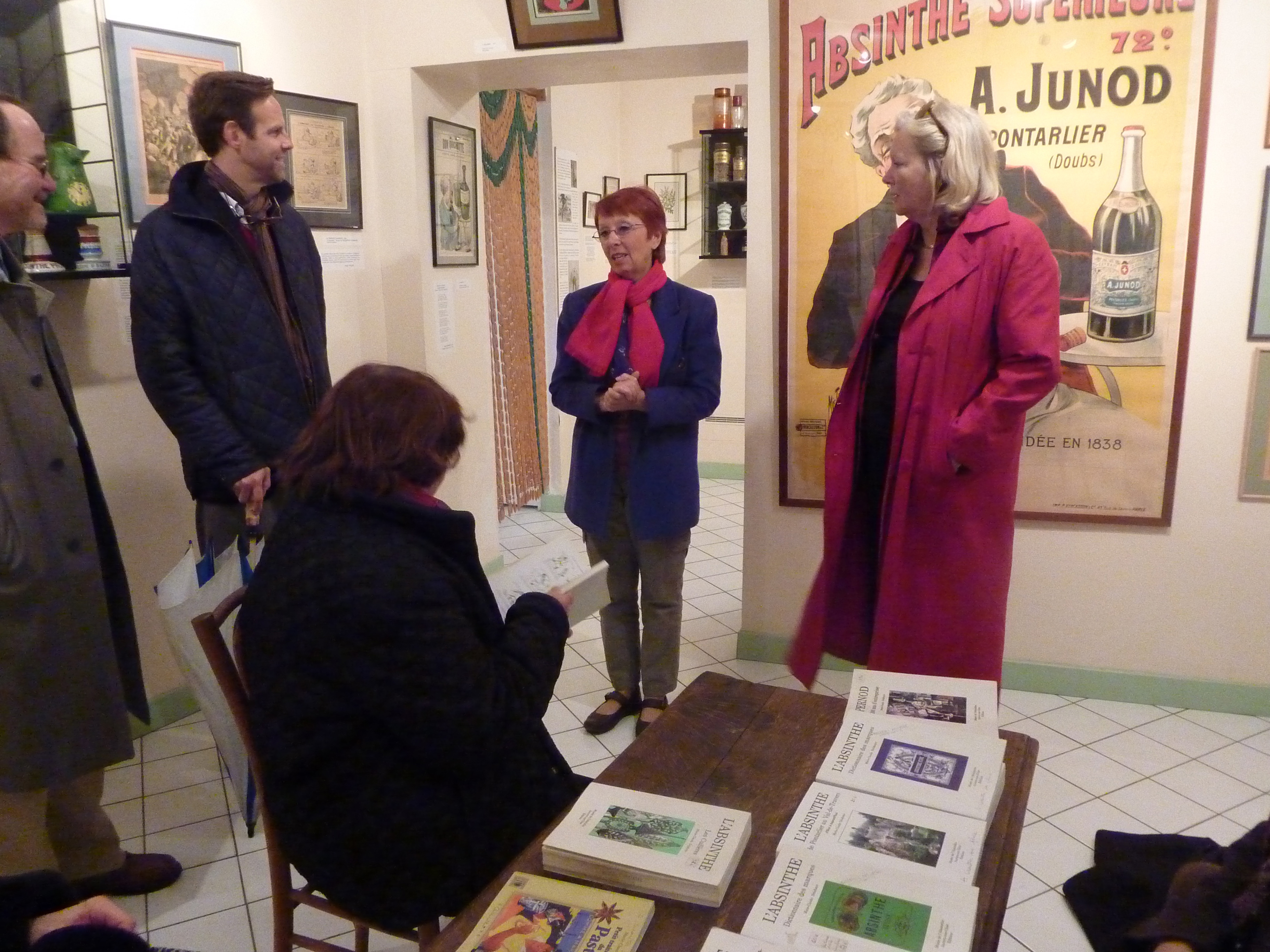
Following our guided walking tour of the village with Anne-Claire, we headed off to see the Absinthe Museum. The museum was founded and is directed by Marie-Claude Delahaye, a woman who is passionate about the subject of absinthe.

Marie-Caude Delahaye (left) and Patricia Ravenscroft (right)

Marie-Caude Delahaye (center)
Patricia Ravenscroft (right)
Photo by www.DiscoverParis.net

Patricia Ravenscroft, the PAN member who organized the day trip to Auvers-sur-Oise, introduced us to Madame Delahaye, who proceeded to give us a private tour of the museum. I learned later that Madame Delahaye has published at least a dozen books on absinthe and is lecturer on the subject of cellular biology at the Pierre et Marie Curie University in Paris.

The ground floor of the museum displays paraphernalia that is associated with the beverage, including trowel-shaped, slotted spoons through which water is dribbled over sugar lumps to sweeten the drink.

On the ground and upper floors are posters and works of art depicting people in various states of inebriation, as well as people praising the consumption of absinthe as a lofty virtue or condemning it as an absolute evil.

During the 19th century, the beverage became associated with artistic and literary creativity. The consumption of absinthe purportedly gave drinkers a heightened state of perception.

However, its high alcohol content (up to 70%) quickly led to drunkenness. By the end of the 19th century there were public campaigns to ban the beverage. It was banned in France in 1915.

Since last year, the production of absinthe has again been permitted, and it can now be ordered at bars and restaurants throughout France.

My overview of the history of the beverage has necessarily been sketchy. In reality, the subject is vast and complex! Madame Delahaye has been studying it since 1981, when she first started collecting absinthe spoons. The Web site of her museum can be found here.

Tomorrow: The house of Doctor Gachet.

* * * * * * *

Like our blog? Join us on Facebook!