


Chocolates from Denise Acabo

July 17th, 2010
Facebook Twitter Linkedin

Denise Acabo has been selling chocolates in the Pigalle district of Paris for almost forty years. Her shop, called l’Etoile d’Or, is located at 30, rue Fontaine in the 9th arrondissement. Mme Acabo only sells chocolates from the best chocolate makers in France, and only proposes her favorites to her clients!
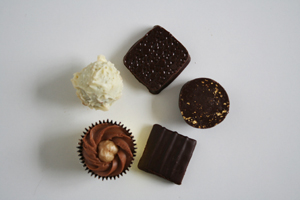
Chocolates from Denise Acabo
(c) Discover Paris!

Among the confections that we sampled from her shop were Bernachon’s Palet d’or, made with fresh cream and dark chocolate. I found its earthy flavor reminiscent of coffee. Bernachon’s gianduja confection, a mixture of chocolate and hazelnut paste in a tiny, pleated aluminum cup, was topped with a whole hazelnut. The confection had an intriguing, smokey flavor. Bernachon is a family-run enterprise in Lyon, crafting chocolates from cocoa beans that they select, roast, and grind themselves – a true chocolate maker!

We also sampled the famous caramel au beurre salé made by Le Roux of Quiberon (Bretagne), which was delightfully chewy, sticky, and salty; and two delicacies from a chocolate maker in Clémencey (Bourgogne). One of these was a delicately-flavored chocolate and blackcurrant ganache. The other, a truffle-shaped confection consisting of a white chocolate shell enveloping a blackcurrant gel, was a delicious surprise.
The Royal Garden of Medicinal Plants

July 13th, 2010
Facebook Twitter Linkedin

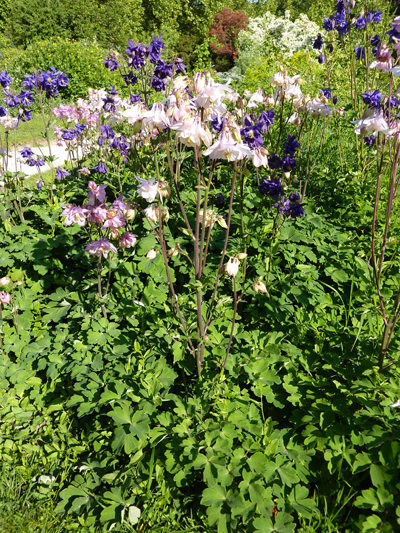
Granny's Nightcap (Aquilegia vulgaris)
A Medicinal Plant Found in the Jardin des Plantes
(c) Discover Paris!

The Royal Garden of Medicinal Plants was founded in Paris 384 years ago. Since then, it has evolved into a great scientific institution. But has it forgotten its original vocation? We investigate this possibility in this month’s Paris, Past and Present, a special feature of our newsletter Paris Insights.

To view the newsletter abstract, click here.

To enter a subscription to Paris Insights, click here.

Bonne lecture!

The Beach in the City
By A. D. McKenzie

July 10th, 2010
Facebook Twitter Linkedin

Summer Fun at Paris Plages
Photography by Djavan De Clercq

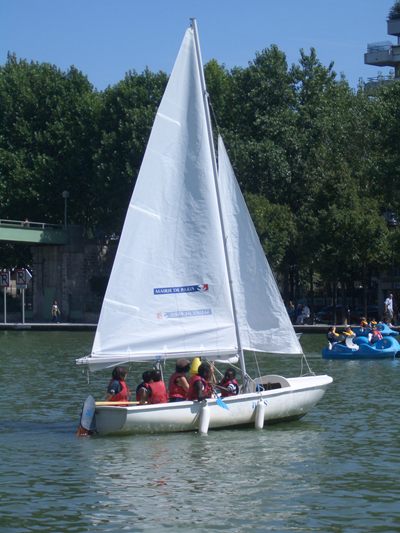
Colorful kayaks and sailboats skimming over the water… Women basking in the sun on wooden deckchairs… Children building elaborate sandcastles… Teenagers whooping as they play beach volleyball…

This may sound like a coastal resort scene, but we’re talking about Paris in the summer, when the beach comes to the city.

Paris Plages (Paris Beaches), as the project is called, will take place for the ninth time this year, from July 20 to Aug. 20. The organizers promise plenty of activities to keep both locals and tourists happy.

Launched in 2002 by the city’s popular mayor, Bertrand Delanoë, Paris Plages began in the historic heart of Paris, running along the river Seine from Pont Neuf to Pont Sully.

Three years ago it was expanded to the 19th arrondissement, a district that is renowned for its multi-ethnic population and vibrant atmosphere. There the area around the Bassin de la Villette was transformed into a beach playground.

Both the Seine—along the Georges Pompidou riverfront highway, which will be closed from July 15 to August 23—and the Bassin will be attracting thousands of visitors in their swimsuits again this year. Other sites will also be hosting various animations.

According to the mayor’s office, free concerts and sporting activities will take place on the square in front of the Hôtel de Ville on rue de Rivoli. Featured performers include Curry and Coco, Camille Bazbaz, and Beat Assailant.

Meanwhile, on the eastern edge of town at Porte de Reuilly near Lac Daumenil, there will be cycling, skating, beach volleyball, and games for children.

Admission to Paris Plages is free to the public. The beaches will be open from 8 a.m. to midnight each day.

People who have participated previously say that one of the nicest things about the project is the way it brings people together. “Everybody has been enjoying the beach with incredible respect for one another’s culture and religion,” a beach-goer named Yolande said last year at the Bassin de la Villette. “There was a grand ball [at the beach] and you could see mothers dancing with their children, and even strangers dancing together. It was wonderful!”

We wish to thank A. D. McKenzie for her contribution to the Paris Insights blog.

Visit to a Phantom Palace – Part 1

July 7th, 2010
Facebook Twitter Linkedin

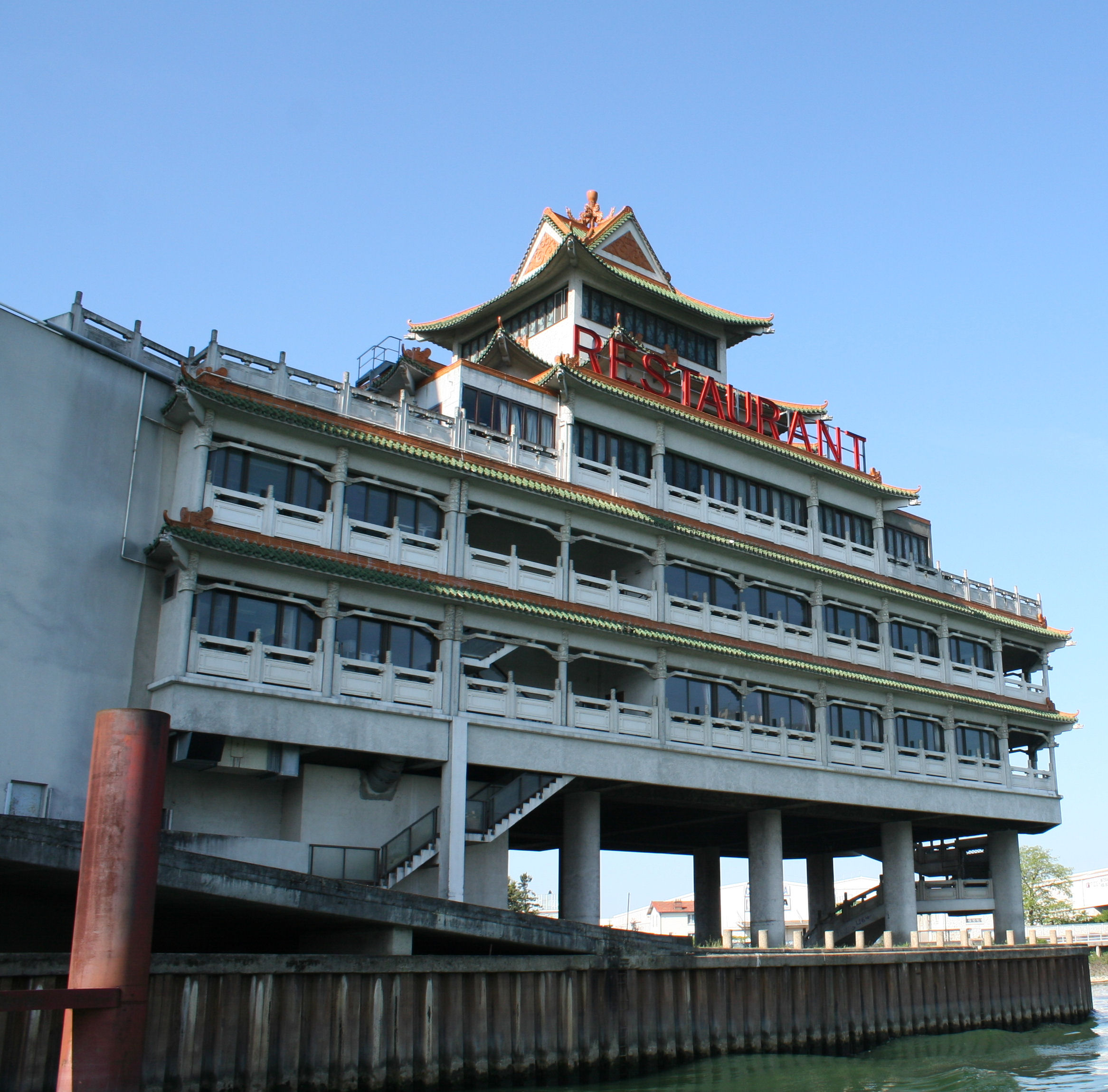
Chinagora Viewed from the River Marne
(c) Discover Paris!

On Saturday, June 5, I joined a group of people led by Patrick Urbain, Director of the Conseil d’Architecture, d’Urbanisme et de l’Environnement du Val-de-Marne, for a visit of unusual buildings that lie to the east of Paris along the Seine river. The highpoint of the visit was the Chinagora project, located at the confluence of the Seine and Marne rivers, just upstream from Paris. We took a boat, a Veugéo, from the dock in front of the National Library upriver to the dock at Alfortville, and then walked downstream along the riverbank of the Marne to get to the site.

Chinagora was built in the early 1990s on the site of an abandoned paper factory. At the height of its glory, the 44,000 m2 project consisted of five buildings that comprised a commercial gallery, an exposition palace, three panoramic restaurants, and a three-star hotel. It was financed by the Guangdong Entreprises Limited, a Chinese group, at a cost of 100 million euros.

The Cantonese architect for the project, Liang Kunhao, is said to have been inspired by the architecture of the Forbidden City for the design of Chinagora. The beautiful dark-green tiles that embellish its roofs were imported by boat from Canton. The project opened in 1992 with the completion of the Chinagora Hôtel, the Chinagora Restaurant, and the Palace of Expositions. In 1994 a magnificent three-story, 3000 m2 shopping center opened, housing a score of boutiques selling merchandise and food from China.

The entire project was destined to become a showcase of Chinese culture. Indeed, from 1992 to 1996, a number of cultural expositions were held, including “The Treasures of the Museums of Canton” and “The Splendor of the Costumes of China.”

But the development fell on hard times. The exposition palace was not profitable and was transformed into a Chinese supermarket. This, too, closed. In fact, all of the enterprises eventually closed except for the three-star hotel. A new Chinese group, called Nouveau Monde, took over the project in 2003 but was unable to turn it into a profitable enterprise.

To be continued…

Remembering Thomas Jefferson on the 4th of July

July 4th, 2010
Facebook Twitter Linkedin

Thomas Jefferson
(c) Discover Paris!

A statue of Thomas Jefferson stands at the entrance to passerelle Léopold-Sédar-Senghor (formerly named pont de Solférino). The statue was erected on July 4, 2006, the 230th anniversary of American independence and the 180th anniversary of Jefferson’s death. According to the inscription on the base, it is a gift to the city of Paris from the Florence Gould Foundation, which supports French/American exchange and friendship, and Alec and Guy Wildenstein in memory of their father Daniel. The statue, sculpted by French artist Jean Cardot, depicts Jefferson holding a quill pen in his right hand and the original design of Monticello in his left. He is facing the Hôtel de Salm, the building whose construction he was able to observe from the south terrace of the Tuileries Garden across the river. Professing to be “violently smitten with the hotel de Salm,” Jefferson incorporated the design of its dome into the redesign of his house in Monticello when he returned to America.

We published a self-guided walking tour of the American Revolution in Paris in the July 2009 edition of Paris Insights. The walk traces a route connecting a number of sites in Paris that are associated with two of the USA’s founding fathers, Thomas Jefferson and Benjamin Franklin. Access to the article that contains this walk, entitled The American Revolution in Paris—An Itinerary for American Patriots, is available to paid subscribers of our newsletter. To enter a subscription, click here.

Le Bon Goût – Our Monthly Restaurant Review

July 3rd, 2010
Facebook Twitter Linkedin

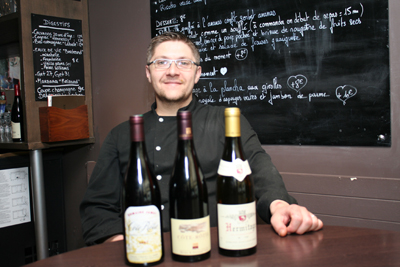
Nicolas Michel
Proprietor and Chef of Le Cotte-Rôti
(c) Discover Paris!

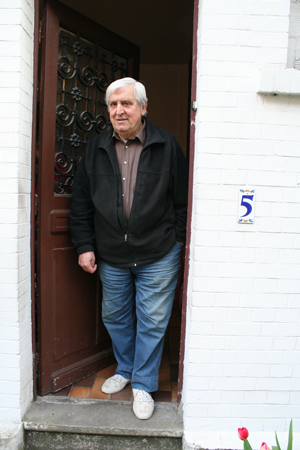
On the first of each month, we publish a restaurant review, which we call “Le Bon Goût,” for the readers of our Paris Insights newsletter. In it, we not only describe our dining experience, but also write about the chef or the proprietor, and illustrate the review with a photograph of him or her.

We have been reviewing restaurants for many years, and have met many chefs and proprietors who are passionate about the art of preparing great cuisine. By writing about them, we hope that we can communicate their passion to you, their customer.

In this month’s Le Bon Goût we review Le Cotte-Rôti, an unusually decorated restaurant located in the 12th arrondissement. Owner and chef Nicolas Michel told us that he plans to remodel his bistrot this August, but, happily, he will continue to serve the same great cuisine when he reopens in September!

Access to the review is available to paid subscribers of our newsletter. To enter a subscription, click here.

A Visit to an Herb Shop

July 1st, 2010
Facebook Twitter Linkedin

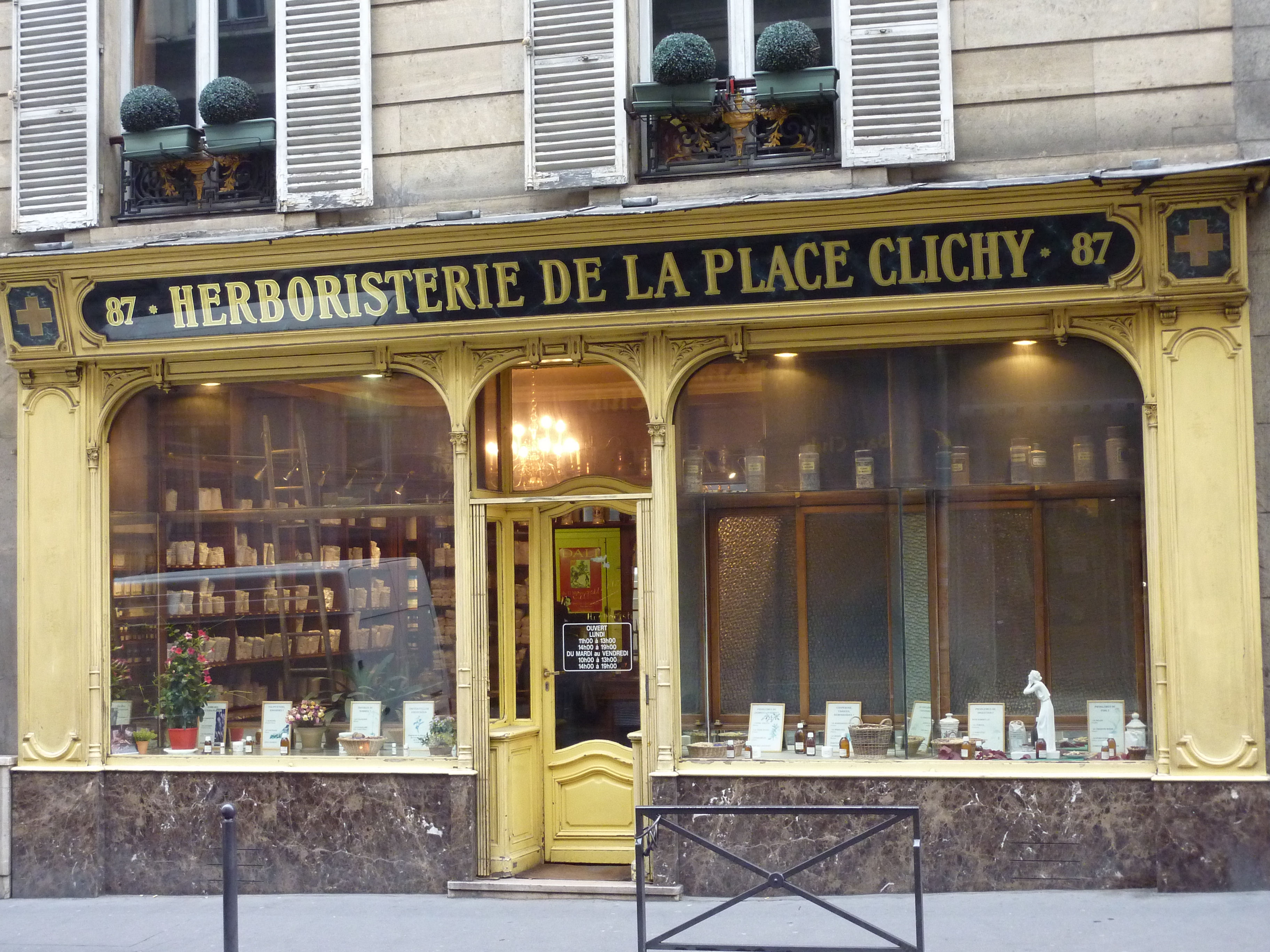
Herboristerie de la place Clichy
(c) Discover Paris!

We recently took a tour of the oldest herb shop in Europe, located near place de Clichy. Owned and operated by Jean-Pierre Raveneau, he spoke with us about medicinal herbs and their place in modern medicine. Read our report in the July issue of Paris Insights. Click here to read the newsletter abstract, and here to enter a subscription.

Bonne lecture!

LOVING LIT IN PARIS

By A. D. McKenzie

June 30th, 2010
Facebook Twitter Linkedin

Shakespeare and Company
(c) Discover Paris!

Literature lovers were in for a treat recently when more than 30 famous writers descended on Paris for the fourth Shakespeare and Company Literary Festival.

The three-day event drew hundreds to the René Viviani Square – across the Seine from Notre Dame Cathedral and a few steps from the iconic Shakespeare and Company bookstore itself. Readers came to listen to authors such as Martin Amis, Petina Gappah, Philip Pullman, Jeanette Winterson, and Hanif Kureishi.

The theme this year was “Storytelling and Politics”, and the writers rose to the challenge of discussing topics that included “what the World Cup means for Africa”, “politics and violence in Pakistan” and “how to write a book in a military dictatorship.”

Novelist and film-maker Kureishi (My Beautiful Laundrette, The Buddha of Suburbia) gave a witty presentation titled “Writing the Suburbs, Writing the City.” He told the audience that he now believed the “identity novel” is dead. He said he realized the “game was up” when he found himself on a panel in Asia with three beautiful Indian first-time novelists who all lived in New York.

Winterson (Oranges Are Not the Only Fruit) spoke about the effects that literature can have on people’s lives and thinking. She said she was convinced that the much talked-about demise of the book was premature – and she seemed to be right, judging from the number of people that bought books after each session.

The bi-annual festival in fact highlights the unique role that the Shakespeare and Company bookshop has played in Parisian literary life. The original store was opened in 1919 by an American ex-pat named Sylvia Beach, who welcomed writers such as James Joyce, Ernest Hemingway, and Gertrude Stein. Her store became a meeting place for many wandering English and American scribes, as well as for readers who could buy or borrow books.

The shop was shut down in 1941 during the German occupation of France, but 10 years later a second English-language bookshop was opened on the city’s Left Bank by another American – George Whitman. This store acquired the Shakespeare and Company name when Beach died. It now houses the Sylvia Beach Memorial Library on its first floor, “where free readings and writers’ workshops take place, where visitors sit to read all day, and where young writers stay at night,” according to the shop’s own lore.

Whitman, now 96 years old, still keeps an eye on things, says the literary festival’s co-organizer Jemma Birrell. She said the theme of “Storytelling and Politics” was in keeping with his view that a bookshop is a political act because of the titles it chooses and the writers it promotes. Whitman’s daughter Sylvia launched the first festival in 2003 and currently does the day-to-day running of the store.

We wish to thank A. D. McKenzie for her contribution to the Paris Insights blog.

A Remarkable Structure that Most Tourists Will Never See –
The Bercy 2 Commercial Center

June 25th, 2010
Facebook Twitter Linkedin

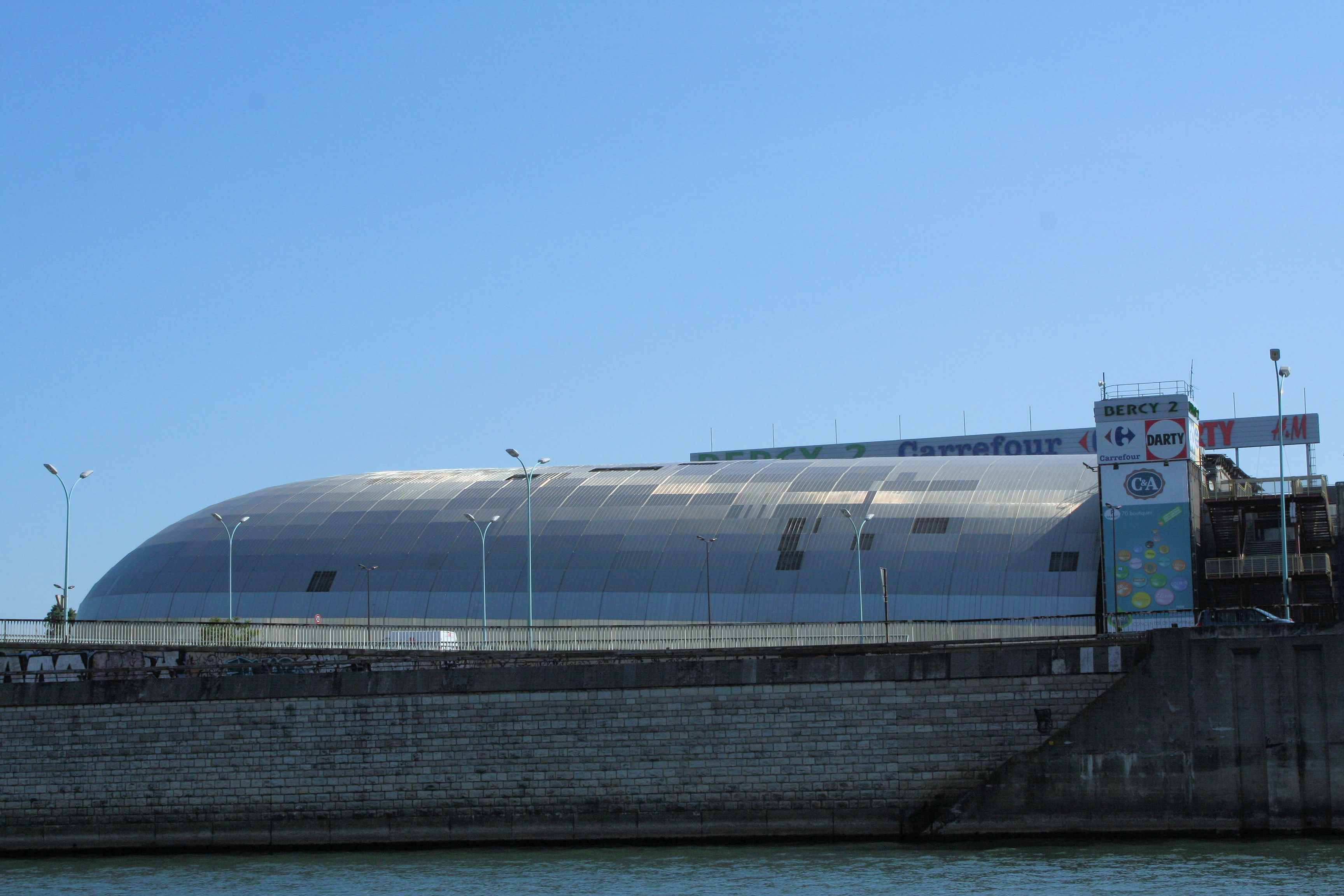
Centre Commercial Bercy 2
(c) Discover Paris!

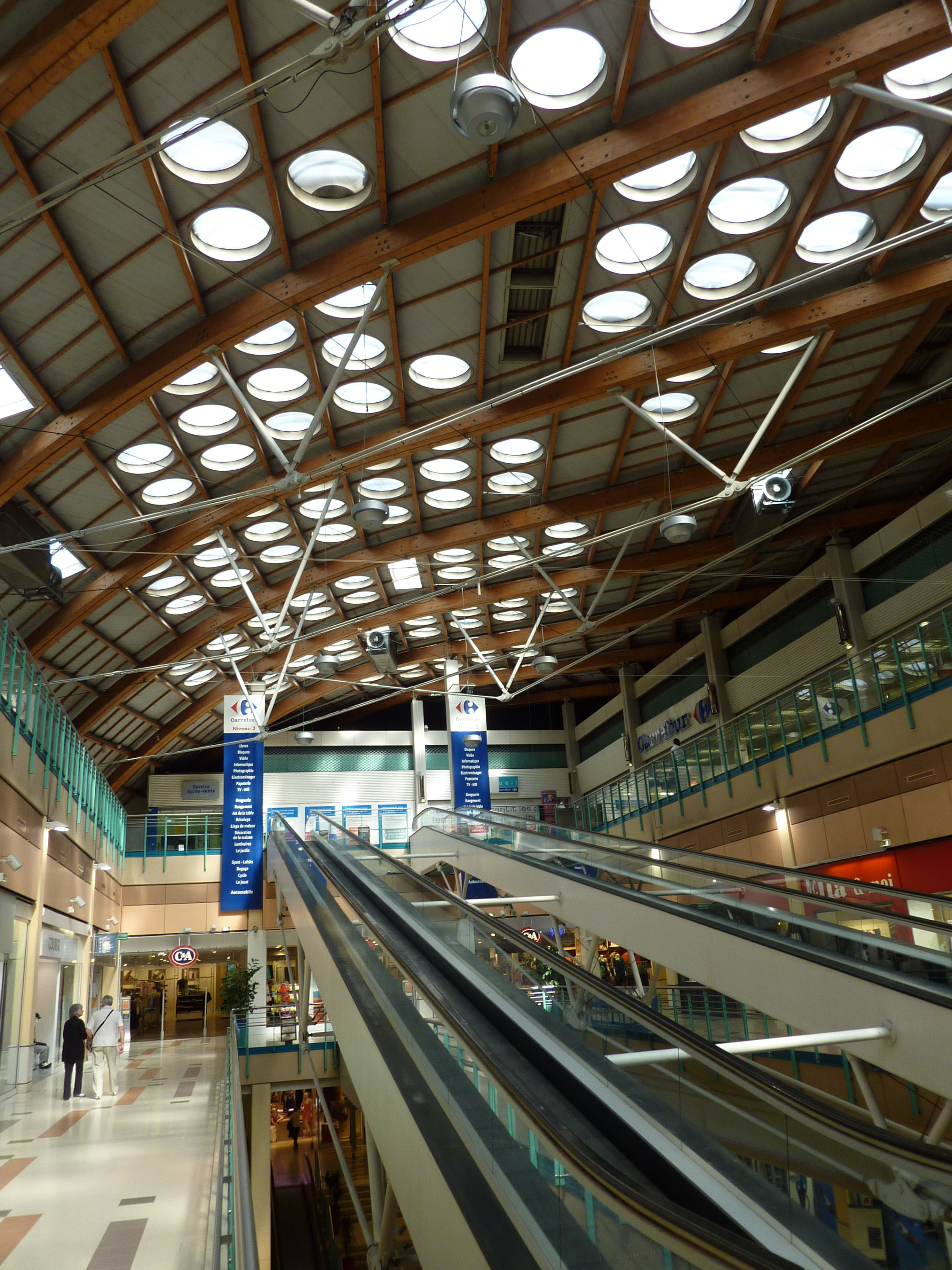
Looking ever so much like a spaceship that has landed to take on passengers, the Bercy 2 Commercial Center is bounded on three sides by river, freeway, and railroad track, just outside the city limits of Paris. It was constructed from 1987 to 1990 by Renzo Piano, a world-renowned architect and winner of a number of prestigious awards. The roof is composed of 27,000 panels of stainless steel mounted on laminated-wood beams. Although futuristic looking on the outside, the interior would look familiar to anyone who frequents modern shopping centers. The structure is handsome and spacious inside, and while ascending the gentle slopes of the escalators, one can see the porthole skylights and the curves of the ribcage-like supports of the roof.

Pedestrian access to the commercial center is by bus 24, which stops at the entrance.

Mr. Piano also designed the famous Centre Pompidou, built in Paris from 1971 to 1978, as well as many other spectacular buildings throughout the world.

View of Roof
(c) Discover Paris!

Paris, Past and Present: Federico Santalla at Le Lapin Agile

June 22nd, 2010
Facebook Twitter Linkedin

Federico Santalla, Singer
(c) Discover Paris!

One of the articles in our monthly Paris Insights newsletter is called Paris, Past and Present. Here, we provide a brief report on some aspect of Paris history, culture, and contemporary life that we find particularly interesting.

In this month’s Paris, Past and Present, we feature Federico Santalla, a singer who performed at Le Lapin Agile for thirty years. One of his favorite songs that he sang there is a poem written by humorist and comedian Pierre Dac that Federico set to music. Called “Rien,” the poem is a nonsense song about the state of nothingness, which Federico performed with gestures and piano accompaniment.

Paris Insights is available by paid subscription. To subscribe, please follow this link:
http://www.discoverparis.net/newsletter-signup.html.

Newsletter abstracts can be viewed at the following link: http://www.discoverparis.net/newsletter.

Bonne lecture!