



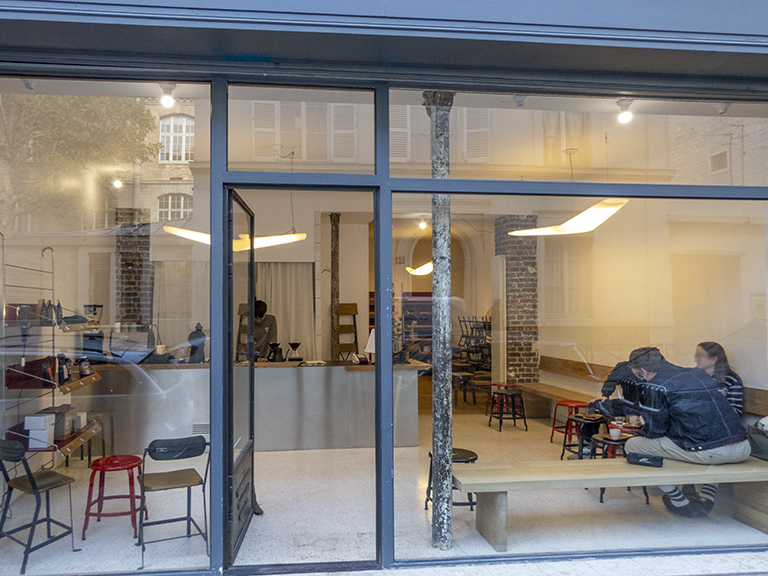
Nœud is a sparsely appointed café located in the 15th arrondissement, not far from the Emile Zola métro station.
I entered, wondering why people would frequent such an austere place, where there were only hard benches and metal chairs to sit on. Whatever the reason, there were numerous customers who came into the shop while I was there.
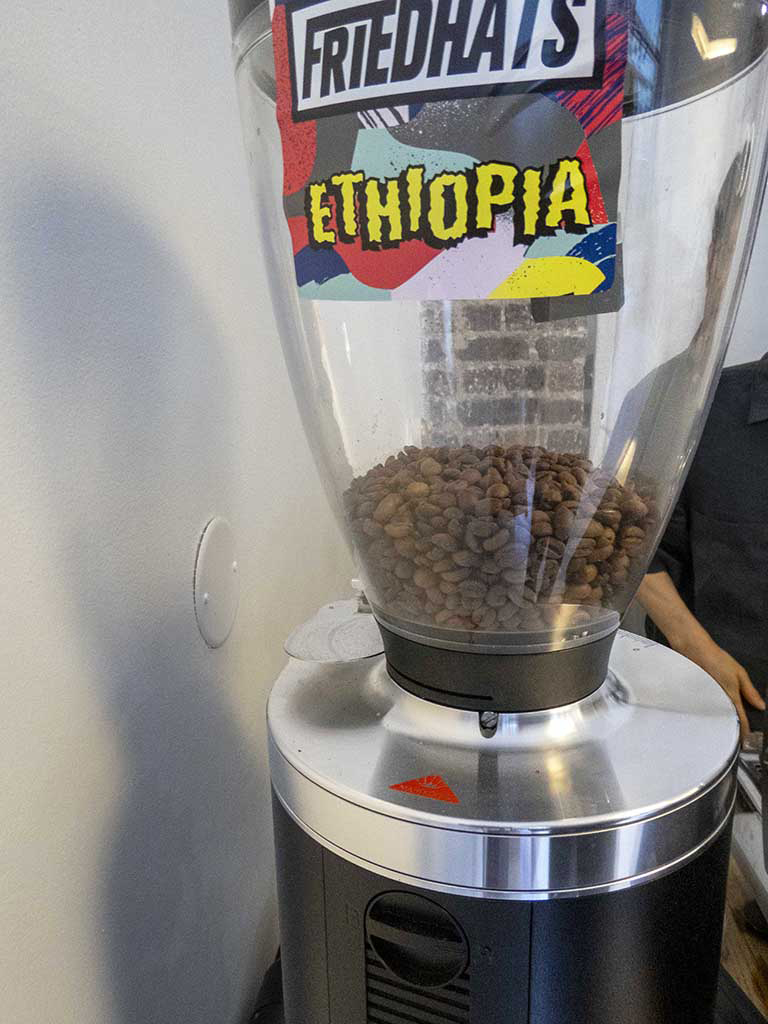
I told the barista that I wanted to taste the espresso of the day and then purchase a bag of the roasted beans that were used to prepare the beverage. The espresso of the day was brewed from Ethiopian beans supplied by Friedhats, a coffee roaster located in Amsterdam.
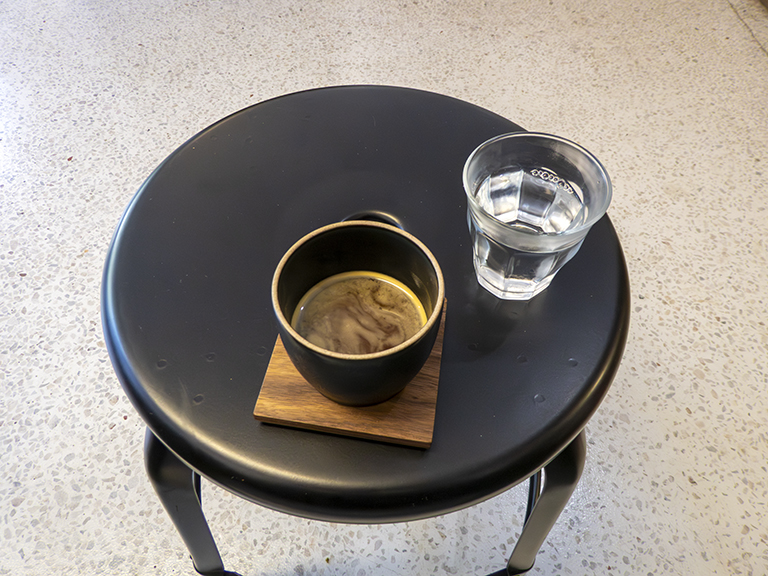
I sat down on a bench and was soon served the espresso with a glass of water.
I thought that the coffee tasted remarkably elegant, but I could not identify aromas or specific flavors.
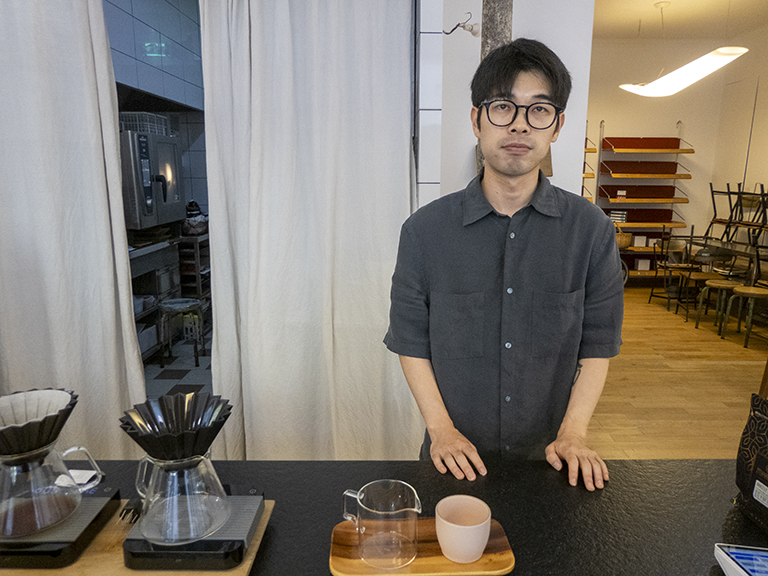
After I finished the coffee, I told the barista that I wanted to purchase a 250g bag of the roasted Ethiopian beans. I was disappointed to learn that they did not have those specific beans in stock.
Returning home and consulting the Internet, I learned that Friedhats sells its roasted beans via its Website. It identifies the Ethiopian coffee beans as follows: “this coffee is 100% wolisho (aka “welicho”) – an ancient variety found in the highlands of Ethiopia.”
Subsequently, I ordered a 250g bottle of the beans directly from the company. It was delivered by international carrier within a few days.
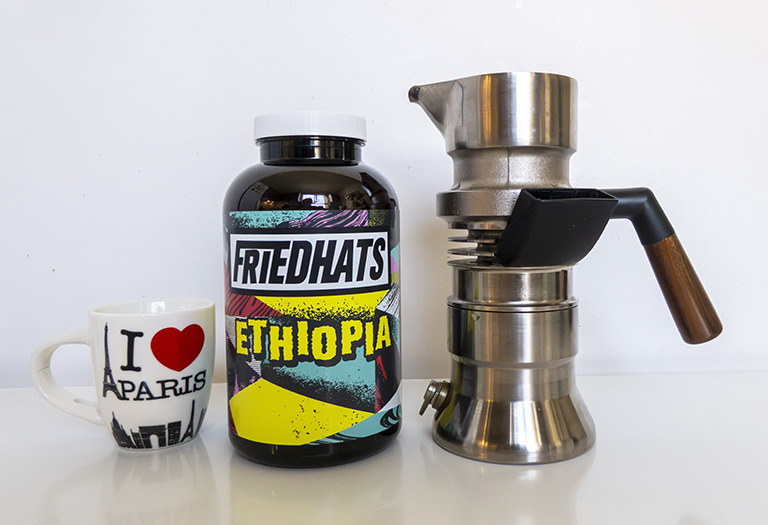
After grinding the beans with my DeLonghi grinder and brewing them with my 9Barista, I was able to identify a rather bright citrus flavor cup after cup. My perception was confirmed by the mention of the word “Bergamot” (a hybrid lime-orange citrus fruit) that was printed on the bottle cap.
The word “Jasmine” was also indicated on the label. I did not detect that flavor, although it may have been the source of the elegance of the espresso I tasted at the café.
Nœud
41, rue Violet
75015 Paris